- Filtration accuracy
- 1μm - 500μm
- Temperature range
- 0°C - 250°C
- Flow rate
- 10 - 1000 m³/h
- Operating pressure
- 0.6 MPa / 1.0 MPa / 1.6 MPa

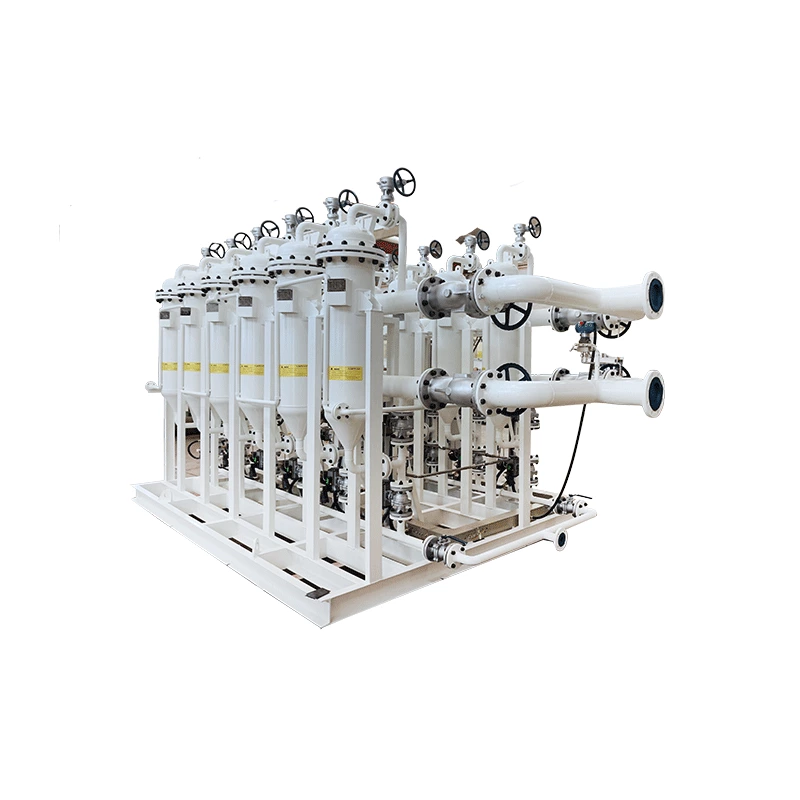
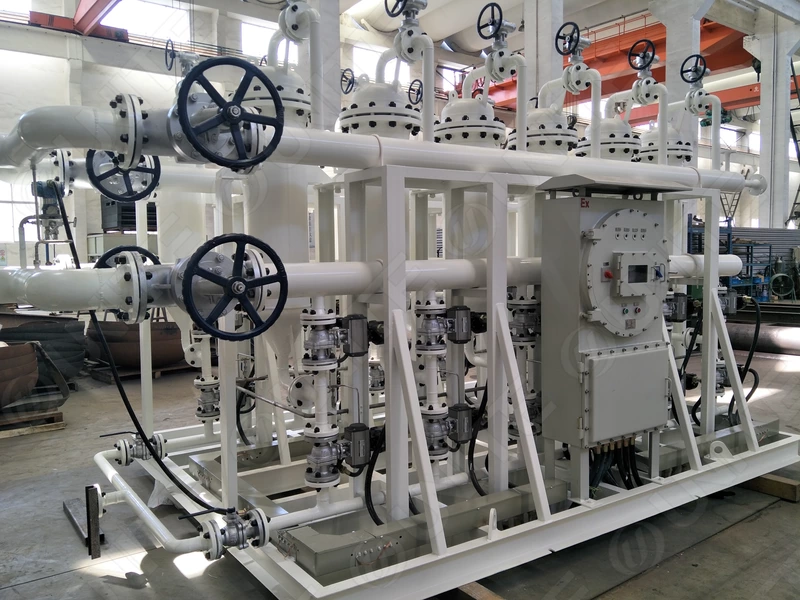
The Unite cross-flow filtration system utilizes metal membrane filterelements as the filtration unit. The system provides inside-out filtration,offering continuous filtration cycles through cross-flow filtration. The material flows through the filter element, which is open at both ends.The filtrate passes through the porous filter element and exits the system, while solid particles are retained in the circulating flow. This method is suitable for filtering materials with specific particle characteristics or for applications requiring continuous reaction processes, maximizing the retention of valuable solid particles, such asprecious metal catalysts.
1. Exceptional Anti-fouling and Anti-clogging Capabilities (Core Advantage)
Dynamic Self-Cleaning Mechanism: The high-velocity flow of the feed liquid generates intense shear forces across the membrane surface, continuously sweeping away intercepted solid particles, macromolecules, or colloids, thereby preventing their accumulation and the formation of a thick "filter cake" layer on the membrane surface.
2. Excellent High-Solids Handling Capacity
Processing "Viscous" Materials: This system excels particularly at processing feed liquids characterized by high concentrations, high viscosities, or colloidal properties. Even under conditions of extremely high solids content, it maintains efficient separation—a scenario where conventional filters would rapidly and completely clog.
3. Enables Truly Continuous Operation
No Need for Frequent Downtime: Thanks to its self-cleaning characteristics, the system does not require frequent filter element replacements—unlike bag or cartridge filters—nor does it necessitate frequent interruptions to the filtration process, as is common with traditional backwashing systems.
4. Extended Service Life for Membrane Modules/Filtration Media
Low-Wear Operation: Despite the high flow rates, the membrane experiences more uniform stress distribution because the system prevents particles from becoming deeply embedded within the membrane pores or being subjected to intense compaction on the surface.
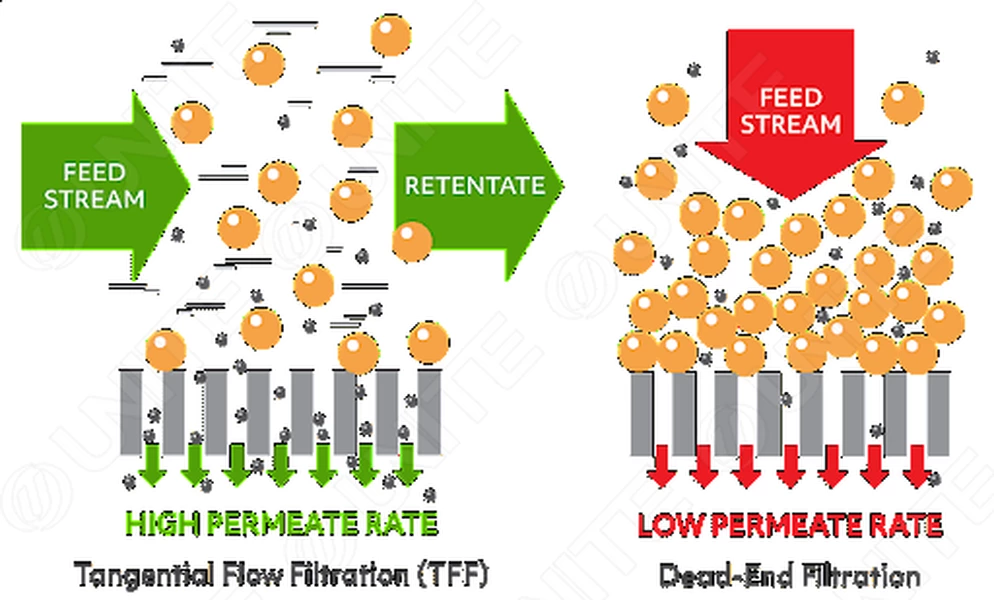
Cross-flow filtration separates particles in a solution by passing the solution along the surface of a membrane. The liquid passes through the membrane because of a pressure differential across the membrane.
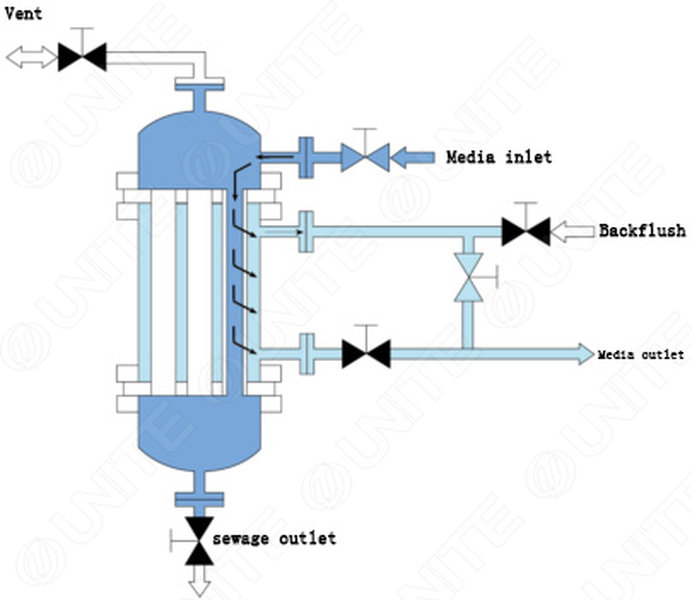
1.Unique Filtration Structure
Unique inside - out filtration structure for efficient separation.
3.High - Flux Maintenance
High shear force keeps filter cake layer thin, maintaining high flux during prolonged filtration.
5.Minimal Residual Liquid
Minimizes residual liquid volume within the equipment.
2.Tangential Fluid Flow
Fluid flows tangentially to membrane surface to retain solid particles in main fluid.
4.Convenient Solid Collection
Solid materials collectable at top or bottom of filter, facilitating filter cake formation.
6.Filter Cake Washing Support
The filter supports the washing of filter cake.
Table1: Material and Precision
|
Filmmaterial
|
Typical accuracy(μm)
|
Applicable specification
|
|
316L/304Stainless Steel
|
0.05~100
|
Neutral/weakly acidic or alkaline,food/pharmaceutical/water treatment |
|
Ti
|
0.1~50
|
Strong corrosiveness,high temperature, biocompatibility |
|
Hastelloy
|
0.5~20
|
Strong acid / strong base /harsh high-temperature environment |
|
Monel
|
1~30
|
Resistant to hydrofluoric acidand seawater |
|
Technical specification
|
Typical value range
|
Explain
|
|
(TMP)
|
0.1~0.8 MPa
|
Too high leads to congestion,while too low results in insufficient flow. |
|
Cross-flow velocity
|
3~8 m/s
|
Provide shear force andanti-contamination function |
|
Oper.Temp.
|
-20~400°C
|
The heat resistance of metal films ismuch higher than that of organic films. |
|
Tolerance of pH
|
0~14
|
Depending on the material,stainless steel from 2 to 12. |
|
Backwashing pressure
|
0.2~0.6 MPa
|
Online/offline regeneration |
|
Initial flux
|
50~500 L/(m²·h)
|
Depending on the accuracy, pressuredifference and material liquid conditions |
Talk to Our Engineers to Get a Free, Customized Filtration Solution.
A Cross-flow Filtration System is a separation process where the feed flows parallel to the membrane or filter surface, rather than directly through it. This design helps reduce fouling and allows continuous filtration with higher efficiency.
In cross-flow filtration, the feed stream moves tangentially across the filter surface. A portion of the fluid passes through the membrane as permeate, while solids are carried away by the main flow, preventing rapid clogging.
Key advantages include reduced membrane fouling, longer filter life, stable filtration performance, continuous operation, and improved separation efficiency for fine particles and emulsions.
These systems are widely used in pharmaceuticals, biotechnology, food and beverage, chemical processing, wastewater treatment, and fine chemical production where high-purity separation is required.
In cross-flow filtration, the feed flows along the filter surface and reduces clogging, while in dead-end filtration, all fluid passes directly through the filter, which can lead to faster fouling and more frequent cleaning.
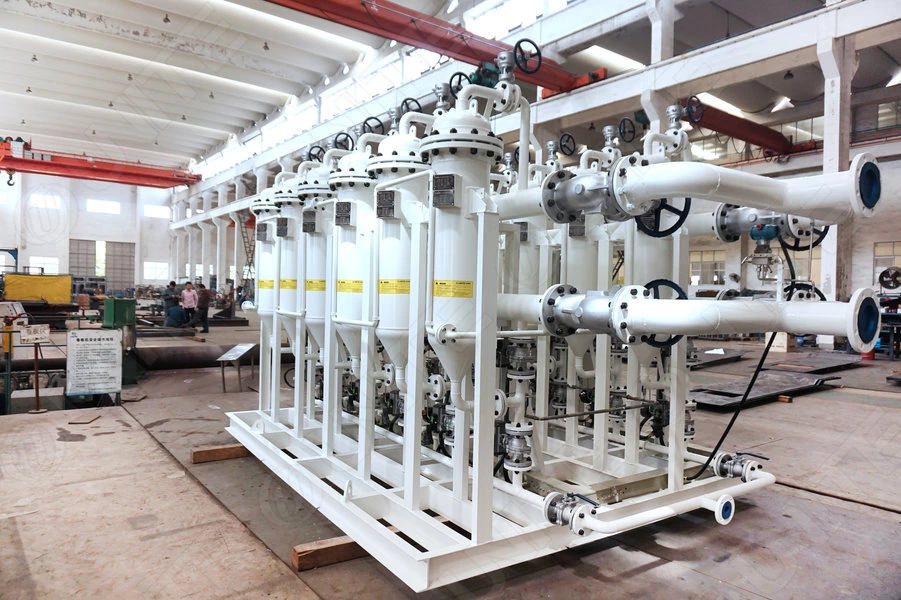
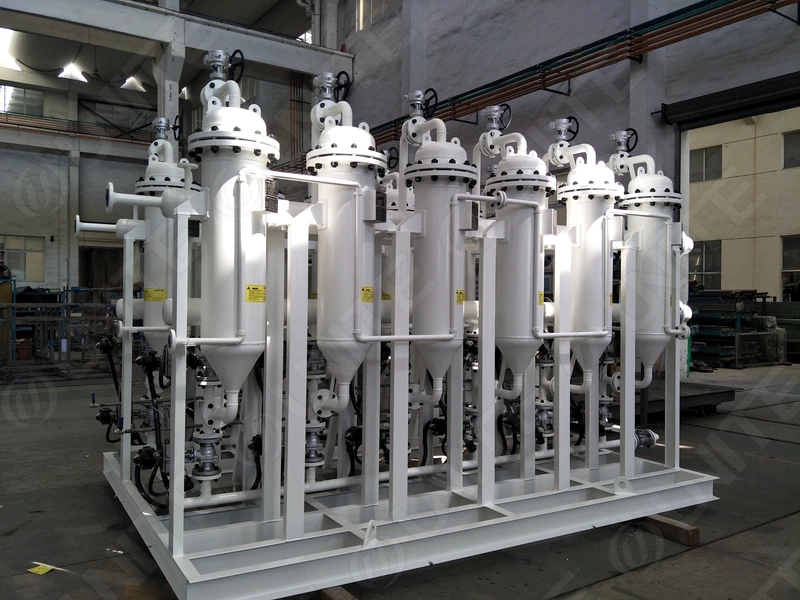
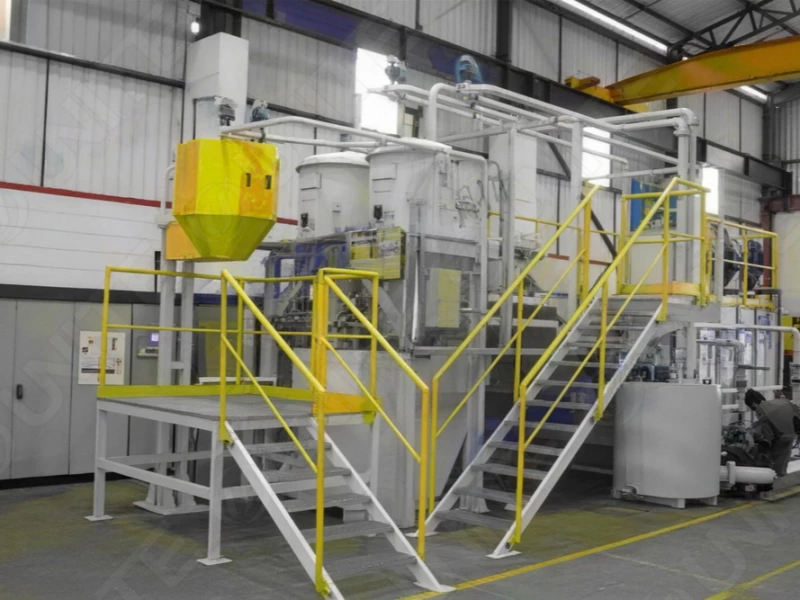
This duplex system ensures continuous water flow via a twin-barrel design, effectively preventing nozzle and equipment clogging caused by high-impurity mine water in both underground and surface operations.

This duplex system ensures continuous water flow via a twin-barrel design, effectively preventing nozzle and equipment clogging caused by high-impurity mine water in both underground and surface operations.

For the removal of suspended solids from bulk pharmaceutical chemicals, Heilongjiang Biopharmaceutical Factory has adopted the micron-grade fully auto


We use cookies to collect information about how you use this site. We use this information to make the website work as well as possible and improve our services.more details