- Filtration accuracy
- 20μm - 3000μm
- Temperature range
- 0°C - 90°C
- Flow rate
- 10 - 5000 m³/h
- Operating pressure
- 0.6 - 2.5 MPa

Integrating research and development, design, manufacturing, and verification, we continuously explore the application of filtration, separation, and purification technologies in various industrial processes through continuous innovation.
In petroleum refining, UNITE industrial filters are critical for process efficiency. They meticulously remove contaminants like particulates and impurities from crude oil and feedstocks. This protects expensive downstream equipment—heat exchangers, pumps, catalytic converters—from fouling and wear, common causes of operational disruption.
By ensuring product purity, advanced UNITE filtration systems enhance quality and help refiners meet stringent specifications. This precision is vital for subsequent refining stages and overall product marketability.
Preventing unscheduled shutdowns and reducing downtime, these robust UNITE systems optimize continuous output. Effective UNITE filtration significantly bolsters safety, extends asset lifespan, and ensures the economic viability of refining operations.
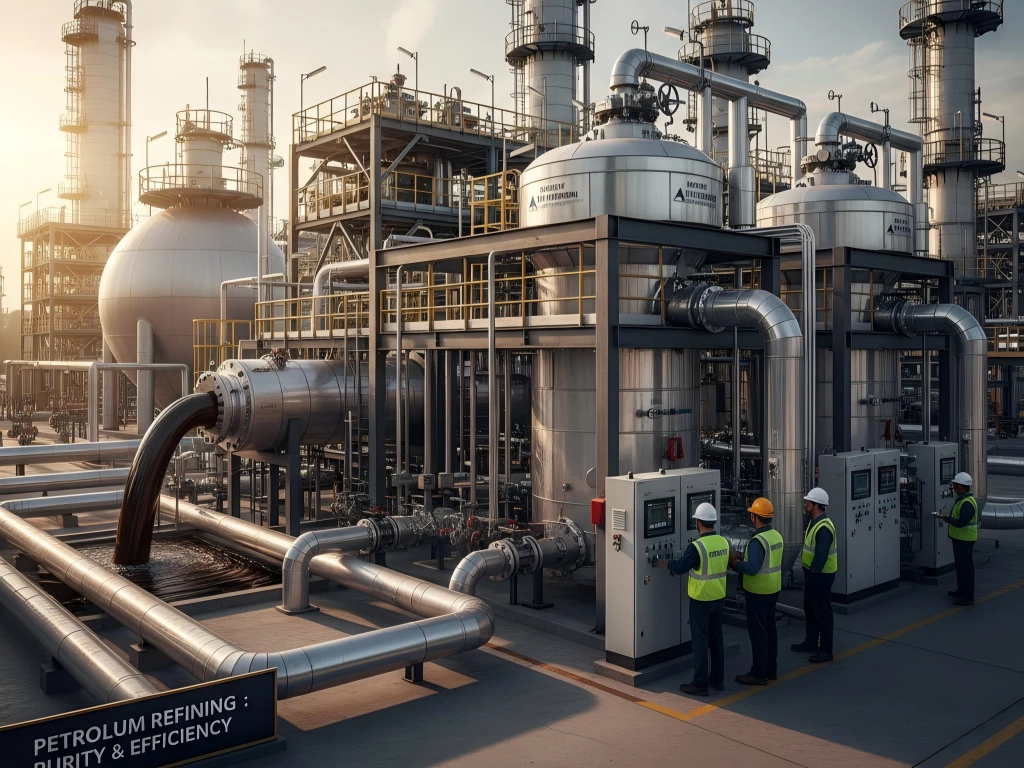
Oil refining is the process of converting crude oil into gasoline, diesel fuel, jet fuel, and chemical raw materials. Because crude oil itself contains sand, metal salts, and coke and catalyst powders produced during processing, filtration technology directly determines the safety of the plant's operations, the lifespan of the equipment, and the purity of the products.
The refining feedstock commonly contains fine coke powder, rustintroduced from upstream processes, and sand and silt inherent in thecrude oil. Because the hydrotreating reactor is filled with extremelyexpensive catalysts, these solid impurities easily adhere to the surface ofthe catalyst particles, forming a "fouling layer," which leads to a sharpincrease in system pressure drop.Industrial filters effectively prevent catalyst "poisoning" or bed cloggingby intercepting these micron-sized impurities under high-pressureconditions. This extends the continuous operating cycle of theequipment (from shutdown for cleaning to the next startup) from a fewmonths to several years, directly saving significant economic lossescaused by production downtime.

During the repeated cycling of the amine solution to absorb hydrogensulfide, degradation products (thermally stable salts) are produced, andsolid particles from the system are absorbed. These impuritiessignificantly alter the surface tension of the amine solution, leading tosevere foaming, causing substantial loss of solvent with the gas, andreducing the efficiency of heat exchangers due to scaling.
The combination of mechanical filtration and activated carbonadsorption effectively removes solid and organic impurities from theamine solution. This not only ensures stable desulfurization efficiencyand avoidsenvironmental compliance risks, but also significantly reducesthe cost of replenishing chemical solvents.


Advanced fuel purification systems at an AVIC testing base provideexceptional water removal and filtration for aviation kerosene. This ensures thetransferred fuel strictly complies with the highest aerospace safety standards.

Industrial hydrocyclone desanding solutions, engineered for harshoffshore conditions, effectively remove solids on CIMC Raffles' deep-water rigsand FPSOs to protect downstream equipment.

Customized lubrication and filtration systems at Shagang Group’s rollingmills effectively eliminate oil impurities. This ensures the long-term safety ofcore bearings and drastically lowers equipment failure rates.

customized high-temperature filtration solution was deployed for JeyOil's thermal oil systems. By effectively intercepting carbon deposits, it preventsequipment scaling and significantly boosts heat exchange efficiency and safety

Advanced filtration systems at Bosch's facilities effectively eliminate waterand particulates from stored diesel. This guarantees ultra-clean fuel and reliableactivation of emergency power systems.

A custom three-phase separator at Kazakhstan's Atyrau Refinery providesefficient gas-oil-water separation under extreme conditions. The systemsignificantly improves feedstock purity and protects downstream operations.


We use cookies to collect information about how you use this site. We use this information to make the website work as well as possible and improve our services.more details