- Filtration accuracy
- 0.1μm - 0.3μm (liquid mist)
- Temperature range
- -20°C - 80°C
- Flow rate
- 50 - 20,000 Nm³/h
- Operating pressure
- 0.6 - 10.0 MPa

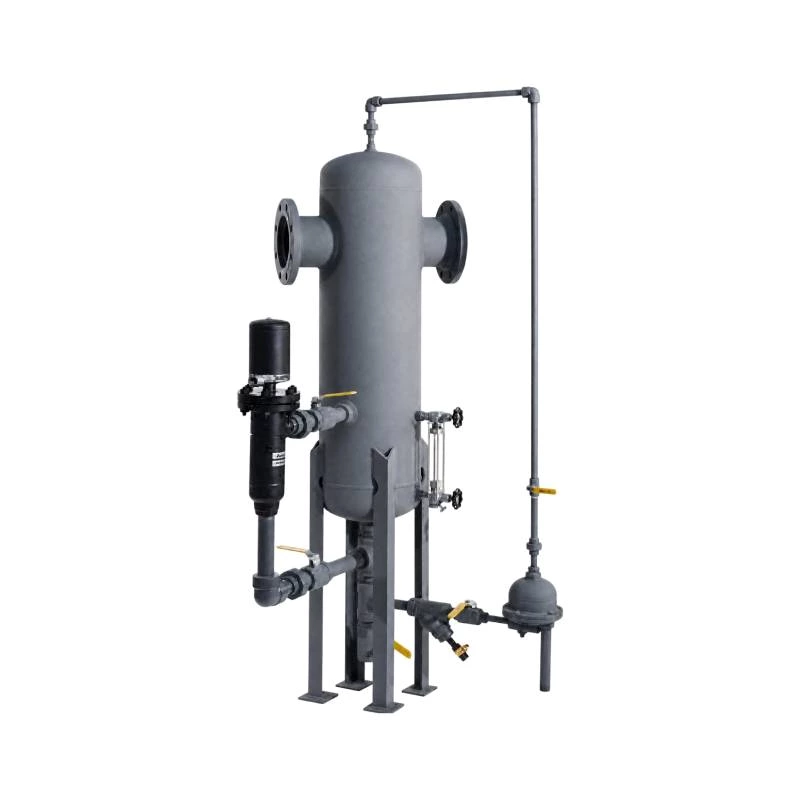
Separator is an advanced industrial separation equipment designed to efficiently remove liquid droplets, solid particles, and other contaminants from gas or liquid streams. By utilizing optimized separation technology, it improves process efficiency, protects downstream equipment, and ensures stable operation in demanding industrial environments.
UNITE gas-liquid separators remove free liquids, liquid droplets and solid contaminants from industrial gas streams. Designed for oil and gas, petrochemical, chemical and power applications, our separators help protect downstream equipment and maintain stable process performance.
For gas streams containing both fine particles and liquid aerosols, UNITE can also provide filter separator and coalescing solutions based on gas composition, flow rate, pressure, temperature and required outlet quality.
Reliable Gas-Liquid Separation
UNITE gas-liquid separators use inlet flow distribution, centrifugal separation and vane-type mist elimination to remove liquid droplets and solid contaminants from gas streams.
The inlet section reduces gas velocity and separates larger droplets and free liquids. The remaining gas then passes through the vane separator, where smaller droplets combine and drain into the collection chamber. A controlled drainage system helps prevent liquid re-entrainment and supports stable continuous operation.
The separator can remove up to 99% of solid and liquid contaminants larger than 10 microns under specified operating conditions. For applications requiring the removal of fine particles, oil mist or aerosols, UNITE can also provide gas filter separators and coalescing solutions.

(A) The gas and liquid entering the vessel are diverted by an inlet baffleto remove large droplets and free-flowing liquid.
(B) The gas and remaining mist then enter a vane separator.
(C) The separated droplets are collected at the bottom of the vanes.
(D) A submerged drain pipe drains the liquid to the bottom of the vessel.
(E) A level gauge controls and monitors the amount of collected liquid forproper drainage from the vessel.


| Pipe Size | Threaded & Skt Weld (A) | Flanged (A) | B | C | D | F | G | NPT Drain (Std / Opt'l) | Thd'd & Socket Weld 1000 psig @ 650 °F | 150 lb Flanged @ 450 °F | 300 lb Flanged @ 650 °F | Liquid Holdup Cap (cu ft/m) |
|---|---|---|---|---|---|---|---|---|---|---|---|---|
| 1 | 6.87 / 174 | 10.5 / 267 | 22 / 559 | 28 / 711 | 5.56 / 141 | - | 7.87 / 200 | 1 / 1-1/2 | 44 / 20 | 47 / 21 | 49 / 22 | 0.19 / 0.0053 |
| 1-1/4 | 6.87 / 174 | 10.5 / 267 | 22 / 559 | 28 / 711 | 5.56 / 141 | - | 7.87 / 200 | 1 / 1-1/2 | 45 / 20 | 50 / 23 | 52 / 24 | 0.19 / 0.0053 |
| 1-1/2 | 7.87 / 200 | 11.5 / 292 | 24 / 610 | 30 / 762 | 6.62 / 168 | 9.12 / 232 | 9.12 / 232 | 1 / 2 | 83 / 38 | 69 / 31 | 75 / 34 | 0.20 / 0.0056 |
| 2 | 7.87 / 200 | 11.5 / 292 | 24 / 610 | 30 / 762 | 6.62 / 168 | 9.12 / 232 | 9.12 / 232 | 1 / 2 | 85 / 39 | 74 / 34 | 78 / 36 | 0.20 / 0.0056 |
| 2-1/2 | - | 16 / 406 | 27 / 686 | 35 / 889 | 8.62 / 219 | 9.12 / 232 | 9.12 / 232 | 1 / 2 | - | 122 / 55 | 132 / 60 | 0.39 / 0.011 |
| 3 | - | 18 / 457 | 30 / 762 | 38 / 965 | 10.75 / 273 | 9.12 / 232 | 9.12 / 232 | 1-1/2 / 2-1/2 | - | 170 / 77 | 180 / 82 | 0.66 / 0.018 |
| 4 | - | 20 / 508 | 36 / 914 | 45 / 1143 | 12.75 / 324 | 10.25 / 260 | 10.25 / 260 | 1-1/2 / 2-1/2 | - | 225 / 102 | 250 / 114 | 1.07 / 0.03 |
| 5 | - | 22 / 559 | 40 / 1016 | 50 / 1270 | 14 / 356 | 10.25 / 260 | 10.25 / 260 | 1-1/2 / 2-1/2 | - | 265 / 120 | 335 / 152 | 1.35 / 0.04 |
| 6 | - | 24 / 610 | 55 / 1397 | 66 / 1676 | 16 / 406 | 10.25 / 260 | 10.25 / 260 | 1-1/2 / 2-1/2 | - | 400 / 182 | 435 / 198 | 3.03 / 0.084 |
| 8 | - | 28 / 711 | 62 / 1575 | 75 / 1905 | 18 / 457 | 11.87 / 301 | 11.87 / 301 | 2 / 3 | - | 545 / 248 | 700 / 318 | 3.83 / 0.107 |
| 10 | - | 34 / 864 | 76 / 1930 | 91 / 2311 | 24 / 610 | 11.87 / 301 | 11.87 / 301 | 2 / 3 | - | 800 / 364 | 1355 / 616 | 6.94 / 0.194 |
A gas filter separator is recommended when a gas stream contains fine solid particles, liquid droplets, oil mist or aerosols that cannot be effectively removed by conventional gas-liquid separation alone.
It is commonly used to protect compressors, gas turbines, dehydration units, amine treating systems, molecular sieve beds, cryogenic equipment, meters and control valves from contamination and liquid carryover.
A gas filter separator is especially suitable when you require:
- Removal of both solid particles and liquid droplets
- Effective separation of fine liquid mist and aerosols
- Higher outlet gas quality for downstream equipment
- Customized filtration based on gas flow, pressure, temperature and contaminant loading
UNITE provides gas-liquid separators, gas coalescers, dry gas filters, vane-type filter separators and cyclonic filter separators for different industrial gas applications.
Talk to Our Engineers to Get a Free, Customized Filtration Solution.
Send us your gas composition, flow rate, pressure, temperature and contaminant information. UNITE engineers will recommend the appropriate separation technology.
A gas-liquid separator is primarily used to remove free liquid and larger droplets from a gas stream. A gas filter separator adds filtration or coalescing elements to capture finer solid particles, liquid aerosols and contamination that may pass through conventional separation equipment.
| Equipment | Main function | Typical duty |
|---|---|---|
| Gas-liquid separator | Removes bulk liquid and larger droplets from gas | Free liquid removal and inlet knockout |
| Gas filter separator | Removes solid particles plus fine liquid droplets or aerosols | Fine gas polishing and downstream equipment protection |
| Gas coalescer | Coalesces fine liquid mist into larger droplets | Oil mist, aerosol and liquid carryover removal |
A gas-liquid separator is industrial equipment designed to remove free liquids, liquid droplets and solid contaminants from gas streams. It helps improve gas quality and protect downstream equipment.
The gas enters the separator through an inlet section that reduces flow velocity and removes larger liquid droplets. The gas then passes through a vane separator, where smaller droplets are collected and drained into the liquid chamber.
A gas-liquid separator can remove free liquids, liquid droplets and solid contaminants from gas streams. The actual separation performance depends on gas composition, flow rate, pressure, temperature, droplet size and particle loading.
A gas-liquid separator mainly removes free liquids and larger droplets. A gas filter separator provides additional filtration for fine particles, liquid mist, oil aerosols and other contaminants that may pass through conventional separation equipment.
Gas-liquid separators are used in oil and gas, petrochemical, chemical processing, power generation and other industrial applications. They are commonly installed to protect compressors, turbines, meters, valves and other downstream equipment.
The selection depends on gas composition, flow rate, operating pressure, operating temperature, liquid and solid loading, allowable pressure drop, required outlet gas quality and available installation space.
Yes. UNITE provides customized gas-liquid separators based on specific process conditions, equipment requirements and project specifications. Send us your process data to receive a suitable separation solution.


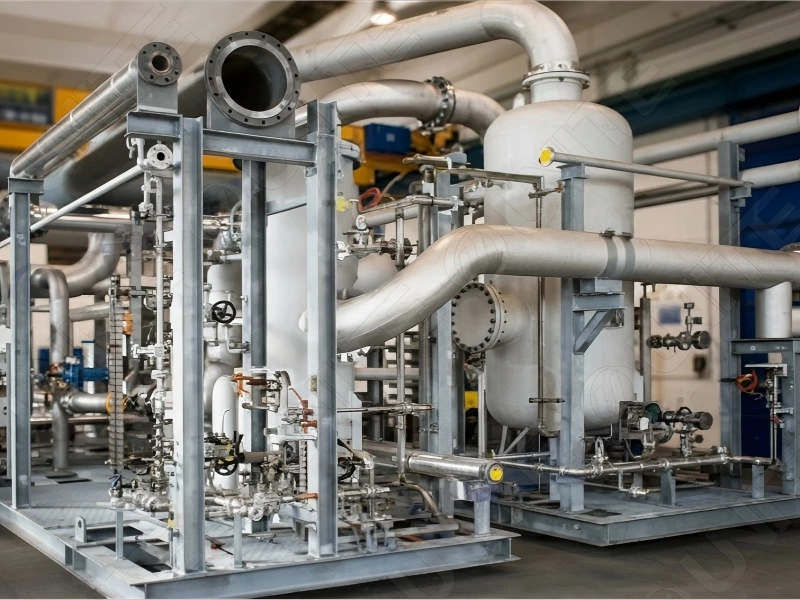
Addressing high-pressure natural gas purification, this integrated systemcombines particulate filtration with coalescing separation to ensure the safeoperation of long-distance pipelines in extreme climates.
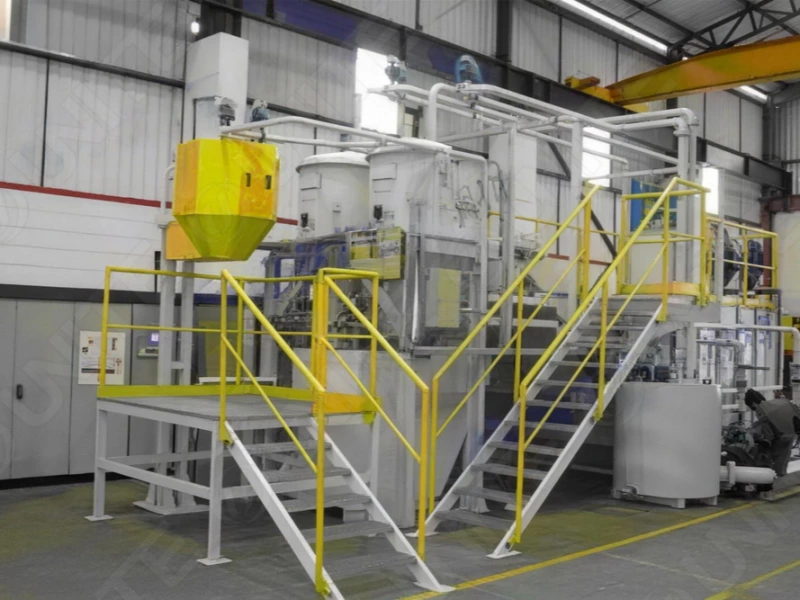
This duplex system ensures continuous water flow via a twin-barrel design, effectively preventing nozzle and equipment clogging caused by high-impurity mine water in both underground and surface operations.


We use cookies to collect information about how you use this site. We use this information to make the website work as well as possible and improve our services.more details