Bosch Group Project: Precision Filtration Solution for Industrial Diesel Storage Systems
Project Background: Maintaining Diesel Quality during Long-Term Storage
As a leading global engineering and technology company, Bosch operates large manufacturing bases and research centers equipped with diesel storage tanks for emergency generator sets and fuel-injection-system performance testing.
During prolonged static storage, diesel fuel can accumulate condensation and support microbial growth, commonly referred to as “diesel bug.” Fuel may also pick up particulate contamination during transportation, transfer, or tank maintenance. These contaminants can threaten the highly precise injectors used in modern high-pressure common-rail systems.
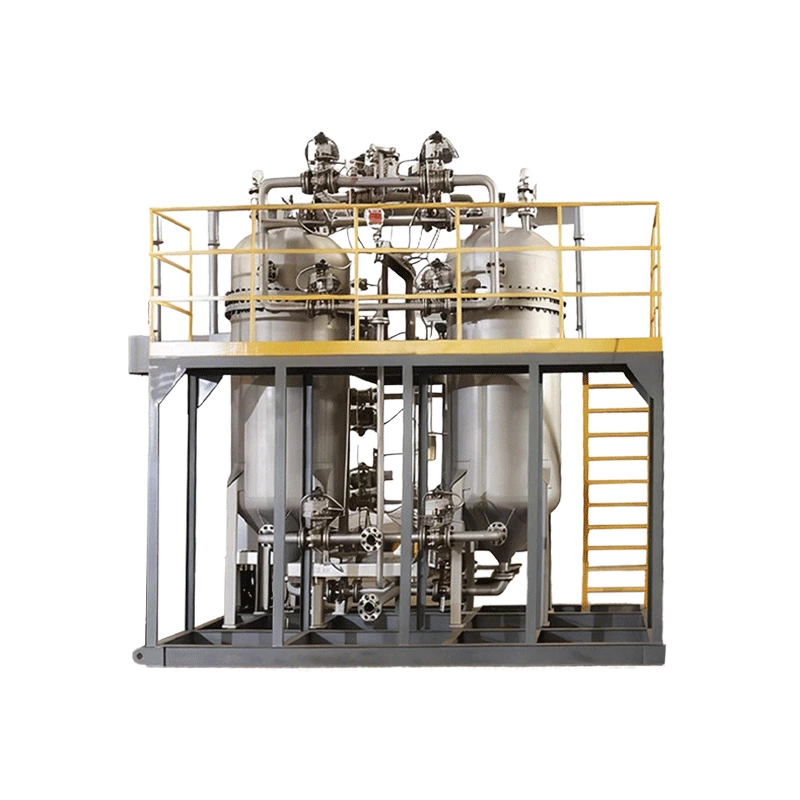
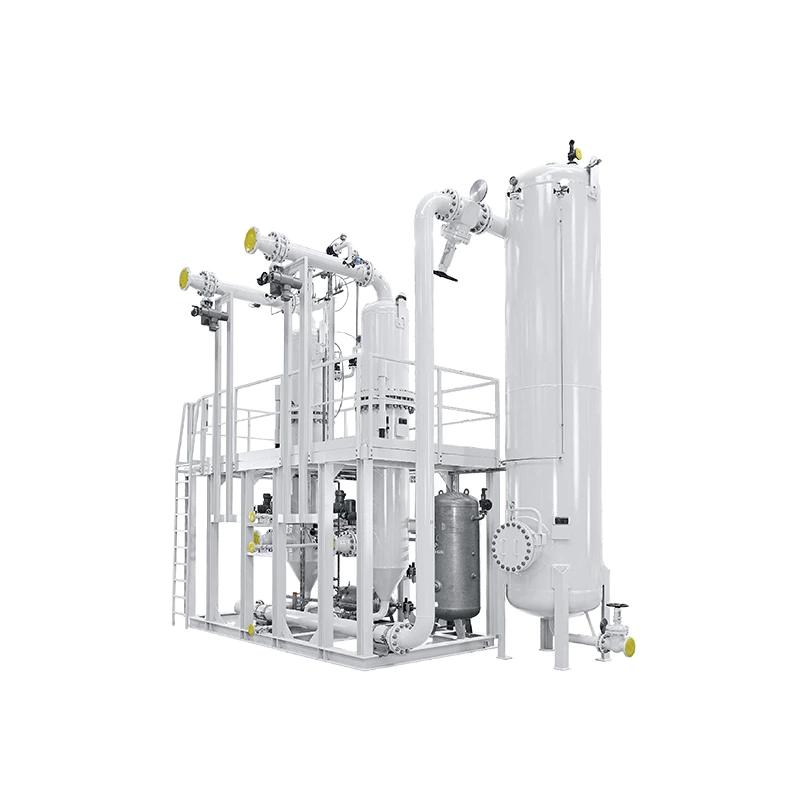
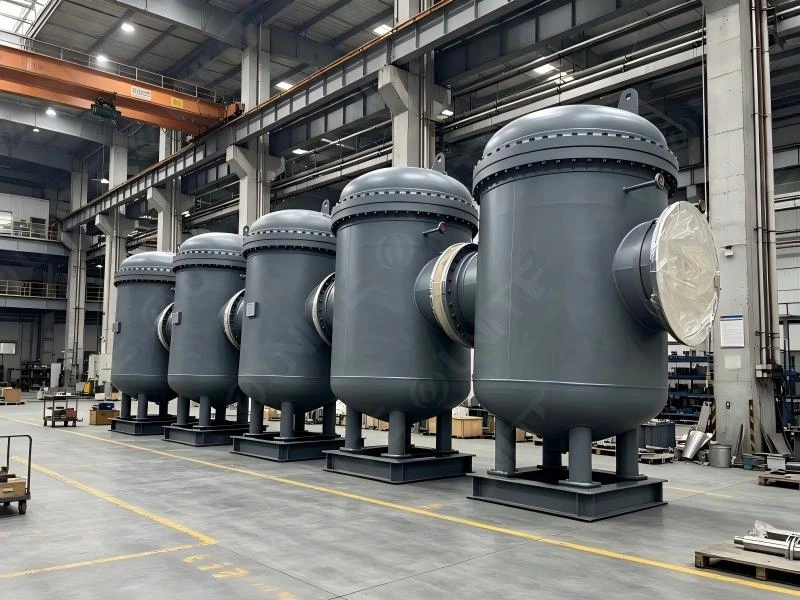
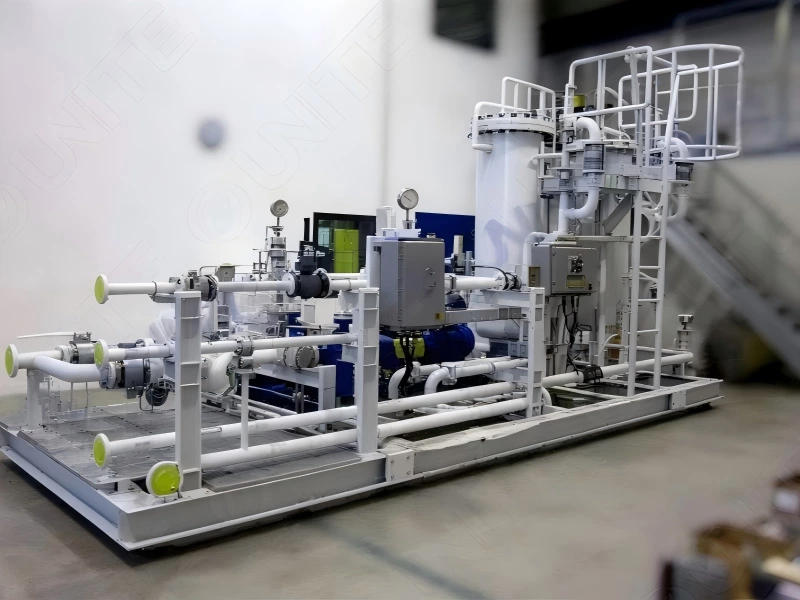
To protect critical generator and fuel-system equipment, Bosch selected an automated diesel purification and filtration unit. The application aligns with UNITE’s oil-refining and refined-petroleum filtration solutions, which focus on controlling water and particulate contamination in petroleum products, protecting downstream equipment, and supporting reliable operation.
Core Challenges
1. Efficient Removal of Free and Emulsified Water
Water contamination can promote fuel-system corrosion and create conditions favorable to microbial growth. The system therefore needed to remove both free water and emulsified water efficiently, keeping the stored diesel within the required quality range.
2. Fine-Particle Interception for High-Pressure Common-Rail Systems
Modern high-pressure common-rail injectors are highly sensitive to particulate contamination. The filtration system needed to stably intercept fine particles above approximately 3–5 μm, according to the project requirements, while maintaining suitable flow and pressure-drop performance.
3. Long-Term Storage Stability
Diesel in standby tanks cannot rely solely on occasional manual sampling. The system required an automatic circulation and purification function that could periodically process the stored fuel, helping maintain consistent quality throughout long storage periods.
4. Explosion-Proof and Fire-Safety Requirements
Because the equipment is installed in fuel-storage areas, the filtration module needed to comply with Bosch’s stringent global requirements for explosion-proof operation and fire safety. The design had to reduce ignition risks associated with sparks, electrical equipment, and static accumulation.
Customized Solution: Automated Diesel Circulation and Purification Module
1. Two-Stage Coalescing Separation for Water Control
The system uses high-efficiency coalescing elements to remove water from the diesel fuel. In the first stage, microscopic water droplets collide with the coalescing media and merge into larger droplets. The second-stage separation elements then help prevent residual water from passing through with the fuel.
This approach supports the production of drier diesel and reduces the risk of water-related corrosion and microbial contamination. It is consistent with the separation principles described in UNITE’s Coalescence-Separation Series, where specialized media are used to separate liquid contaminants and protect sensitive downstream equipment.
The final water-removal performance depends on diesel properties, temperature, flow rate, water concentration, emulsion stability, element design, and operating conditions. The applicable fuel-quality target should be confirmed through site testing and the customer’s fuel-management specification.
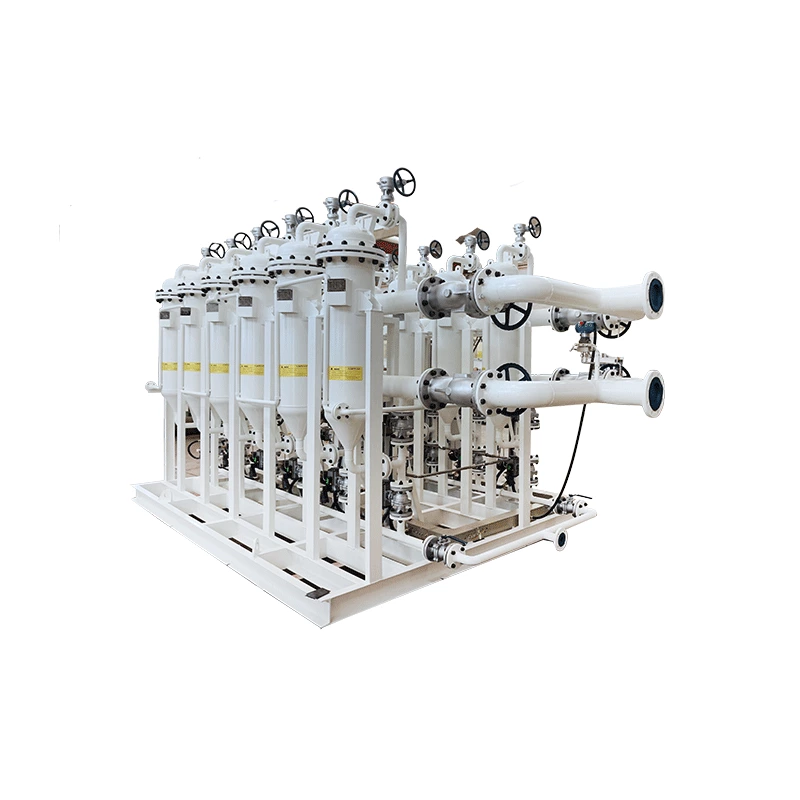
2. Two-Stage Precision Filtration for Particulate Removal
A pre-filter first captures larger particles and protects the downstream fine filter from rapid loading. The fine-filtration stage then uses high-Beta-rated media to retain smaller particles and support a final fuel-cleanliness target of NAS Class 6 or better after circulation, according to the project requirements.
The staged arrangement helps balance contaminant capacity and precision filtration. It also supports the protection of fuel injectors, pumps, valves, and generator components that may be affected by rust, transport debris, tank sediment, or other solid contaminants.
For broader information about UNITE’s industrial filtration equipment and modular process solutions, see the Filtration System Series. The final filter rating, element material, pressure drop, flow rate, and replacement interval should be selected based on the diesel specification and actual contamination profile.
3. Automatic Circulation, Monitoring, and Maintenance Alerts
An integrated PLC control system enables scheduled circulation and purification of the stored fuel. This allows the unit to process diesel at defined intervals rather than waiting for a manual inspection or a fuel-quality problem to develop.
The module is equipped with online moisture sensors and differential-pressure monitoring. These functions track fuel condition and filter loading in real time, provide early warning of contamination or element blockage, and alert operators when filter replacement or maintenance is required.
By combining scheduled circulation with online monitoring, the system helps reduce manual sampling and supports a more predictable fuel-maintenance program. The exact circulation frequency, alarm thresholds, sensor accuracy, and control logic should be configured according to tank volume, fuel turnover, storage duration, and site operating procedures.
4. Explosion-Proof Safety Integration
The complete unit incorporates an explosion-proof design with intrinsically safe instruments and power components. The safety concept addresses potential ignition sources by controlling the selection, installation, and operation of electrical and instrumentation components in the fuel-storage area.
The final hazardous-area classification, equipment protection level, certification documents, grounding and bonding requirements, static-control measures, and fire-safety interfaces must be confirmed for the installation location and applicable regulations. Bosch’s internal global standards should also be verified before final equipment acceptance.
Customer Value and Project Results
Since commissioning, the system has delivered the following reported benefits at Bosch’s diesel-storage facilities:
•Diesel quality remained above engine-manufacturer requirements: Fuel indicators in the storage tanks consistently met or exceeded the applicable engine requirements;
•100% rapid generator start-up success during multiple emergency drills: The generator sets achieved a 100% rapid start-up success rate during the reported emergency power exercises;
•Lower risk of injector fouling and contamination-related repairs: Water and particulate control helped reduce the risk of injector clogging and associated repair costs;
•Reduced manual sampling and maintenance workload: Automatic circulation, online moisture monitoring, and differential-pressure alarms reduced the need for routine manual intervention;
•Improved backup-energy readiness: The system supported more reliable standby diesel management and was adopted by Bosch as a standardized backup-energy configuration for its industrial parks;
•Reliable integrated fuel-security solution: Bosch expressed high satisfaction with the system’s efficiency, automation, and operational reliability.
The reported start-up performance and fuel-quality results are specific to the Bosch project. Actual performance depends on fuel quality, storage duration, tank condition, ambient humidity, contamination loading, circulation schedule, filter configuration, generator design, and emergency-start procedures.
Conclusion
Diesel storage for emergency generators and engine testing requires more than a conventional transfer filter. Long-term storage can introduce water, microbial contamination, sediment, and fine particles that threaten injectors and compromise emergency-power readiness.
The Bosch project combines two-stage coalescing separation, staged precision filtration, automatic fuel circulation, online moisture and differential-pressure monitoring, and explosion-proof safety integration. By continuously managing the quality of stored diesel, the system helps protect high-pressure fuel-injection equipment, reduce manual maintenance, and improve confidence in emergency generator start-up.
If your application involves diesel storage, emergency generators, fuel-injection testing, fuel circulation, water removal, particulate control, or explosion-proof filtration, contact the UNITE engineering team with your tank volume, fuel properties, circulation rate, cleanliness target, and site safety requirements.
Related Pages
•Oil-Refining and Petroleum-Product Filtration Solutions
•Coalescence-Separation Series
•Industrial Filtration System Series
•Bosch Industrial Diesel Storage Filtration Project