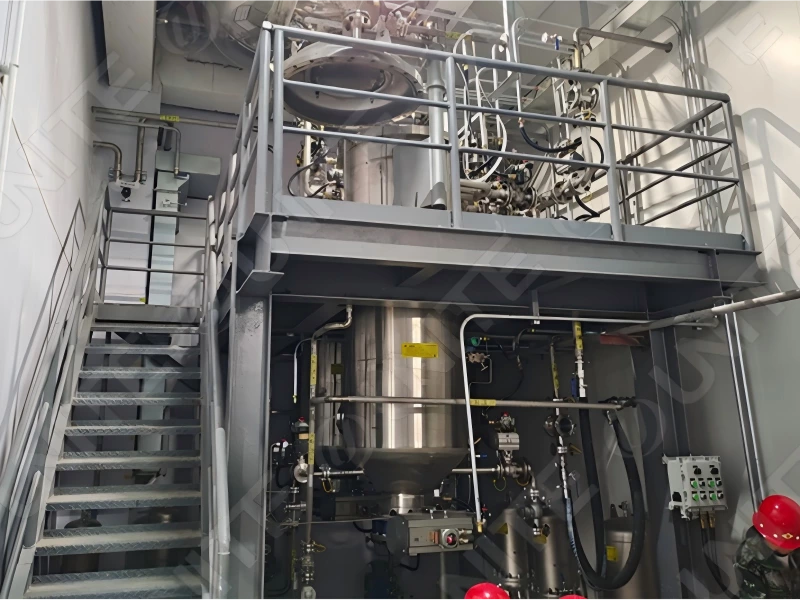
Integrated Skid-Mounted Filtration System for Waste Plastic Catalytic Pyrolysis
Project Background: Solid-Liquid Separation for High-Viscosity Pyrolysis Liquids
Chemical recycling through catalytic pyrolysis can convert mixed waste plastics into valuable hydrocarbon feedstocks. However, the crude pyrolysis liquid produced by the process may contain carbon residues, fine catalyst particles, heavy resinous compounds, and other suspended solids.
The material is also highly temperature-sensitive. When the temperature falls, its viscosity can increase rapidly, making the liquid difficult to transfer and increasing the risk of solidification in filter elements, pipelines, valves, and downstream distillation equipment.
Reliable solid-liquid separation is therefore essential for stable operation. The filtration system must maintain material flowability while removing fine solids and protecting downstream process equipment from fouling, abrasion, and blockage.
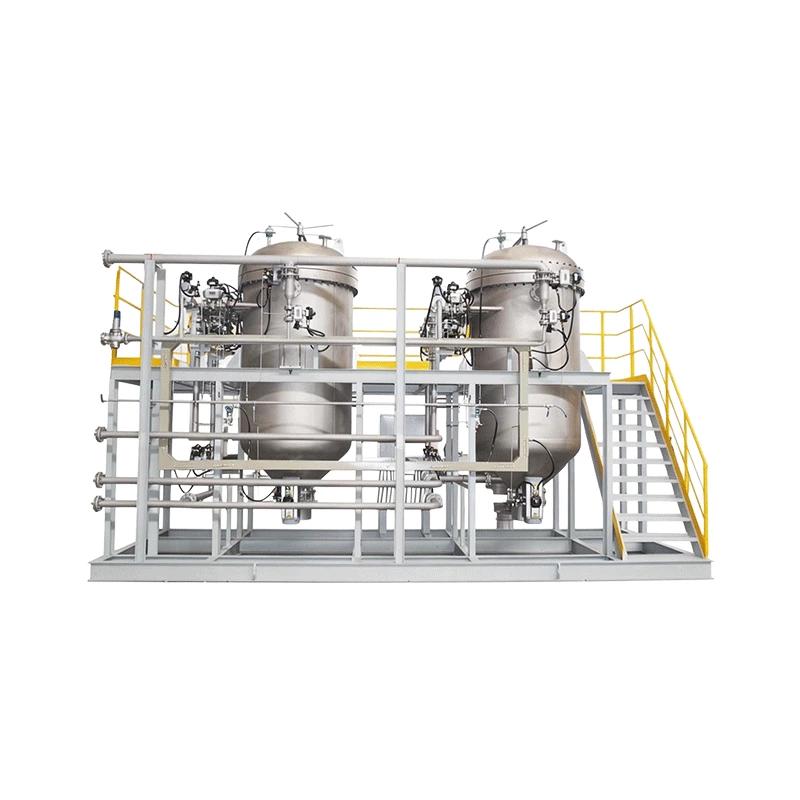
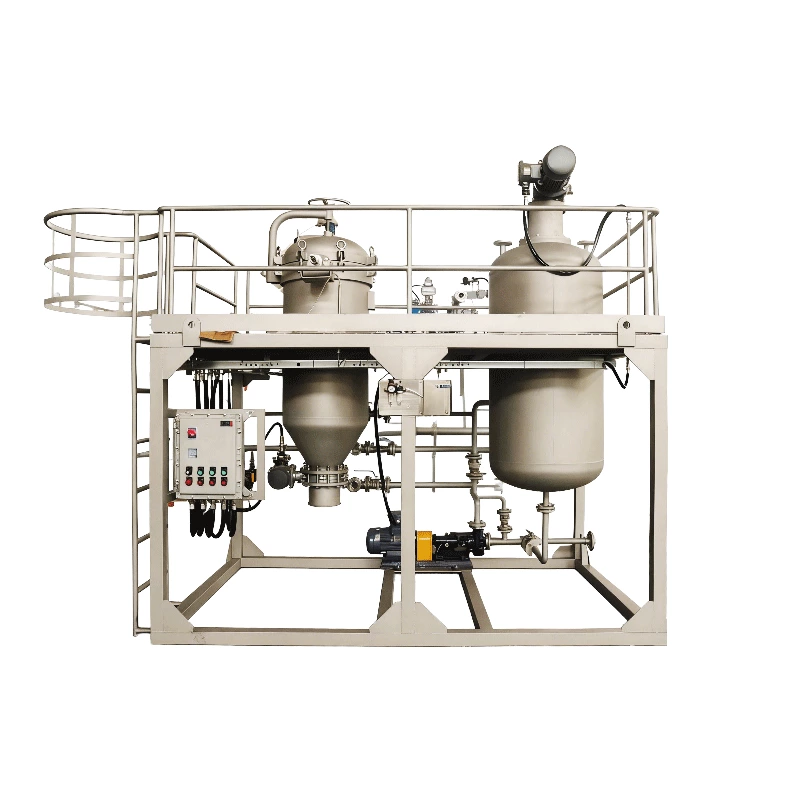
For this application, UNITE designed and manufactured an integrated skid-mounted filtration system centered on a fully enclosed candle filter and precoat filtration process.
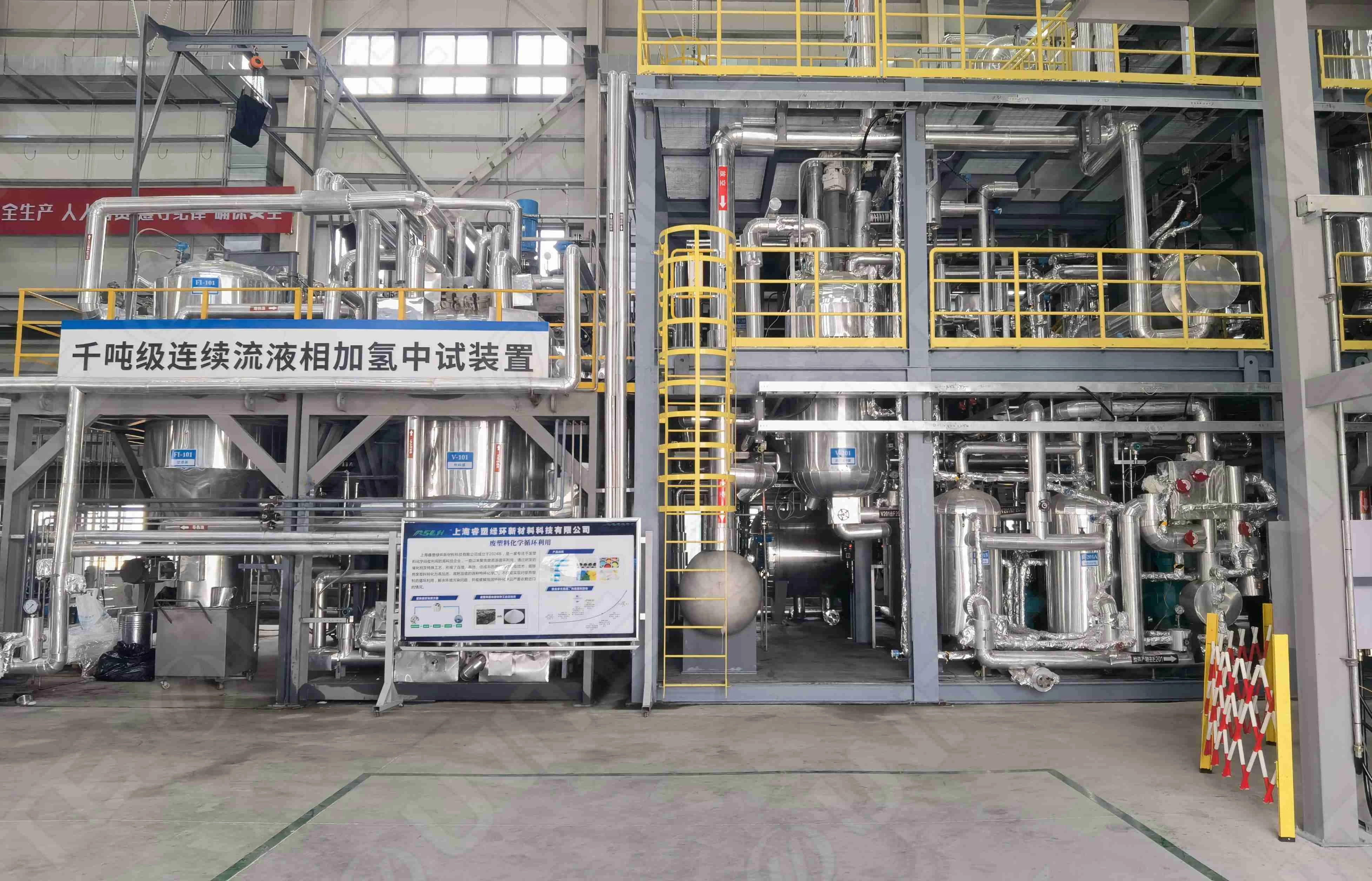
Core Process Challenges
1. High Viscosity and Temperature-Sensitive Material
The crude pyrolysis liquid can become highly viscous or solidify as it cools. Conventional filtration equipment and unheated transfer lines may therefore experience poor flow, filter blockage, or difficult cleaning.
2. Fine Solids and Heavy Organic Residues
Carbon residues, catalyst fines, and heavy resinous materials must be removed before the liquid enters downstream distillation and purification equipment. Inadequate filtration may accelerate fouling, increase pressure drop, and reduce process availability.
3. Enclosed Handling of Hot, Oil-Bearing Filter Cake
The filter cake may contain hot hydrocarbons and recoverable catalyst particles. Manual opening and cleaning can increase the risk of VOC emissions, odor release, operator exposure, and contact between hot combustible material and ambient air.
4. Coordination of Filtration and Supporting Utilities
The application requires more than a standalone filter. Material transfer, heating, temperature control, liquid-level monitoring, differential-pressure monitoring, nitrogen purging, cake treatment, and discharge must operate as one coordinated process package.
Customized Solution: Fully Integrated Skid-Mounted Candle Filter System
UNITE supplied a complete skid-mounted package integrating the main filtration equipment, process vessels, pumps, heating utilities, insulation, instrumentation, control system, and supporting piping.
The system includes:
•Precoat mixing tank
•Fully enclosed candle filter
•Intermediate tank
•Transfer pumps
•Thermal oil heating station
•Electric heating system
•Insulation and heat-tracing structure
•Instrumentation and automatic control system
•Integrated skid platform
The package was factory-prefabricated and integrated by UNITE to reduce on-site installation work and simplify commissioning.
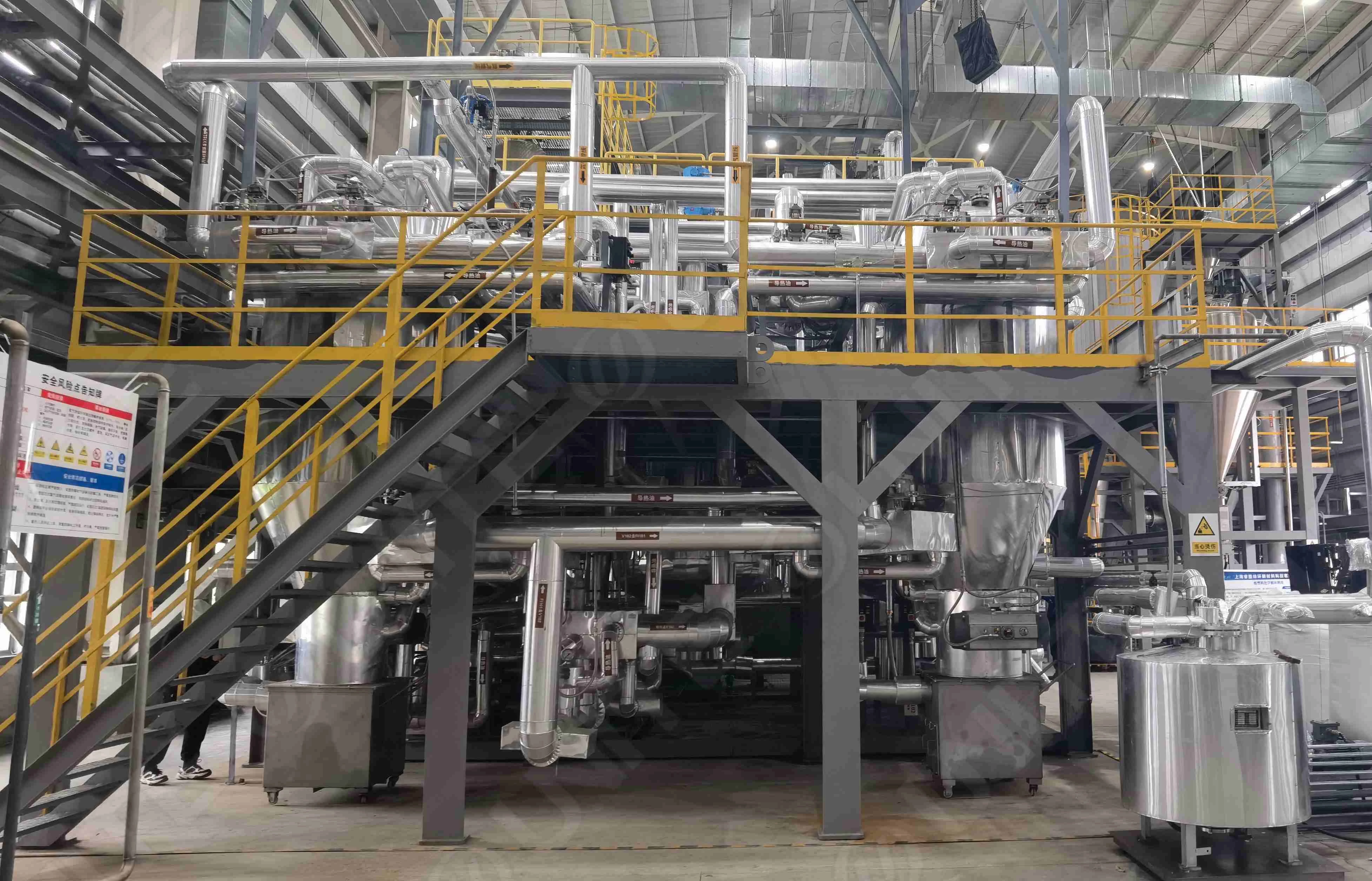
Key System Functions
Constant-Temperature Operation for Improved Flowability
The candle filter vessel is designed with a fully jacketed shell and heads. Together with the skid-mounted thermal oil station, electric heating system, and insulation structure, the system provides continuous heat preservation and temperature control throughout the filtration process.
Maintaining the required operating temperature helps preserve the flowability of the pyrolysis liquid and reduces the risk of material solidification or sticky deposits on the filter elements and internal surfaces. The required operating temperature and heat-transfer configuration should be confirmed through material testing and process design.
Precoat Filtration for Fine Solid Removal
Before filtration, the system forms a precoat layer using a suitable filter aid. This layer supports the tubular filter elements and provides an additional filtration interface for capturing fine carbon residues, catalyst particles, and heavy organic solids.
During filtration, the liquid passes through the filter elements while the solid phase is retained on the element surface and within the precoat layer. The clarified liquid is then collected and transferred to the intermediate tank for downstream processing.
This configuration is intended to improve filtration stability and protect downstream distillation equipment from particulate fouling and blockage. Filter-aid selection, filtration precision, and cycle time require confirmation based on the actual particle-size distribution and liquid properties.
Online Washing and Nitrogen Drying
At the end of the filtration cycle, the filter cake can be treated within the enclosed vessel. The integrated process sequence supports hot-medium washing, nitrogen purging, and drying before cake discharge.
These operations help reduce residual liquid in the cake and prepare the solids for controlled removal. They also reduce the need for manual intervention and avoid opening the filter housing during routine operation.
Automatic Enclosed Cake Discharge
After washing and drying, nitrogen back-blowing loosens the filter cake from the candle elements. The cake is then discharged through the enclosed solids outlet and transferred to a suitable collection or conveying system.
Because the cake remains inside the sealed process boundary during filtration, washing, drying, and discharge, the system helps limit VOC release and odor dispersion. It also reduces the potential for hot, oil-bearing solids to come into contact with ambient air.
Where the process permits, recovered catalyst particles can be collected for return to the process, helping improve material utilization and reduce catalyst consumption.
Integrated Monitoring and Safety Interlocks
The filtration, precoat, washing, drying, and discharge sequences are coordinated through the automatic control system. The skid integrates temperature, liquid level, pressure, and differential-pressure monitoring with the operation of pumps, valves, heating units, and nitrogen systems.
The control logic can provide protective actions under abnormal conditions such as excessive temperature, low liquid level, high differential pressure, abnormal flow, or other process deviations. The final interlock matrix and control philosophy should be confirmed according to the process hazard analysis and project requirements.
Project Value
The integrated system addresses several key filtration and process-integration requirements for waste plastic catalytic pyrolysis:
•Stable handling of high-viscosity liquids: Constant-temperature operation helps maintain material flowability during filtration and transfer.
•Improved front-end clarification: Precoat filtration supports the removal of carbon residues, catalyst fines, and heavy solids before downstream distillation.
•Protection of downstream equipment: Reduced solids carryover helps limit fouling, abrasion, and blockage in subsequent process units.
•Reduced manual cleaning: Automatic cake treatment and enclosed discharge minimize the need to open the filter for routine operation.
•Lower emission and exposure risk: Enclosed processing helps control VOCs, odors, and contact with hot oil-bearing filter cake.
•Potential catalyst recovery: Separated catalyst-containing solids can be collected for possible reuse, subject to process evaluation.
•Simplified project execution: Factory integration on a single skid reduces field installation work and supports faster commissioning.
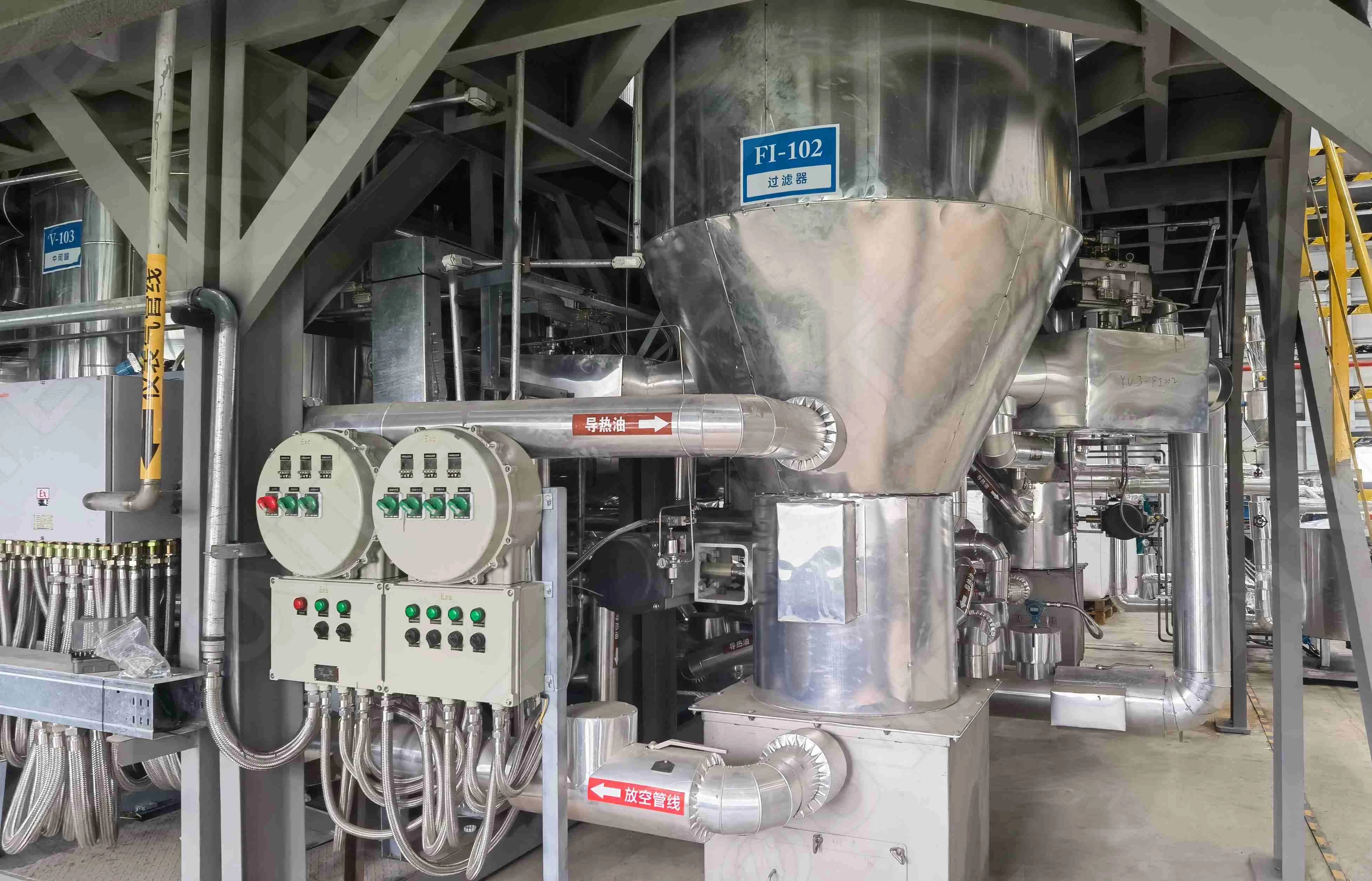
Conclusion
For waste plastic catalytic pyrolysis, the filtration of high-viscosity, solids-laden liquid requires coordinated control of temperature, solid-liquid separation, cake handling, and process safety. A standalone filter may not be sufficient when the process also requires heating, precoat preparation, washing, nitrogen drying, enclosed discharge, and automatic interlocking.
UNITE’s integrated skid-mounted system combines a fully enclosed candle filter with precoat filtration, constant-temperature operation, online cake treatment, automatic nitrogen blowback, and coordinated process control. The solution provides a practical solid-liquid separation package for protecting downstream distillation and purification units while supporting safer and more stable operation.
Actual equipment configuration, filter media, filter-aid type, filtration area, heating duty, pressure rating, operating temperature, and control logic should be finalized through process data review, material testing, and project-specific engineering.
Related UNITE Solutions
•Solid-Liquid Separation Series
•Filtration and Separation Skid-Mounted System