Pressure Leaf Filter vs Candle Filter: Key Differences, Working Principle & Selection Guide
Pressure leaf filters and candle filters are both industrial solid-liquid separation systems widely used in chemical, petrochemical, pharmaceutical, and fine chemical industries. Although they serve similar purposes, they differ significantly in design, filtration mechanism, and application scenarios.
This article provides a detailed comparison to help engineers and buyers choose the right filtration system based on process requirements.
---
1. Overview of Pressure Leaf Filter
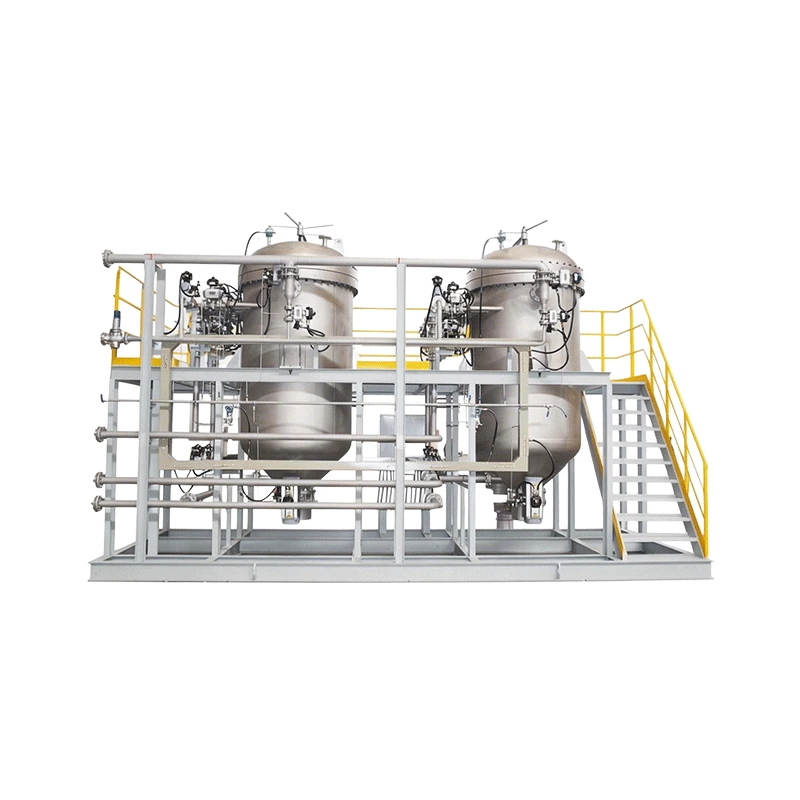
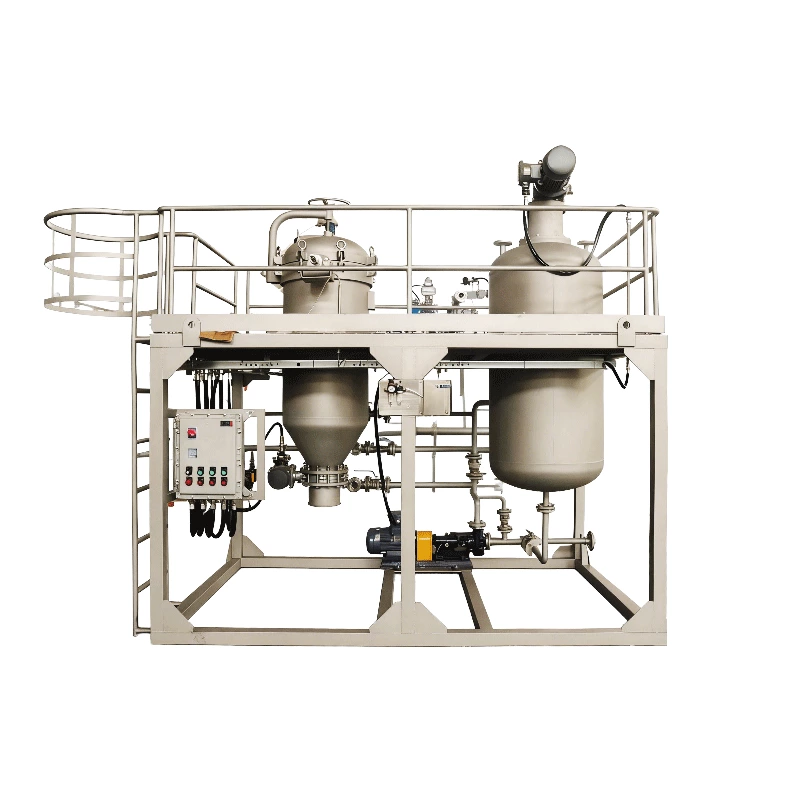
A pressure leaf filter is a batch or semi-continuous filtration system that uses multiple filter leaves installed inside a pressure vessel. The filter leaves are covered with filter media that capture solid particles while allowing clean liquid to pass through.
It is widely used for high-solid-content slurry filtration, such as edible oil, chemical intermediates, and industrial wastewater.
---
2. Overview of Candle Filter
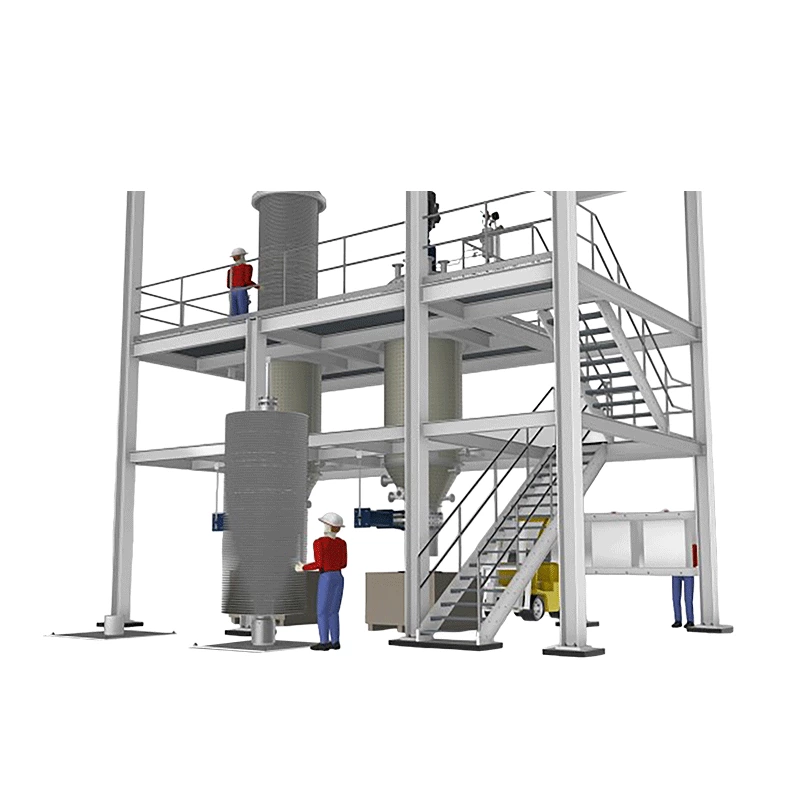
A candle filter is a closed pressure filtration system that uses vertical tubular filter elements (“candle elements”) to achieve high-precision solid-liquid separation. It is especially suitable for fine particles and catalyst recovery applications.
It is commonly used in high-value industrial processes requiring high filtration accuracy and closed-system operation.
---
3. Working Principle Comparison
Pressure Leaf Filter Working Principle
- Slurry is pumped into a sealed vessel
- Liquid passes through filter leaves
- Solid particles form a cake on leaf surfaces
- Filtration continues until cycle completion
- Cake is removed by vibration or blowback
Candle Filter Working Principle
- Slurry enters a pressurized closed system
- Liquid flows through candle filter elements (outside → inside)
- Fine particles are retained on the surface
- A filter cake layer gradually forms
- Cake is discharged via backwash or gas blowback
---
4. Key Differences Between Pressure Leaf Filter and Candle Filter
| Feature | Pressure Leaf Filter | Candle Filter |
|---|---|---|
| Filtration Precision | Medium to High | High to Very High |
| Solid Handling Capacity | High | Medium |
| Particle Size Suitability | Coarse to fine particles | Fine to sub-micron particles |
| System Type | Batch / Semi-continuous | Closed pressure system |
| Automation Level | Medium | High |
| Catalyst Recovery | Limited | Excellent |
---
5. Application Differences
Pressure Leaf Filter Applications
- Edible oil refining and clarification
- Chemical intermediates
- Industrial wastewater treatment
- Bulk slurry filtration with high solids
Candle Filter Applications
- Catalyst recovery systems
- Lithium battery slurry filtration
- Pharmaceutical purification
- Fine chemical production
The most suitable filtration system depends on the process objective. Bulk slurry separation, catalyst recovery, and fine chemical clarification may require different combinations of filtration area, precision, cake handling, and process control. The following sections compare these requirements in more detail.
5.1 Candle Filter vs Pressure Leaf Filter for Catalyst Recovery
Catalyst recovery requires more than simply separating solids from liquid. The filtration system must retain fine catalyst particles, minimize product loss, support cake washing when required, and maintain a controlled process environment. For this reason, candle filters are often evaluated for catalyst recovery applications, while pressure leaf filters may be preferred for higher-solids bulk separation.
A candle filter operates as a closed pressure filtration system. Slurry flows through the filter elements, while catalyst particles are retained on the outer surface of the candle elements and gradually form a filter cake. Depending on the process design, the cake can be washed, dewatered, and discharged by backwash or gas blowback.
This configuration can be useful when the catalyst has a high recovery value or when the process requires fine-particle retention. The closed vessel also helps reduce exposure to the process fluid and can support cleaner operation in chemical and petrochemical applications.
A pressure leaf filter can also be used for catalyst-containing slurries, particularly when the slurry has a relatively high solids concentration or when the main requirement is high solids-handling capacity. Its multiple filter leaves provide a large filtration area and can be suitable for batch or semi-continuous bulk separation.
The better choice depends on the complete process requirement rather than the filter name alone. Key evaluation criteria include:
- Catalyst particle-size distribution
- Catalyst concentration in the slurry
- Required filtrate clarity
- Acceptable catalyst loss in the filtrate
- Filter-cake washing requirements
- Cake discharge method
- Product or solvent recovery requirements
- Need for enclosed operation
- Number of filtration cycles per day
- Cleaning and maintenance requirements
As a general selection principle, a candle filter may be a strong candidate when the process involves fine catalyst particles, high-value solids, or strict containment requirements. A pressure leaf filter may be more suitable for high-solid-content slurries, larger throughput, or cost-sensitive bulk filtration.
Pilot testing or process-specific engineering review is recommended before final equipment selection. Actual performance depends on slurry properties, filter media, operating pressure, cycle time, and cake characteristics.
5.2 Which Filter Is Better for Fine Chemical Clarification?
Fine chemical clarification typically requires the removal of suspended particles while preserving product quality and minimizing contamination. The appropriate filter depends on the target particle size, required filtrate clarity, product value, solvent properties, and the need for a closed process.
Candle filters are commonly considered when clarification requires fine-particle retention or stable operation in a closed vessel. Their tubular filter elements provide a defined filtration surface, and the filter cake can build progressively during the filtration cycle. This makes the system suitable for processes where consistent separation and controlled handling of fine solids are important.
Pressure leaf filters are often considered for clarification duties involving larger liquid volumes or higher solids loading. The filter leaves provide a large filtration area and can handle a broad range of industrial slurries. They may be a practical option for edible oil clarification, chemical intermediates, and other applications where the solids content is significant and extremely fine filtration is not the primary requirement.
When comparing the two systems for fine chemical clarification, engineers should evaluate the following factors:
-
Required filtrate quality
Define the target turbidity, particle carryover, and final clarity rather than relying only on a nominal micron rating. -
Particle-size distribution
Fine particles can affect cake permeability, filtration cycle time, and the pressure drop across the filter medium. -
Slurry concentration and viscosity
High-viscosity or high-solid-content slurries may require a different filter area, pressure, or cake-discharge strategy. -
Product loss and cake washing
If valuable product remains in the filter cake, the system should be evaluated for cake washing, liquid recovery, and residual moisture. -
Containment and contamination control
A closed pressure system can be advantageous when the process involves volatile solvents, hazardous chemicals, or strict purity requirements. -
Cleaning and changeover
The selected design should be compatible with the required cleaning method, production frequency, and material-of-construction requirements. -
Automation requirements
Automatic feeding, backwash, blowback, cake discharge, and process monitoring may reduce operator involvement in repetitive filtration cycles.
In summary, a candle filter is often worth evaluating when fine clarification, closed operation, and controlled solids recovery are important. A pressure leaf filter may be more appropriate when the process involves higher solids loading, larger throughput, or a more economical bulk clarification solution.
Neither filter type is automatically superior for every fine chemical process. A representative slurry test should be used to confirm filtrate quality, cycle time, cake behavior, and cleaning requirements.
5.3 Fundabac-Type Filter vs Candle Filter vs Pressure Leaf Filter
When selecting equipment for industrial solid-liquid separation, buyers may compare a Fundabac-type filter with a conventional candle filter or a pressure leaf filter. These systems can share similar pressure-vessel and filter-cake principles, but their detailed configuration, automation, cake handling, and process integration may differ.
A Fundabac-type system is generally evaluated as a closed candle filtration solution for demanding solid-liquid separation. It may be considered for applications that require fine-particle retention, controlled cake formation, cake washing, liquid recovery, or automated cake discharge.
A conventional candle filter also uses tubular filter elements installed inside a pressure vessel. It is commonly considered for fine filtration, catalyst recovery, pharmaceutical processing, and fine chemical applications. The actual performance depends on the candle-element design, filter medium, operating pressure, cake thickness, and discharge method.
A pressure leaf filter uses multiple filter leaves inside a pressure vessel. It is often selected for high-solid-content slurries, bulk clarification, edible oil processing, chemical intermediates, and industrial wastewater applications. Compared with candle-based systems, it may be better suited to processes where filtration area and solids-handling capacity are more important than very fine particle retention.
The main comparison points are shown below:
| Selection factor | Fundabac-type or candle filter | Pressure leaf filter |
|---|---|---|
| Typical filtration objective | Fine filtration, catalyst recovery, closed clarification | Bulk separation and high-solids filtration |
| Filter elements | Tubular candle elements | Flat or leaf-shaped filter elements |
| Fine-particle handling | Often suitable for fine and very fine particles, depending on the media | Suitable for coarse to fine particles, depending on the media |
| Solids capacity | Medium to high, depending on vessel and cake design | High for many bulk-slurry applications |
| Cake washing | Can be integrated when required by the process | May be available depending on the equipment design |
| Cake discharge | Backwash, gas blowback, or other automated methods | Vibration, blowback, or other mechanical methods |
| Process containment | Closed pressure-vessel operation | Closed pressure-vessel operation |
| Automation | Often selected for highly automated process cycles | Available with manual, semi-automatic, or automatic operation |
| Typical application focus | Catalyst recovery, fine chemicals, pharmaceutical and high-value solids | Edible oils, chemical intermediates, wastewater and bulk slurry filtration |
The comparison should not be based solely on the brand name or equipment category. Buyers should request confirmation of the following technical points:
- Filter area and effective filtration area
- Compatible filter medium and pore or opening characteristics
- Maximum operating pressure and temperature
- Slurry viscosity and solids concentration range
- Expected filter-cake thickness
- Filtration cycle time
- Cake washing and drying requirements
- Filtrate clarity target
- Solvent and chemical compatibility
- Automatic discharge and cleaning sequence
- Materials of construction
- Available test data using the actual process slurry
For catalyst recovery or fine chemical clarification, a Fundabac-type or other candle-filter design may be appropriate when fine-particle retention, closed operation, and controlled cake handling are key priorities. For high-volume filtration with higher solids loading, a pressure leaf filter may provide a more practical solution.
The final selection should be based on process testing and a complete equipment review. The same filter category can produce different results depending on the filter medium, operating conditions, slurry properties, and automation configuration.
For a project-specific recommendation, the slurry composition, solids concentration, particle-size distribution, required filtrate quality, operating temperature, and cake-discharge method should be reviewed together. UNITE’s technical team can help evaluate the appropriate filtration configuration based on the actual process requirements.
---
6. Advantages Comparison
Pressure Leaf Filter Advantages
- High solid handling capacity
- Cost-effective for bulk filtration
- Simple mechanical structure
- Suitable for large-volume processes
Candle Filter Advantages
- High filtration accuracy
- Closed system for safety and purity
- High recovery of valuable materials
- Suitable for high-value processes
---
7. Which One Should You Choose?
Choose a pressure leaf filter when your process involves high solid content, bulk separation, or cost-sensitive filtration applications.
Choose a candle filter when your process requires high precision, catalyst recovery, or closed-system operation with high product value.
---
8. Selection Guide
- Particle size distribution
- Solid concentration in slurry
- Required filtration accuracy
- Process industry type
- Automation requirements
- Material recovery value
---
9. FAQ
What is the main difference between pressure leaf filter and candle filter?
Pressure leaf filters are designed for high-solid bulk filtration, while candle filters are used for high-precision fine filtration and catalyst recovery.
Which filter is better for chemical industry applications?
Both are used in chemical industries, but candle filters are preferred for fine chemical and catalyst recovery processes, while pressure leaf filters are used for bulk separation.
Can a candle filter replace a pressure leaf filter?
In high-precision applications, yes. However, for high-solid bulk filtration, pressure leaf filters are more suitable.
Which system has higher filtration accuracy?
Candle filters generally provide higher filtration accuracy compared to pressure leaf filters.
Contact UNITE's technical team for product selection support and quotation.