How to Choose a Self-Cleaning Filter for Industrial Water and Process Liquids
Choosing the right self-cleaning filter is not simply a matter of matching pipe size or selecting the smallest possible micron rating. For industrial water and process-liquid systems, the correct choice must protect downstream equipment, maintain stable production, and control both maintenance effort and liquid losses. A poorly specified unit can create frequent cleaning cycles, excessive pressure drop, incomplete solids discharge, or unnecessary capital cost.
This guide explains how to select an industrial self-cleaning filter by evaluating the liquid, solids, hydraulic conditions, cleaning mechanism, materials of construction, automation needs, and total lifecycle cost. It is designed for engineers and procurement teams working with cooling water, process water, wash water, wastewater, chemicals, oils, coatings, food liquids, and other industrial fluids.
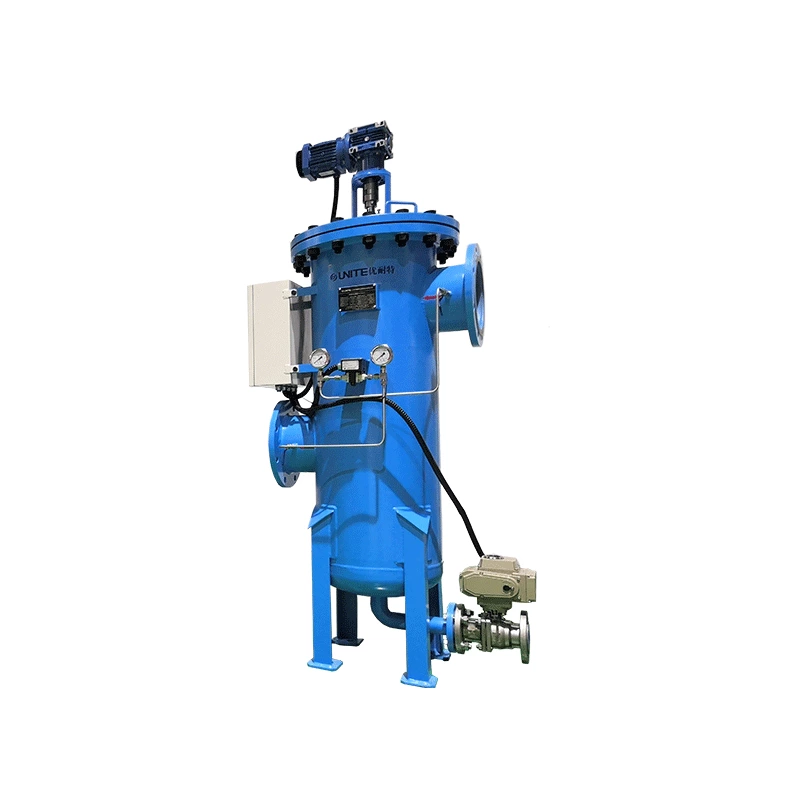
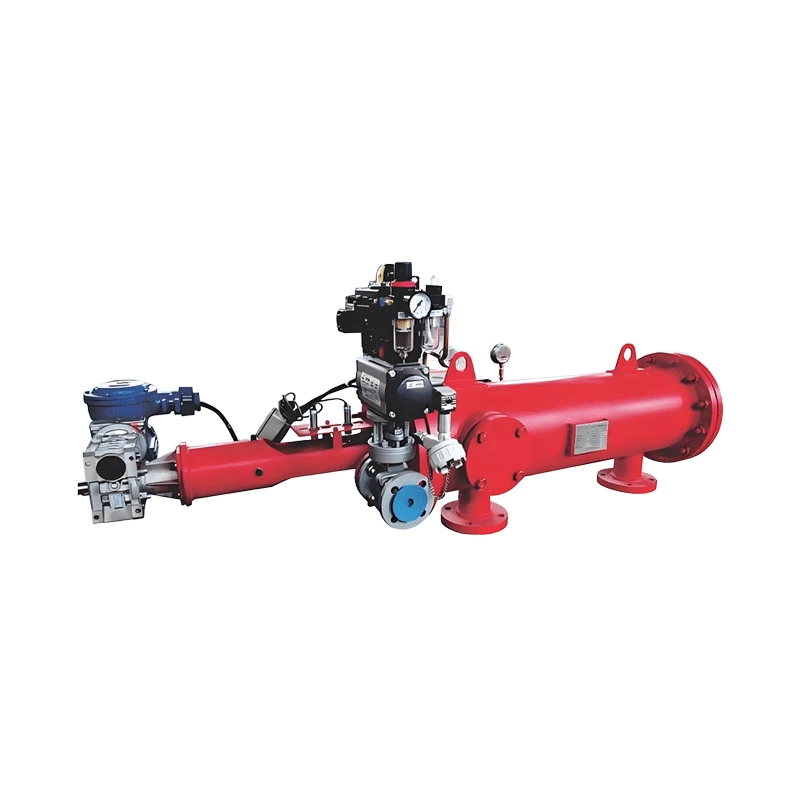
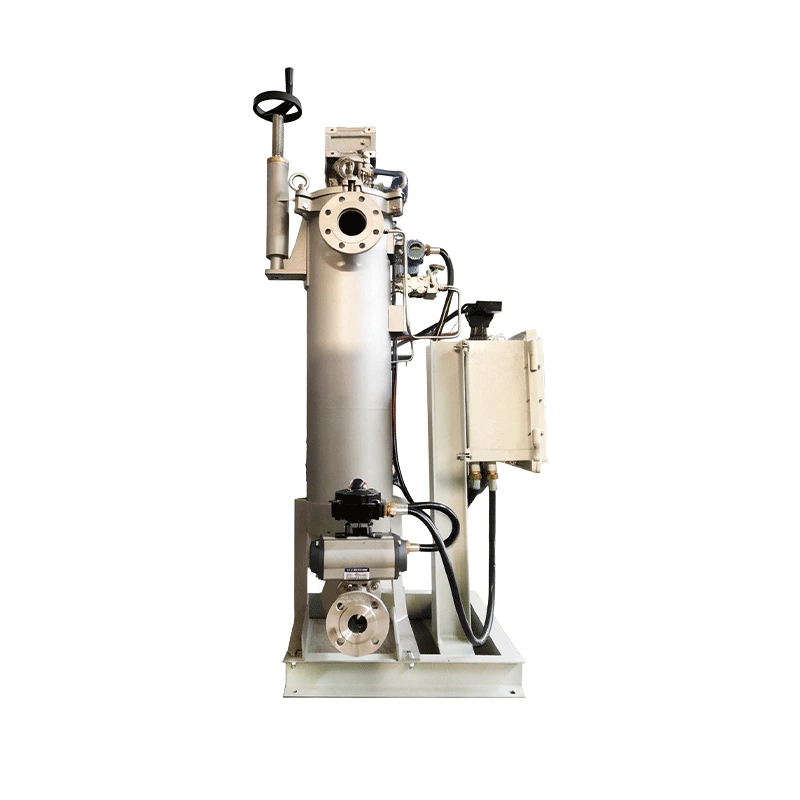
A self-cleaning filter is an inline filtration system that removes retained solids from its screen automatically or mechanically, allowing the process to continue with far less manual intervention than a conventional basket, bag, or cartridge filter. In scraper-style systems, internal wipers clean the screen while contaminants move to a collection and discharge zone.
Start With the Process Objective, Not the Filter Catalog
The first selection question is not, “Which filter model should we buy?” It is, “What must the filtration system accomplish?” In most plants, the answer falls into one or more of four objectives: protecting pumps and control valves, preventing heat-exchanger fouling, maintaining product quality, or enabling water reuse. Each objective leads to a different balance between particle retention, flow continuity, pressure loss, and discharge strategy.
For example, a cooling-water loop may need to stop debris from plugging nozzles or exchanger passages, while a paint or resin process may need to remove gels, fibers, and agglomerates without damaging a valuable, viscous product. Both applications can use self-cleaning technology, but their filtration ratings, cleaning mechanisms, and material specifications will likely differ.
| Process objective | Typical risk to control | Selection priority | Common filter approach |
| Pump and valve protection | Damage, clogging, wear | Reliable coarse particle removal | Backwash or suction-scanner filter |
| Heat exchanger protection | Fouling and restricted passages | Controlled particle size and low pressure drop | Automatic screen filter with differential-pressure control |
| Product quality | Visible contamination, agglomerates, foreign matter | Consistent cut point and hygienic or chemical-compatible design | Scraper or wiper filter, often with fine screen |
| Water reuse or recirculation | Accumulating suspended solids | Continuous operation and manageable reject stream | Backwash or hybrid self-cleaning filter |
1. Characterize the Liquid and the Contaminants
A filter should be specified around real operating conditions rather than nominal conditions. Collect samples, review operating data, and speak with production personnel before setting a micron rating. The most important data are liquid type, temperature, viscosity, chemical composition, solids concentration, particle-size distribution, and contaminant behavior.
Particle behavior matters as much as particle size. Sand, metal chips, and hard mineral particles are generally easier to remove than sticky gels, fibers, biological growth, or deformable solids. Fibrous and tacky contaminants can bridge a screen or resist hydraulic flushing. In such cases, a mechanically cleaned scraper or wiper design may be more appropriate than a backwash-only design.
| Parameter to define | Why it matters | Practical question to ask |
| Liquid chemistry | Determines corrosion resistance and seal compatibility | Is the liquid neutral water, solvent, acid, alkali, brine, oil, or a mixed process stream? |
| Temperature | Changes viscosity, seal limits, and pressure rating | What are the normal, maximum, and upset temperatures? |
| Viscosity | Influences pressure drop and screen-cleaning effectiveness | Does viscosity change with temperature or batch composition? |
| Solids loading | Drives cleaning frequency and discharge volume | What are the average and worst-case suspended-solids levels? |
| Particle size and shape | Determines the screen opening and cleaning method | Are contaminants granular, fibrous, gelatinous, abrasive, or compressible? |
| Product value | Determines whether backwash loss is acceptable | Can the discharge be wasted, recovered, or returned to the process? |
2. Set the Correct Flow Rate and Sizing Basis
Use the normal flow rate, peak flow rate, and minimum flow rate when sizing an automatic self-cleaning filter. A unit sized only for average flow may become a restriction during pump changeover, batch transfer, or seasonal water-demand peaks. Conversely, extreme oversizing may reduce screen-surface velocity and make some cleaning mechanisms less effective.
Request performance data at the actual liquid viscosity, screen opening, and expected flow. Do not treat a catalog’s “maximum flow” as a continuous process rating. The required hydraulic margin should be agreed with the supplier after considering process variability, future expansion, and the need to keep velocity in the preferred operating range for the selected design.
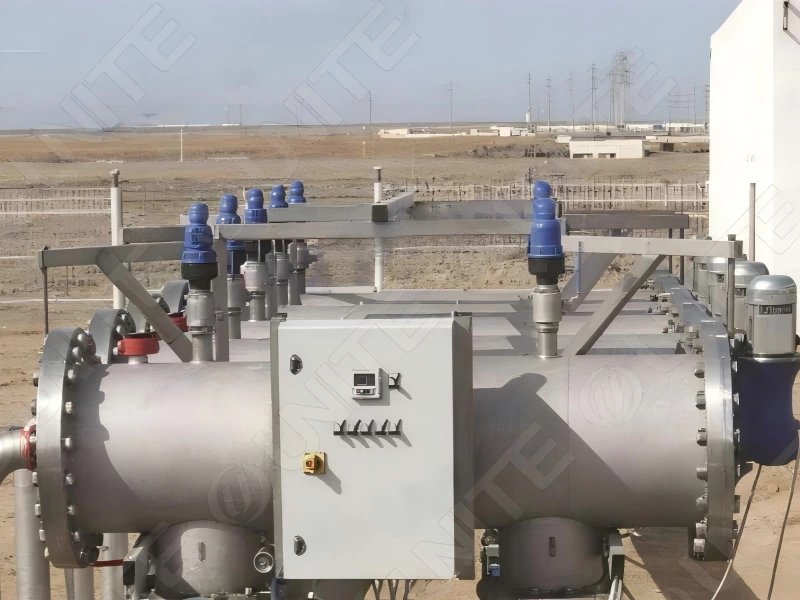
High-flow designs are available for very large utility systems; one manufacturer, for example, cites systems up to 200,000 L/h. This illustrates why flow capacity should be verified by model and configuration rather than assumed from pipe diameter alone.
Selection principle: Size for the worst credible operating condition, then confirm that the selected unit still provides acceptable cleaning performance at the lowest normal flow.
3. Choose a Micron Rating That Protects the Process Without Overfiltering
A finer screen does not always mean a better self-cleaning filter. Reducing the screen opening generally increases clean pressure drop, raises the probability of screen blinding, and can increase cleaning frequency. The correct filtration rating is the coarsest opening that reliably protects the downstream equipment or meets the product-quality requirement.
Start with the smallest relevant downstream restriction, such as a spray-nozzle orifice, heat-exchanger passage, valve trim, membrane pretreatment limit, or product-specification limit. Then validate the proposed screen opening against a particle-size analysis of the incoming liquid. A sample taken only during clean operation may be misleading; include startup, upset, and seasonal conditions where possible.
Supplier guidance commonly frames the decision around the relationship between flow rate, filtration accuracy, and allowable pressure loss, and notes that downstream equipment and particle-size distribution should inform the filtration rating. Treat published micron ranges as application-dependent engineering guidance, not as a substitute for testing your liquid.
| Filtration target | Typical purpose | Key trade-off |
| Coarse protection | Keep large debris away from pumps, valves, and large exchanger channels | Lower pressure drop, but smaller solids may pass |
| General industrial-water control | Protect cooling circuits, wash systems, and recirculation loops | Balance screen life and equipment protection |
| Fine process protection | Control fine contaminants before sensitive equipment or quality-critical stages | More cleaning demand and greater risk of product loss |
| Product polishing | Improve visual quality or remove agglomerates from process liquids | Requires careful validation of product shear, recovery, and cleanability |
4. Separate Pressure Rating From Allowable Pressure Drop
Pressure requirements are often misunderstood during filter selection. The pressure rating is the maximum pressure that the housing, connections, and seals can safely withstand. The pressure drop is the operating loss across the clean or dirty screen. These are different design values and must be evaluated separately.
Define the normal and maximum line pressure, upstream surge conditions, and the maximum allowable differential pressure across the filter. Then confirm the clean pressure drop at maximum flow and the cleaning trigger setpoint. Differential-pressure control is valuable because it initiates cleaning when the screen loads with solids, while time-based cleaning can be useful as a secondary safeguard where fouling is highly variable.
Ensure that the drain or reject path is also engineered. A self-cleaning filter can only clean effectively if its discharge valve, drain line, and destination can accept the solids-bearing liquid. Back pressure, inadequate drain capacity, or a poorly routed discharge line can prevent complete cleaning even when the filter itself is correctly sized.
5. Match the Cleaning Mechanism to the Fluid
The cleaning mechanism should match both liquid properties and contamination type. Backwash filters use a portion of filtered liquid to flush solids from the screen. Suction-scanner designs clean a localized area of the screen and can reduce the volume of cleaning liquid. Scraper and wiper filters use mechanical action, making them particularly useful where contaminants are sticky, fibrous, or associated with higher-viscosity liquids.
Different technologies can also affect process continuity. Some units clean while filtration continues, whereas other configurations may create a brief flow disturbance or require a standby arrangement. Confirm this behavior before purchase if uninterrupted flow is essential.
| Cleaning mechanism | Best suited to | Advantages | Points to verify |
| Backwash | Low-viscosity water and relatively free-flowing solids | Familiar approach; suitable for many utility-water duties | Backwash volume, pressure availability, drain capacity |
| Suction scanner | Water systems where low flush volume is important | Localized cleaning and potentially lower reject volume | Minimum driving pressure and scanner reliability |
| Mechanical scraper or wiper | Viscous, sticky, fibrous, or product-sensitive liquids | Physical removal of deposits; can support continuous process filtration | Seal design, wear parts, product shear, cleaning access |
| Hybrid system | Variable water quality or difficult solids | May combine mechanisms for greater operating flexibility | Control complexity and maintenance plan |
Scraper-based systems are used across water, high-viscosity products, and aggressive chemical services; suppliers specifically identify flow rate, viscosity, contaminant type, and industry requirements as core selection considerations. For a demanding or high-value process liquid, a pilot trial using actual fluid is usually more valuable than selecting solely from published ratings.
6. Specify Materials, Seals, and Connections for the Real Environment
The wetted housing, screen, shaft, scraper, gaskets, and valve internals must all be compatible with the process fluid and cleaning chemicals. Stainless steel is common for many water and process duties, but chlorides, acids, caustics, solvents, high temperatures, and abrasive solids may require higher-alloy materials, engineered polymers, special elastomers, or hard-facing.
Material selection should also include external conditions. An outdoor coastal installation may need different corrosion protection from an indoor skid. Food, beverage, pharmaceutical, and other sanitary applications can require smooth internal finishes, drainability, validated clean-in-place capability, and hygienic connection standards.
| Specification area | What to include in the request for quotation |
| Wetted materials | Housing, screen, scraper/wiper, shaft, valve internals, and fasteners |
| Elastomers and seals | Process compatibility, temperature range, cleaning-chemical compatibility, and replacement availability |
| Connections | Pipe size, flange or hygienic standard, pressure class, orientation, and space for removal |
| Surface and hygiene | Required finish, drainability, clean-in-place expectations, and documentation needs |
| Hazardous or regulated area | Electrical classification, grounding, control enclosure rating, and required certifications |
7. Define Controls, Instrumentation, and Maintenance Expectations
A self-cleaning filter should be treated as a process asset, not a passive pipe fitting. At minimum, specify differential-pressure monitoring, cleaning initiation logic, discharge-valve actuation, alarm limits, and a way to verify that cleaning has occurred. For critical duties, integrate status signals with the plant control system and consider instrumentation for inlet/outlet pressure, flow, discharge events, and motor torque where relevant.
Automatic operation reduces routine manual work, but it does not eliminate maintenance. Screen inspection, seals, scraper elements, valves, actuators, and sensors still need planned service. Select a design with accessible wear parts, local technical support, and a realistic spare-parts list. This is especially important when the filter is installed upstream of production-critical equipment.
8. Compare Lifecycle Cost, Not Purchase Price Alone
The least expensive filter can become the most expensive option if it discharges excessive product, requires frequent intervention, or fails to protect downstream assets. Compare the total cost of ownership over the intended service life. Include capital cost, installation, energy loss from pressure drop, backwash or reject volume, labor, replacement elements, spare parts, downtime exposure, and disposal cost.
Self-cleaning filters can reduce reliance on disposable bags and cartridges, but the actual savings depend on the application, cleaning efficiency, and maintenance strategy. A lifecycle comparison should therefore use your plant’s labor rate, water value, product value, waste-treatment cost, and downtime cost rather than generic savings claims.
| Lifecycle-cost item | Why it should be quantified |
| Clean pressure drop | Affects pump energy and available pressure for downstream equipment |
| Cleaning-liquid or product loss | Can create direct utility, product, and waste-treatment costs |
| Manual intervention | Affects labor, safety exposure, and process consistency |
| Consumables and wear parts | Determines ongoing maintenance cost and stock requirements |
| Unplanned downtime | Often exceeds the filter purchase price in production-critical service |
| Downstream protection | Captures avoided repair, cleaning, and efficiency-loss costs |
A Practical Self-Cleaning Filter Selection Checklist
Before requesting quotations, prepare a concise application data sheet. This allows suppliers to recommend a filter configuration that can be compared on an equal basis and tested against the same duty conditions.
| Information to provide | Required detail |
| Flow conditions | Normal, minimum, peak, and future-design flow rates |
| Liquid data | Composition, density, viscosity, temperature, pH, and chemical additives |
| Solids data | Concentration, particle-size distribution, shape, abrasiveness, stickiness, and fibers |
| Filtration goal | Downstream equipment to protect or product-quality target |
| Hydraulic limits | Line pressure, surge pressure, allowable clean and dirty pressure drop |
| Cleaning requirements | Preferred trigger, permissible discharge volume, drain destination, and recovery needs |
| Mechanical constraints | Pipe size, connection standard, orientation, footprint, lifting access, and bypass arrangement |
| Automation requirements | Power supply, control signals, alarms, control-system integration, and area classification |
| Compliance requirements | Material certificates, sanitary expectations, site standards, and documentation |
Frequently Asked Questions
What is the difference between a self-cleaning filter and a self-cleaning strainer?
The terms are often used interchangeably in industrial applications. “Strainer” commonly implies coarse removal of larger debris, while “filter” may be used for finer or more process-critical particle control. The correct term matters less than documenting the required screen opening, solids characteristics, flow, pressure limits, and cleaning method.
Can a self-cleaning filter replace bag filters or cartridge filters?
In many continuous or high-solids applications, it can. However, the self-cleaning unit must achieve the required filtration rating and product-quality result without unacceptable pressure loss or discharge loss. For ultra-fine polishing or intermittent low-volume duties, bags or cartridges may still be the better fit.
Are self-cleaning filters suitable for viscous liquids?
Yes, but the cleaning mechanism is critical. Viscous, sticky, fibrous, or gel-like fluids often benefit from a mechanical scraper or wiper configuration rather than a conventional water-backwash design. Validate the system using the actual process liquid whenever possible.
What data does a supplier need to size an automatic self-cleaning filter?
Provide normal and peak flow, fluid properties, temperature, line pressure, maximum acceptable pressure drop, solids loading, particle-size information, target micron rating, pipe connections, drain constraints, and controls requirements. A representative liquid sample or pilot test can substantially improve confidence for difficult applications.
Conclusion: Select for Stable Process Performance
The right industrial self-cleaning filter protects equipment and product quality while keeping filtration stable under real operating conditions. Begin with the process objective, characterize the fluid and solids, set the filtration target based on downstream risk, and then match the cleaning mechanism, materials, controls, and reject handling to the application.
The strongest procurement specifications do not ask for a generic “automatic filter.” They define the full duty: flow range, liquid properties, contaminant profile, required retention, pressure limits, discharge requirements, materials, controls, and acceptance criteria. That approach makes it far more likely that the installed system will deliver reliable, cost-effective filtration over its operating life.
References
[1] Self-Cleaning Filter vs Backwash Filter
[2] What Is a Self-Cleaning Filter? Working Principle, Types & Applications