Automatic Backwash Filter Selection Checklist for Industrial Applications
Choosing an automatic backwash filter is not only a matter of selecting a flow rate or micron rating. The filter must match the process duty, solids characteristics, cleaning conditions, available utilities, and maintenance requirements.
This checklist helps engineers collect the essential information before requesting an automatic backwash filter quotation or confirming an equipment configuration.
1. Identify the Purpose of Filtration
Begin by defining what the filter must achieve in the process. An automatic backwash filter may be used to:
- Protect pumps, heat exchangers, membranes, spray nozzles, or other downstream equipment.
- Remove suspended solids from industrial water.
- Reduce debris entering a process system.
- Maintain continuous filtration with limited manual intervention.
- Recover or separate valuable solids from a liquid stream.
The filtration objective determines the required retention target, filter configuration, cleaning method, and acceptable pressure loss.
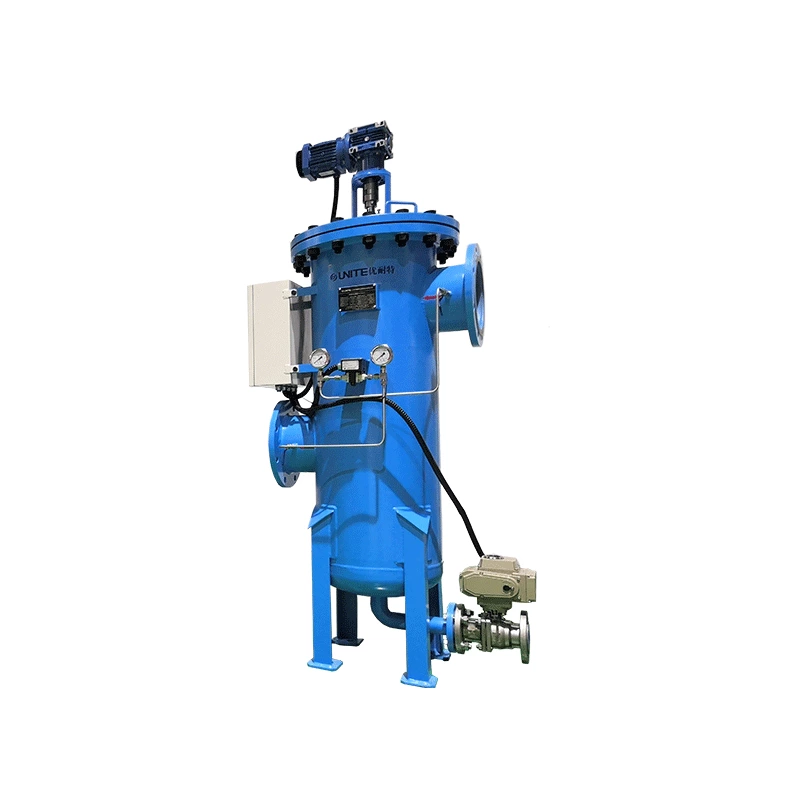
Automatic backwash filters are commonly used in industrial water treatment applications, cooling-water systems, process-water lines, and other continuous filtration duties.
Before selecting the equipment, record:
- The downstream equipment being protected.
- The maximum particle size or solids level permitted after filtration.
- Whether the filter is used as a prefilter or final filtration stage.
- Whether filtration must continue during the cleaning cycle.
- The consequences of temporary flow reduction or filtration failure.
2. Record the Actual Operating Flow
Flow rate is an important design input, but one flow value is usually not enough for reliable equipment selection.
Provide the following information:
| Flow condition | Information to provide |
|---|---|
| Normal flow | The typical operating flow through the filter |
| Minimum flow | The lowest expected operating flow |
| Maximum flow | The highest regular process flow |
| Upset flow | Any short-term or abnormal flow condition |
| Operating pattern | Continuous, intermittent, batch, or variable operation |
| Future demand | Expected production or capacity changes |
The filter should be evaluated under realistic operating conditions rather than only under a theoretical maximum flow. Fluid viscosity, temperature, solids loading, and allowable pressure drop may affect the required filter size and arrangement.
If uninterrupted flow is essential, also specify whether the system requires:
- Parallel filters.
- A duty-and-standby arrangement.
- A bypass line.
- A buffer tank.
- A cleaning sequence that temporarily reduces flow.
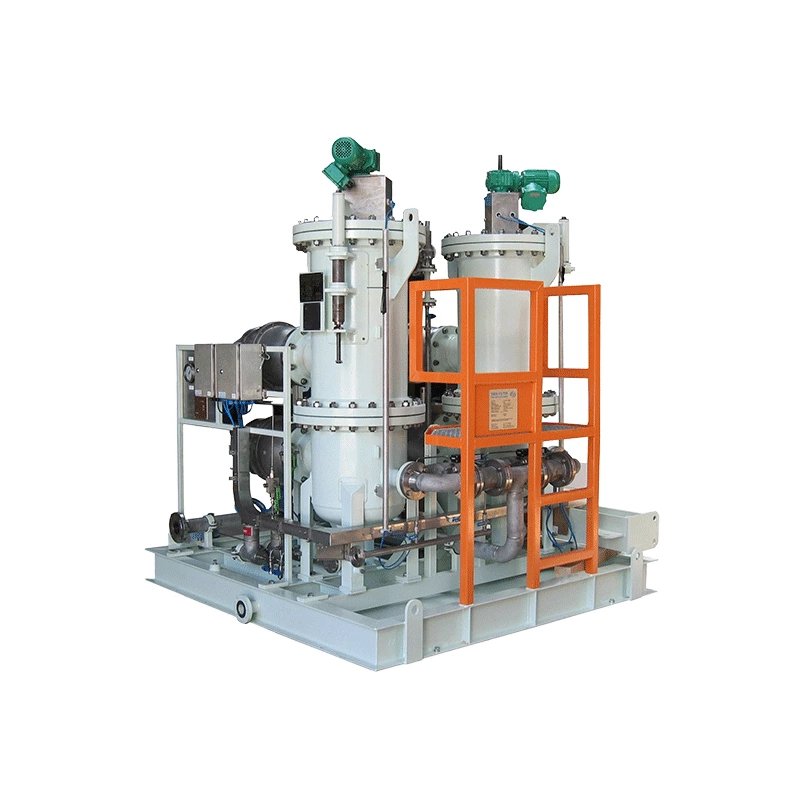
For larger installations, an automatic filter may also be integrated into a filtration and separation skid-mounted system.
3. Define the Required Particle Retention
The term “micron rating” should be clearly defined in the equipment specification. Depending on the application, it may refer to a nominal or absolute particle-retention target.
The selection should be based on the actual filtration objective rather than choosing the smallest available rating.
Consider the following questions:
- What particle size must be removed?
- Is the target nominal or absolute?
- What is the shape and hardness of the particle?
- Are the particles fibrous, sticky, abrasive, soft, or deformable?
- Is the target intended to protect downstream equipment or meet a product-quality requirement?
- How will filtration performance be measured?
A finer rating does not automatically provide a better solution. It may increase pressure loss, accelerate filter loading, and result in more frequent cleaning. A rating that is too coarse may allow excessive solids to pass downstream.
The final retention target should be confirmed using representative process samples or an agreed test method whenever filtration performance is critical.
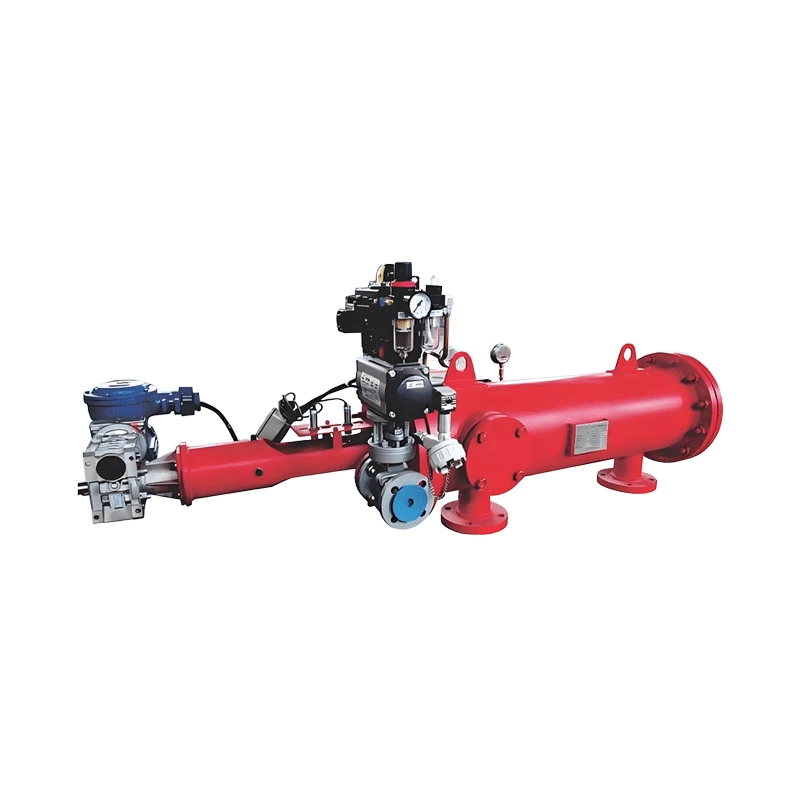
For applications requiring continuous automatic cleaning, engineers can also compare the available solutions in the Self-Cleaning Filter Series.
4. Understand the Solids Load
Two systems with the same flow rate may require very different filter designs if their solids loads are different.
Provide information about:
- Average solids concentration.
- Maximum solids concentration.
- Particle-size distribution.
- Expected debris events.
- Solids origin.
- Seasonal or batch-related changes.
- Whether the solids are sticky, oily, fibrous, biological, abrasive, or easily compacted.
A high or highly variable solids load may affect:
- Backwash frequency.
- Backwash duration.
- Drain or discharge capacity.
- Screen or filter element configuration.
- The need for prefiltration.
- Maintenance intervals.
If laboratory analysis is available, include the analytical method and sample conditions with the equipment inquiry.
5. Confirm Pressure Conditions
Pressure information should be measured as close as possible to the proposed filter location.
Record:
- Normal inlet pressure.
- Minimum inlet pressure.
- Maximum inlet pressure.
- Outlet pressure.
- Clean pressure drop allowance.
- Dirty pressure drop alarm value.
- Available pressure for backwashing.
- Pressure fluctuations during pump or valve operation.
The filter must maintain the required process flow while also having sufficient pressure or utility support for the cleaning sequence.
Where the pressure margin is limited, the system may require a larger filter area, parallel units, a pump-assisted cleaning arrangement, or a different filtration configuration.
For high-pressure or demanding process installations, automatic filtration may form part of a broader industrial filtration system, and the filter should be evaluated together with upstream and downstream equipment.
6. Define the Backwash Sequence
Automatic backwashing should be treated as a complete process sequence rather than simply an automatic valve operation.
The equipment specification should state:
- What initiates cleaning.
- Whether differential pressure, time, flow reduction, filtrate quality, or operator command is used.
- How long the backwash cycle may last.
- Whether normal filtration continues during cleaning.
- What happens if one cleaning cycle is unsuccessful.
- How the filter returns to normal operation.
- Which alarms and interlocks are required.
The backwash medium may be filtered process liquid, an external liquid, compressed gas, or another approved utility. Confirm its:
- Pressure.
- Flow rate.
- Temperature.
- Chemical compatibility.
- Availability.
- Contamination risk.
- Disposal route.
The cleaning discharge should be directed to a suitable drain, collection tank, recovery system, or wastewater treatment facility.
7. Check Materials and Compatibility
Wetted materials, seals, coatings, valves, and instruments must be compatible with the process liquid and cleaning conditions.
Review:
- Fluid composition.
- Chloride or solvent content.
- Corrosive components.
- Operating temperature.
- Design pressure.
- Abrasive solids.
- Cleaning chemicals.
- Outdoor or marine installation conditions.
Material selection should be confirmed from actual process data rather than from the liquid name alone. For example, two water systems may require different materials because of differences in temperature, salinity, chemical dosage, or solids content.
8. Review Installation and Maintenance Requirements
A filter may meet the filtration specification but still be unsuitable if it cannot be installed or maintained safely.
Before final selection, confirm:
- Available installation space.
- Filter orientation.
- Nozzle and pipe arrangement.
- Drain connection location.
- Required service clearance.
- Lifting or handling facilities.
- Bypass requirements.
- Screen or element removal method.
- Access to valves, sensors, and actuators.
- Availability of spare parts.
The maintenance plan should identify the expected inspection frequency and the spare parts that should be kept on site. Automatic cleaning reduces manual intervention, but screens, seals, valves, sensors, and actuators still require periodic inspection.
9. Prepare a Complete Equipment Inquiry
A complete inquiry allows the supplier to evaluate the application more accurately and reduce unnecessary clarification.
Include the following information:
| Category | Required information |
|---|---|
| Process liquid | Type, composition, temperature, viscosity, and density |
| Flow | Normal, minimum, maximum, and upset flow |
| Solids | Type, concentration, size distribution, and variability |
| Filtration target | Required particle-retention size and performance basis |
| Pressure | Inlet pressure, outlet pressure, pressure-drop limits, and design pressure |
| Cleaning | Trigger, backwash medium, pressure, duration, and frequency |
| Operation | Continuous, batch, intermittent, duty/standby, or parallel operation |
| Materials | Required materials, seals, coatings, and chemical compatibility |
| Controls | PLC interface, instruments, alarms, and communication requirements |
| Discharge | Drain, recovery, collection, or wastewater treatment connection |
| Installation | Available space, pipe size, orientation, and maintenance access |
After collecting this information, contact the UNITE filtration equipment team for a project-specific evaluation.
10. Final Selection Principle
The most suitable automatic backwash filter is the one that can meet the filtration objective under actual process conditions while maintaining an acceptable pressure drop and reliable cleaning performance.
Do not select equipment based only on:
- Nominal flow rate.
- The smallest available micron rating.
- Clean-water test data.
- A general application name.
- The assumption that automatic cleaning eliminates all maintenance.
A reliable selection should be verified against the process liquid, solids load, pressure conditions, cleaning utilities, discharge arrangement, installation limitations, and long-term maintenance plan.
For a project-specific recommendation, provide the process data listed above so the filter configuration, filtration rating, materials, control sequence, and backwash arrangement can be evaluated together.