What Is an Automatic Backwash Filter? How It Works & Key Benefits
Continuous industrial processes demand filtration systems that can operate without interruption — not equipment that shuts down every few hours for manual cleaning. The automatic backwash filter was developed specifically to solve this problem. By reversing flow through the filter element to flush out accumulated solids, it restores filtration capacity automatically, without stopping the process or requiring operator intervention.
This article explains the working principle of automatic backwash filters, how they differ from other filter types, their key components, and where they are used in industry.
What Is an Automatic Backwash Filter?
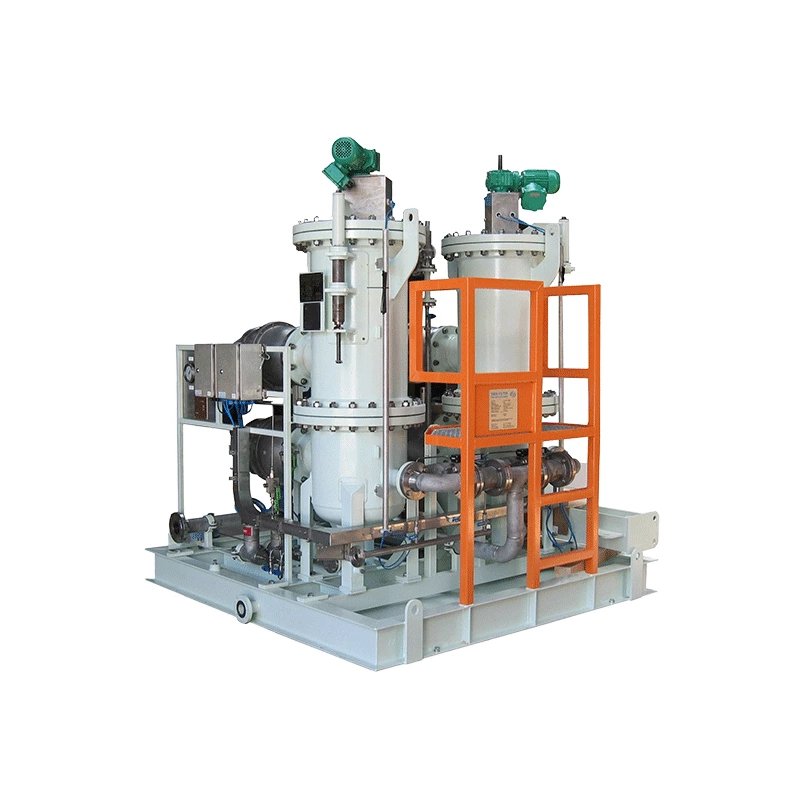
An automatic backwash filter (also called an auto backwash filter or self-regenerating filter) is a pressure filtration device designed for continuous, unattended operation. It uses a metal or synthetic filter element — typically a wedge wire screen, perforated plate, or sintered mesh — to remove solid particles from liquids. When the filter element accumulates enough solids to cause a measurable increase in pressure drop, the system automatically initiates a backwash cycle: a brief reversal of flow through the element that dislodges trapped particles and flushes them to drain.
Because the backwash cycle takes only seconds and affects only a small portion of the filter at a time, the main process flow continues uninterrupted. This makes automatic backwash filters ideal for high-flow, continuous-process applications where conventional bag or cartridge filters would require frequent shutdowns.
How Does an Automatic Backwash Filter Work?
Normal Filtration Mode
- Process liquid enters the filter housing through the inlet.
- Liquid passes through the filter element (screen or mesh) from the outside in (or inside out, depending on design).
- Solid particles are captured on the filter element surface.
- Clean filtrate exits through the outlet and continues downstream.
Backwash Initiation
The backwash cycle is triggered by one or both of the following signals:
- Differential pressure (ΔP): A preset pressure drop across the filter element (typically 0.05–0.15 MPa) indicates that the element is loaded with solids.
- Timer: A fixed time interval (e.g., every 30 minutes), regardless of pressure drop.
Backwash Cycle
- A motorized suction scanner or backwash arm rotates to position over a segment of the filter element.
- A drain valve opens, creating a sudden pressure differential between the clean side of the filter and the drain.
- Clean filtered liquid flows backward through that small segment of the element, dislodging accumulated solids.
- Dislodged particles are flushed to the drain line.
- The scanner moves to the next segment and the process repeats until the entire element has been cleaned.
- The drain valve closes. Normal filtration resumes.
The entire backwash cycle typically consumes less than 1–2% of the total flow as backwash water, making it highly efficient.
Key Components
Filter Housing
A cylindrical pressure vessel, typically fabricated from carbon steel or stainless steel, rated for the system's operating pressure. Housing design varies by flow rate and installation orientation (horizontal or vertical).
Filter Element
The heart of the system. Options include:
- Wedge wire screen: High open area, excellent mechanical strength, cleanable; suitable for 50–2000 µm filtration
- Sintered mesh: Multi-layer construction for 25–500 µm filtration; high pressure resistance
- Perforated plate with filter mesh: Economical option for coarser filtration (200–3000 µm)
Suction Scanner / Backwash Arm
A rotating or reciprocating arm that sweeps across the filter element surface during backwash. The suction nozzle creates a localized reverse-flow jet that lifts particles off the element surface.
Drive Motor
Powers the suction scanner rotation. Operates only during the backwash cycle, minimizing energy consumption.
Control System (PLC)
Monitors differential pressure and timer signals, coordinates backwash initiation, controls the drain valve, and logs operational data. Can be integrated with plant DCS/SCADA systems.
Differential Pressure Transmitter
Continuously measures pressure drop across the filter element and sends the signal to the PLC.
Technical Parameters
| Parameter | Typical Range |
|---|---|
| Filtration accuracy | 25 µm – 3000 µm |
| Flow rate | 5 – 5000 m³/h |
| Operating pressure | 0.3 – 1.6 MPa |
| Operating temperature | -10°C – 120°C |
| Backwash water consumption | <2% of total flow |
| Backwash cycle duration | 10–60 seconds |
| Materials | CS, SS304, SS316L, Duplex |
Types of Automatic Backwash Filters
Single-Chamber Backwash Filter
The most common design. One cylindrical housing with a rotating suction scanner. Suitable for most continuous-process applications.
Twin-Chamber (Duplex) Backwash Filter
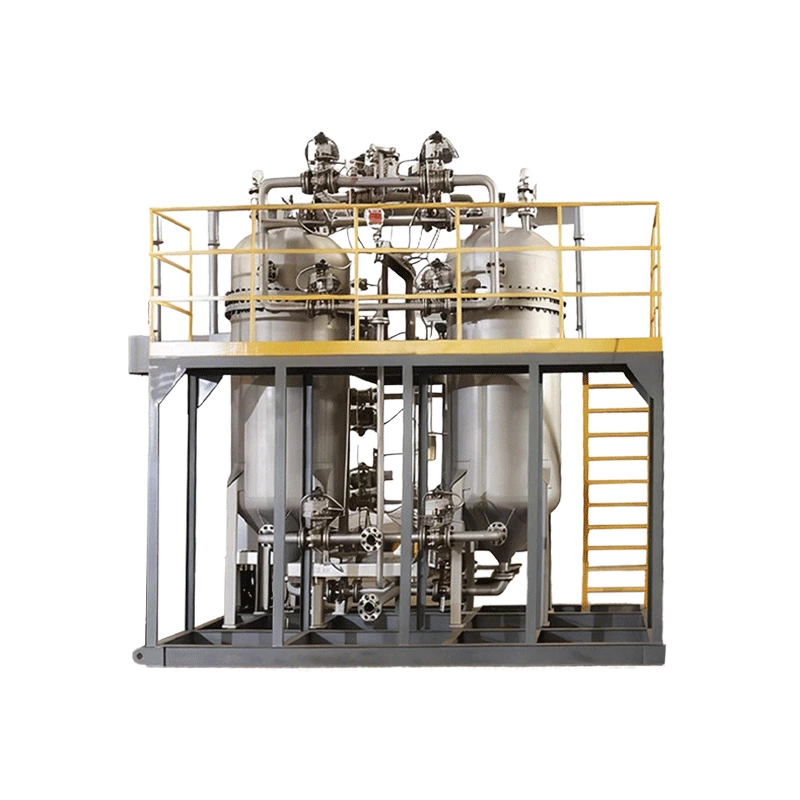
Two chambers operate in alternation: while one is in backwash mode, the other maintains full filtration capacity. This design ensures zero flow interruption even during the backwash cycle — critical for processes where even brief flow reduction is unacceptable.
High-Pressure Backwash Filter
Designed for operating pressures up to 10 MPa or higher, used in hydraulic systems, injection water systems in oil fields, and high-pressure cooling circuits.
Basket-Type Backwash Filter (Duplex Basket Filter)
Uses two basket-type elements in a manifold arrangement. One basket is isolated and backwashed while the other handles full flow. A simpler and lower-cost alternative to the rotating scanner design for moderate flow rates.
Automatic Backwash Filter vs. Self-Cleaning Filter
These two terms are sometimes used interchangeably, but they refer to distinct technologies:
| Feature | Automatic Backwash Filter | Motorized Scraper Self-Cleaning Filter |
|---|---|---|
| Cleaning method | Reverse flow (hydraulic) | Mechanical scraping blade |
| Element type | Screen/mesh | Screen/mesh |
| Solids handling | Flushed to drain | Scraped and discharged |
| Suitable for | Moderate to high solids | Very high solids, fibrous particles |
| Flow during cleaning | Continuous | Continuous |
| Complexity | Medium | Medium–High |
Backwash filters are preferred when the fluid contains smaller, loose particles that are easily dislodged by reverse flow. Scraper self-cleaning filters are better for sticky, fibrous, or large-particle fouling.
Industries and Applications
Automatic backwash filters are deployed wherever continuous filtration is required and manual intervention must be minimized:
- Industrial Water Treatment: Cooling tower make-up water, process water pre-treatment, condensate polishing
- Oil & Gas: Produced water treatment, injection water filtration, condensate filtration
- Power Generation: Cooling water filtration for turbines and heat exchangers, boiler feed water
- Chemical Industry: Catalyst protection, slurry pre-filtration, solvent recycling
- Irrigation & Agriculture: Drip irrigation system protection, fertigation lines
- Marine: Ballast water treatment systems, seawater cooling
- Steel & Mining: Blast furnace cooling water, mill scale filtration
Benefits of Automatic Backwash Filters
Continuous operation: No process interruption for filter cleaning or element replacement during normal operation.
Low operating cost: Minimal consumables — no bags or cartridges to replace. The filter element typically lasts 5–10 years with proper maintenance.
Reduced labor: Automated operation eliminates the need for operators to monitor and manually clean filters.
Low backwash water consumption: Typically less than 2% of total flow, compared to much higher losses in some other self-cleaning systems.
Scalable: Available in sizes from small pilot-scale units to large-diameter vessels handling thousands of m³/h.
Remote monitoring: PLC-based control systems allow remote monitoring and alarm integration.
Maintenance Considerations
While automatic backwash filters require far less maintenance than bag or cartridge filters, periodic checks are still necessary:
- Annual inspection of the filter element for physical damage, corrosion, or clogging that backwash cannot clear
- Lubrication of the drive motor and scanner mechanism (if applicable)
- Calibration of the differential pressure transmitter
- Drain valve inspection — the drain valve opens and closes thousands of times per year and is a wear item
- Seal and O-ring replacement as part of scheduled maintenance
If the element develops persistent fouling that backwash cannot clear, chemical cleaning (soaking in appropriate solvent or acid/base solution) can restore performance.
Frequently Asked Questions
Q: Can an automatic backwash filter handle very fine particles below 25 µm? Standard backwash filters are most effective from 25 µm upward. For finer filtration, a precision filter or membrane system downstream is recommended.
Q: What happens if the backwash cycle fails? If differential pressure continues to rise above the alarm setpoint, the control system triggers a high-ΔP alarm. A bypass valve can be opened to maintain flow while the unit is taken offline for inspection.
Q: How much installation space is required? Automatic backwash filters have a compact footprint. Vertical installation is standard; horizontal installation is available for low-headroom situations.
Q: Are automatic backwash filters suitable for viscous fluids? Yes, with modifications. Higher-viscosity fluids may require a longer backwash cycle and larger drain valve to ensure effective cleaning.
UNITE Automatic Backwash Filter Solutions
UNITE offers a comprehensive range of automatic backwash filtration systems for flow rates from 5 to 5000+ m³/h, with filtration accuracy from 25 µm to 3000 µm. All units feature PLC-based control, stainless steel filter elements, and full compliance with relevant pressure vessel standards.
UNITE's engineering team provides complete technical support from system sizing through installation and commissioning. Custom designs are available for high-pressure, high-temperature, and corrosive-fluid applications.
Contact UNITE to discuss your backwash filtration requirements.