Self-Cleaning Filter vs Backwash Filter:Key Differences, Working Principle & Selection Guide
Both promise automatic filtration without constant maintenance — but they work in fundamentally different ways. Understanding the distinction is essential before you specify either one for your system.
Why the Confusion Exists
Walk into any water treatment trade show and you will find both self-cleaning filters and backwash filters marketed under the same banner: "automated, maintenance-free filtration." The labels are close enough that engineers, procurement managers, and facility operators regularly conflate the two — sometimes with costly consequences. A system designed around a self-cleaning filter cannot simply swap in a backwash unit of the same nominal flow rating and expect equivalent performance. The underlying mechanism, the consumable resources, and the failure modes are entirely different.
This article lays out both technologies plainly — what happens inside each one during a cleaning cycle, where each excels, and a practical framework for choosing between them.
How a Self-Cleaning Filter Works
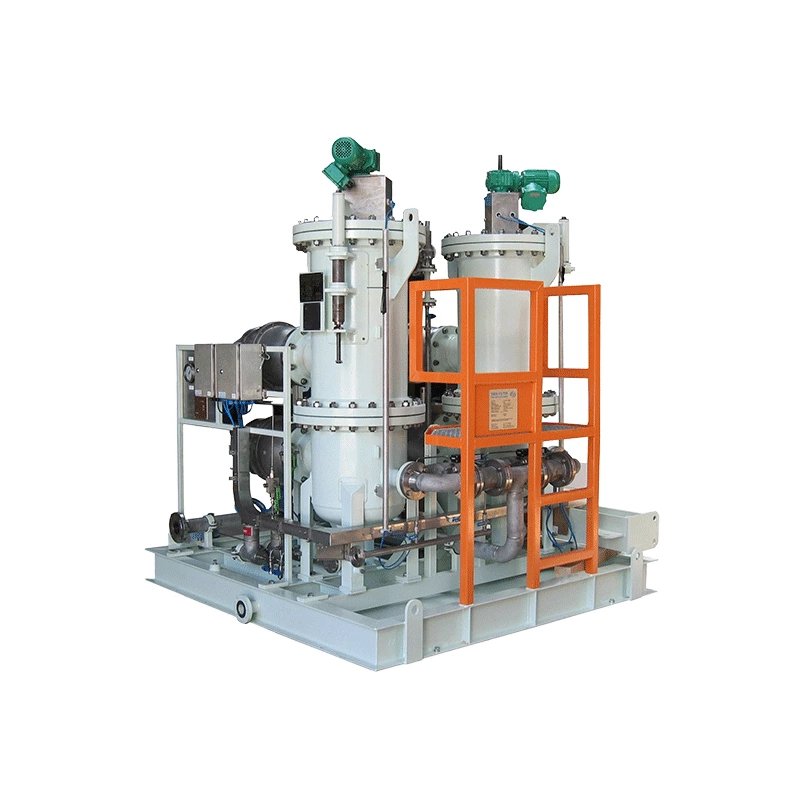
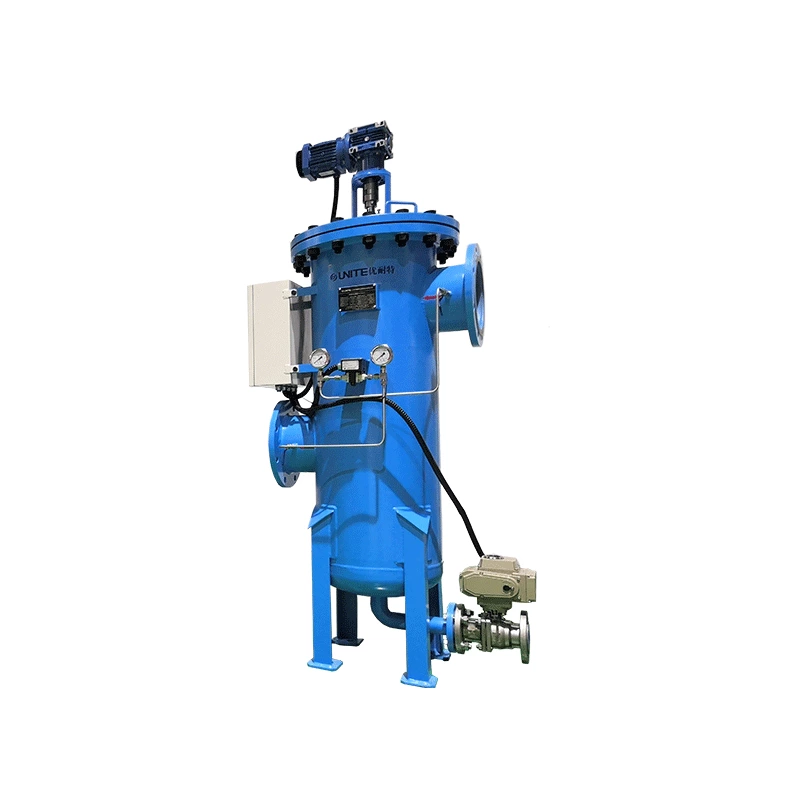
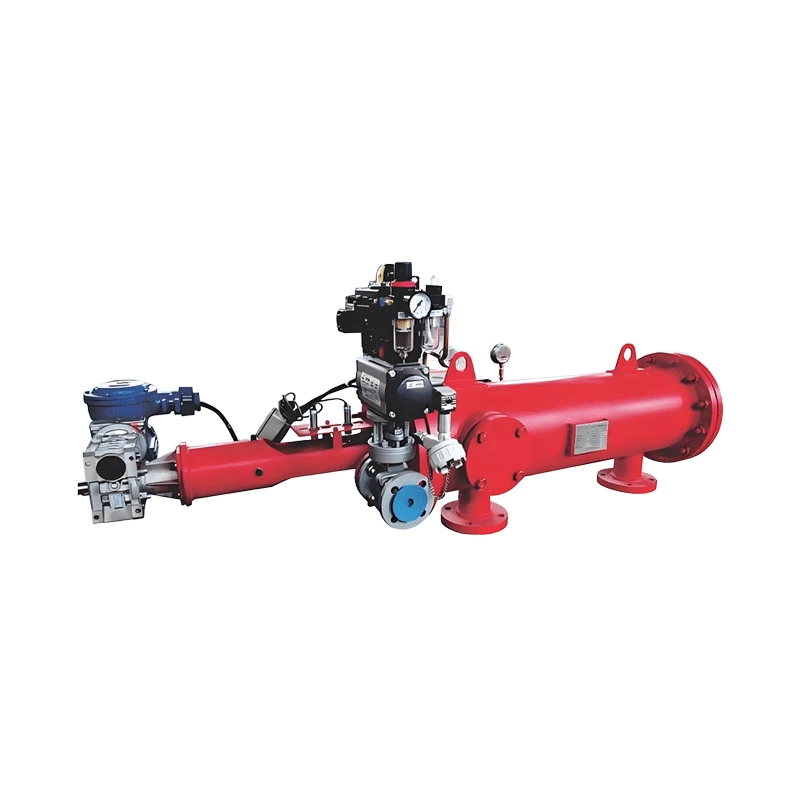
A self-cleaning filter uses a fine mesh screen as its filtration element, typically rated between 10 and 3,000 microns depending on the application. Water flows from outside the screen to the inside; particles too large to pass accumulate on the outer surface of the mesh.
When the differential pressure across the screen rises above a set threshold — or a timer elapses — the cleaning cycle triggers automatically. A motorised suction scanner or rotating brush travels across the screen surface, scraping or vacuuming the accumulated solids into a small flush outlet. The key operational point is that this cleaning happens continuously while the system is running. Filtered water keeps flowing to the downstream process. The only water lost is a brief, concentrated discharge through the flush port, typically less than 0.5 percent of the rated flow.
Because the screen itself is the filtration medium, it does not degrade with each cleaning cycle the way a granular bed does. A quality stainless mesh screen lasts years; the main wear items are the drive motor and the brush or suction assembly.
How a Backwash Filter Works
A backwash filter uses a bed of granular media — commonly silica sand, anthracite, garnet, or activated carbon — as its filtration element. Water flows downward through the bed; fine particles are trapped in the interstitial spaces between the granules. Activated carbon beds also adsorb certain dissolved organic compounds, giving backwash filters a removal capability beyond simple particle straining.
Over time, the trapped material builds up and clogs the bed, raising the pressure drop across it. The backwash cycle reverses the flow direction and dramatically increases the flow velocity, expanding and fluidising the media bed. The turbulence breaks apart and lifts the retained solids, which are then flushed out through a waste line. During this cycle, forward filtration typically stops. The backwash cycle requires a large volume of water — sometimes five to ten times the normal filtration flow rate — and lasts anywhere from five to fifteen minutes.
After backwash, the media bed needs a brief "rinse-to-waste" period to re-stratify and settle before clean water is sent to the process again. Media beds are also consumed gradually; small amounts of sand or activated carbon are lost in each backwash cycle, and periodic topping-up or full replacement is necessary.
Side-by-Side Comparison
| Parameter | Self-Cleaning Filter | Backwash Filter |
|---|---|---|
| Filtration Medium | Stainless steel mesh screen | Granular bed (sand, anthracite, activated carbon, etc.) |
| Cleaning Mechanism | Rotating brush or suction scanner removes solids from screen surface | Reversed high-velocity flow fluidises and evacuates the media bed |
| Filtration During Cleaning | Uninterrupted — system stays online | Suspended — forward flow halted during backwash cycle |
| Filtration Precision | High; precisely defined by screen aperture (10–3,000 µm) | Moderate; depends on media grain size, typically >100 µm |
| Water Consumption | Very low (<0.5% of rated flow) | High; backwash volume can reach 5–10× rated flow |
| Removal Capability | Suspended particles and sediment only | Suspended particles; activated carbon also removes some dissolved organics |
| Footprint | Compact; vertical or horizontal installation | Larger; requires overhead clearance for media expansion during backwash |
| Media Lifespan | Screen lasts years; no gradual consumption | Media slowly depleted; requires periodic top-up or replacement |
| Maintenance Complexity | Low; motor and brush/suction assembly serviced annually | Moderate; media condition must be monitored; bed inspection needed |
| Typical Capital Cost | Medium to high | Medium |
The self-cleaning filter's defining advantage is not its automation — it is the fact that cleaning and filtration happen simultaneously. For processes where any interruption is unacceptable, this is not a convenience; it is a requirement.
Selection Guide: Matching Technology to Application
Neither filter type is universally superior. The right choice follows from operational requirements, site constraints, and the quality of the incoming water.
-
Industrial cooling water circuitsContinuous production, large flow rates, moderate particle load, space constraints, zero downtime tolerance
→ Self-Cleaning -
Large-scale agricultural irrigation (drip or spray)High suspended solids and sand load, water supply relatively abundant, brief pauses acceptable
→ Backwash -
Food, beverage, and pharmaceutical process waterStrict precision requirements, unbroken supply mandatory, hygiene standards apply
→ Self-Cleaning -
Municipal water treatment (secondary stage)Very high throughput, need to remove both particles and some organic load, overnight backwash feasible
→ Backwash -
Marine ballast water treatment / seawater desalination pre-filtrationConfined space, highly variable incoming quality, fast response needed
→ Self-Cleaning -
Swimming pool and recreational water circulationFine particle removal needed, mature sand media technology, low capital cost priority
→ Backwash -
Power plant condenser intake screeningMassive flow volumes, coarse debris and biofouling, continuous operation essential
→ Self-Cleaning -
Groundwater treatment for iron and manganese removalOxidised particulate removal, media can be catalytic (greensand), batch operation acceptable
→ Backwash
A Note on Combining Both Technologies
In demanding installations — semiconductor fabrication water, high-pressure boiler feedwater, reverse osmosis pre-treatment — the two filter types are often deployed in series rather than treated as alternatives. A backwash filter handles the coarse load and removes dissolved organics via activated carbon; a self-cleaning filter downstream provides the final, precision barrier without any risk of process interruption. This tandem arrangement often delivers better overall performance and lower lifecycle cost than either technology could achieve alone.
A Framework for Your Decision
Before finalising a specification, work through four questions in order.
First, can the downstream process tolerate any interruption to flow? If the answer is no — if even a five-minute pause would cause a production loss, a safety issue, or a quality failure — a self-cleaning filter is the only technically suitable choice. Backwash filters are disqualified at this step for continuous-process applications.
Second, how scarce is the water supply? In water-stressed regions or where effluent discharge is costly, the difference in water consumption between the two technologies can be decisive. A self-cleaning filter's <0.5% flush loss is rarely material; a backwash filter's 5–10× surge demand may be genuinely problematic at scale.
Third, do you need to remove dissolved substances as well as particles? If activated carbon adsorption or biological treatment is part of the process objective, a granular media bed is required. Screen filters do not adsorb dissolved compounds.
Fourth, what are the space and civil works constraints? Backwash vessels need clearance above the media bed for expansion — often adding 50 to 100 percent to the vessel height. On brownfield sites or offshore installations, a self-cleaning filter's compact envelope is often the deciding factor.
When none of these four questions points clearly in one direction, the remaining decision rests on lifecycle cost modelling: capital expenditure, media replacement intervals, water costs, and maintenance labour, projected over the design life of the installation. Engage your equipment supplier for a site-specific comparison using your actual feedwater analysis data.
Conclusion
Self-cleaning filters and backwash filters both automate what would otherwise be a manual, labour-intensive maintenance task, and both are proven across decades of industrial deployment. But they are not interchangeable. The self-cleaning filter earns its place wherever precision, continuous supply, and low water consumption matter most. The backwash filter earns its place wherever high throughput, dissolved-compound removal, or lower initial capital cost are the governing criteria.
Getting this choice right at the design stage avoids expensive retrofits, process interruptions, and water waste down the line. When in doubt, request a detailed water quality analysis and a lifecycle cost comparison from your shortlisted suppliers before committing to either technology.
Contact UNITE's technical team for product selection support and quotation.