Bag Filter vs Precision Filter: Key Differences & Selection Guide
TL;DR: Bag filters use replaceable fabric bags to capture particles in the 1–1,000 micron range and excel at high-flow, high-solids-load applications. Precision (cartridge) filters use fine cartridge elements for 0.1–50 micron separation and are optimized for low-solids polishing and critical purity applications. The right choice depends on your required filtration accuracy, solids loading, flow rate, and total cost of operation.
Quick Comparison Table
| Parameter | Bag Filter | Precision (Cartridge) Filter |
|---|---|---|
| Filtration Accuracy | 1 – 1,000 microns (nominal) | 0.1 – 50 microns (nominal or absolute) |
| Solids Loading Capacity | High (large bag volume) | Low (cartridge blinds quickly with heavy solids) |
| Flow Rate per Housing | 10 – 500+ m³/h | 1 – 30 m³/h (per cartridge; multi-round for higher flow) |
| Filter Element | Fabric bag (PP, nylon, polyester felt) | Cartridge (membrane, melt-blown PP, sintered metal) |
| Element Change Frequency | Less frequent (high dirt-holding capacity) | More frequent (low dirt-holding capacity) |
| Rated Performance | Nominal | Nominal or Absolute |
| Sterile / Pharmaceutical | Generally not used | Standard for pharma/sterile service |
| Capital Cost | Low | Low-Medium |
| Element Cost | Medium | Low-High (varies by cartridge type) |
| Typical Application | Industrial process fluids, paints, coatings, high-turbidity liquids | Water treatment, beverage, pharma, instrument protection |
What Is a Bag Filter?
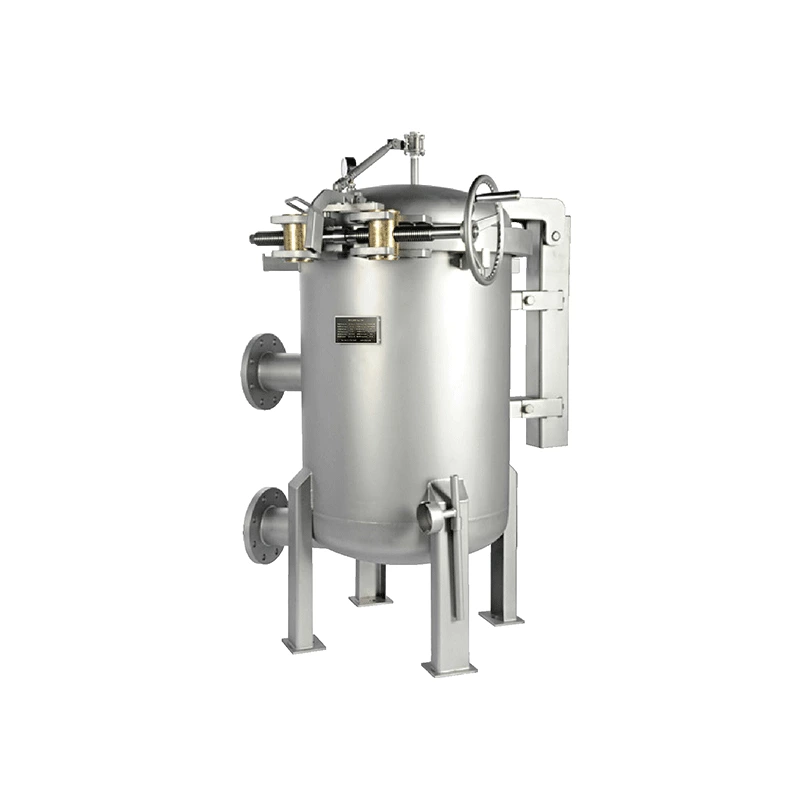
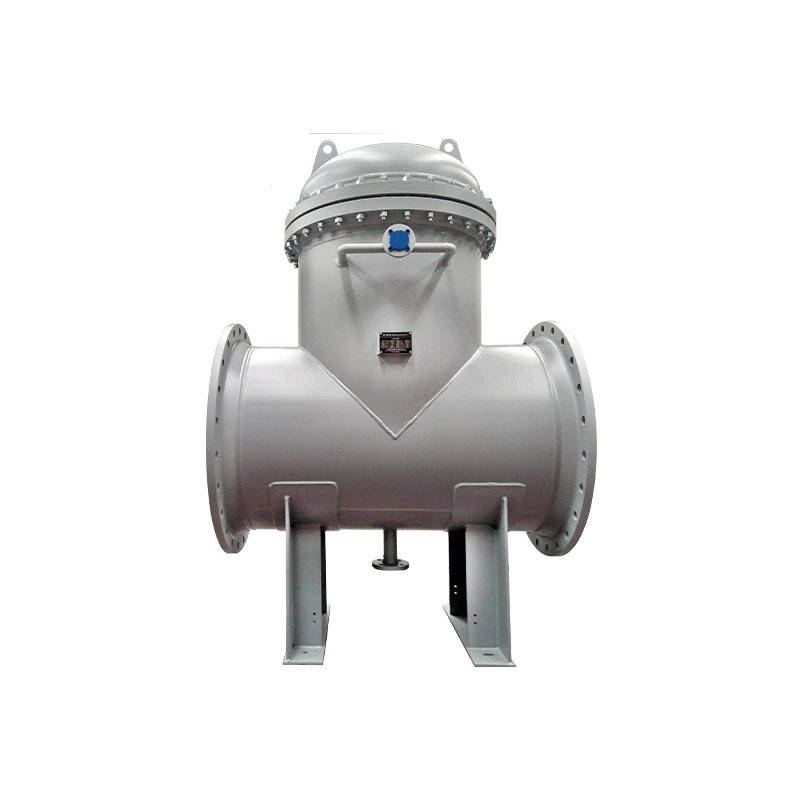
A bag filter housing is a cylindrical pressure vessel into which a fabric filter bag is inserted. Process fluid flows into the bag from the inside, passes through the fabric wall, and exits as filtered liquid. Particles are retained inside the bag. When the bag is full (indicated by high differential pressure), the housing is opened and the bag is replaced.
Bag filters are the workhorse of industrial filtration for medium-accuracy applications. Their large bag volume (a standard size 2 bag holds 30–50 grams of solids) makes them highly cost-effective when the process stream carries significant contamination.
Common bag filter ratings: 1, 5, 10, 25, 50, 100, 200, 500, 800 microns
Bag filter housing types:
- Single-bag housing: Standard for moderate flow rates (up to ~150 m³/h)
- Multi-bag housing: Multiple bags in parallel in one vessel; high flow rates (up to 500+ m³/h)
- Side-entry housing: Bag slides in from the side; popular in paint and coating applications
What Is a Precision (Cartridge) Filter?
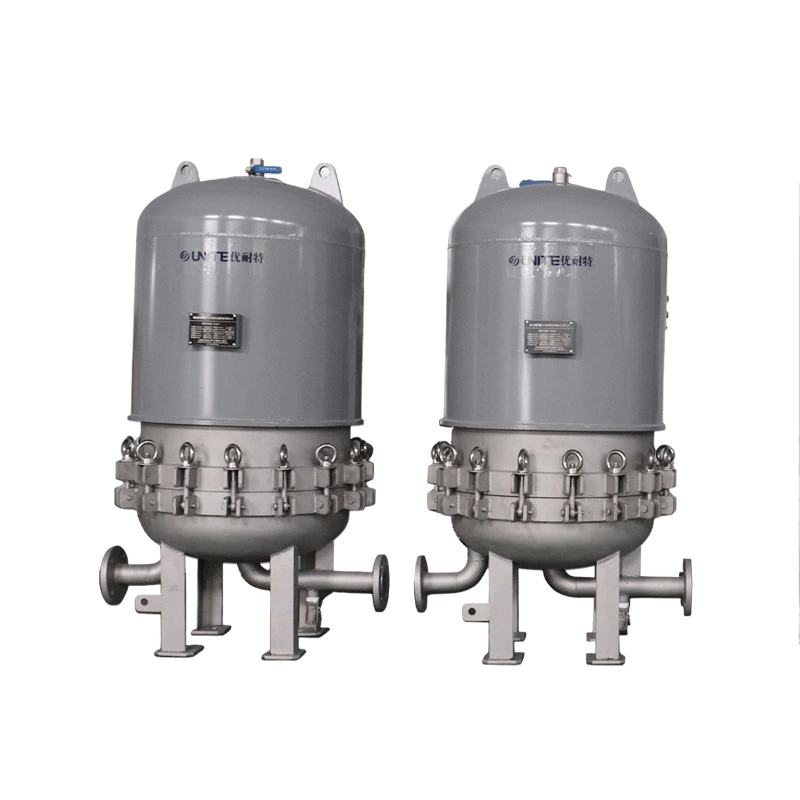
A precision filter housing holds one or more cylindrical filter cartridges. These cartridges use fine filter media — pleated membranes, melt-blown fibers, or sintered metals — to achieve filtration accuracy from 0.1 to 50 microns. Many precision cartridges carry an absolute rating, meaning they achieve guaranteed >99.9% removal at the stated pore size — a level of performance not achievable with bag filters.
Common cartridge ratings: 0.1, 0.2, 0.45, 1, 5, 10, 20 microns (absolute or nominal)
Cartridge types:
- Pleated membrane (PTFE, PES, nylon): Finest accuracy; pharma/sterile service
- Pleated polypropylene: General industrial; food-grade
- Melt-blown/string wound: High dirt-holding depth filtration; pre-filtration role
- Sintered metal: Reusable; high-temperature and high-pressure service
Key Differences Explained
1. Filtration Accuracy
This is the most important differentiating factor:
Bag filters are typically rated nominally at 1–1,000 microns. "Nominal" means the filter removes approximately 80–95% of particles at the stated size — not all particles. For most industrial protection and clarification purposes, this is entirely adequate.
Precision cartridge filters are available in both nominal and absolute ratings down to 0.1 microns. An absolute-rated 0.2-micron cartridge removes >99.9% of bacteria — a requirement no bag filter can meet. If your application demands guaranteed fine particle removal or sterile filtration, precision cartridges are the only option.
Decision rule: If you need filtration accuracy below 5 microns or need guaranteed performance (absolute rating), use a precision cartridge filter.
2. Solids Loading and Element Life
Bag filters have a large internal volume filled with felt or woven fabric. A standard size 2 bag (183 mm × 812 mm) has approximately 0.5 m² of filtration area and can hold 30–80 grams of captured solids before replacement. For high-turbidity feeds, bag filters provide significantly longer service life between element changes.
Precision cartridges have a much smaller solids-holding capacity. A 10-inch cartridge typically holds 1–10 grams of solids. Exposing a precision cartridge to a high-solids feed stream results in rapid blinding and very frequent, costly element changes.
Decision rule: For feeds with >50 mg/L suspended solids, bag filters are far more economical to operate. Use precision cartridges only after upstream pre-filtration has reduced solids loading.
3. Flow Rate Capacity
Bag filters in a single-bag housing handle flow rates up to approximately 50–150 m³/h for standard liquid service (lower for viscous fluids). Multi-bag housings in a single vessel can handle 500+ m³/h.
Precision cartridges have a smaller flow rate per element — a 10-inch cartridge typically handles 0.5–3 m³/h for liquid service. High-flow systems use multi-round housings with many cartridges in parallel.
For a 100 m³/h application, you might use a single multi-bag housing vs. a multi-round housing with 50–100 cartridges. The bag filter solution is simpler and more economical at high flow rates with moderate accuracy requirements.
4. Total Cost of Operation (TCO)
Cost comparison for a hypothetical 50 m³/h liquid filtration application:
| Cost Component | Bag Filter | Precision Cartridge Filter |
|---|---|---|
| Housing capital cost | Low | Low-Medium |
| Element unit cost | $5–$30 per bag | $5–$100+ per cartridge |
| Elements per housing | 1–5 | 5–50 |
| Change frequency (high solids) | Weekly | Daily or more |
| Change frequency (low solids) | Monthly | Weekly |
| Labor per change | 10–15 min | 20–45 min |
| Element disposal | Simple (bagged solid waste) | May require special handling (pharma) |
For high-solids feeds: Bag filters are substantially more economical. For low-solids polishing: Cartridge filters are more economical per unit of filtration area.
When to Use a Bag Filter
Choose a bag filter when:
- Filtration accuracy requirement is 5 microns or coarser
- The process fluid has significant suspended solids (>10 mg/L)
- Flow rate is high (>50 m³/h per housing)
- The application is industrial process fluid, paint, coating, resin, or similar
- Nominal (rather than absolute) filtration performance is acceptable
- Budget constraints favor the simplest, lowest-cost solution
Typical bag filter applications: Cooling water treatment, paint and coatings manufacturing, chemical process streams, food oil filtration, general process water, plating bath filtration
When to Use a Precision Cartridge Filter
Choose a precision cartridge filter when:
- Filtration accuracy requirement is 5 microns or finer
- Absolute-rated (guaranteed) performance is required
- The application involves pharmaceutical, biotech, or food/beverage production
- Sterile filtration (0.2 microns) is required
- The feed is a low-solids, high-clarity liquid
- The application is final polishing ahead of membrane systems (RO, UF)
- The application involves gas/compressed air filtration
Typical precision filter applications: Pre-RO filtration, pharmaceutical API filtration, beverage polishing, ultrapure water, instrument air, sterile filtration, electronic-grade chemical production
The Pre-Filtration Strategy: Using Both Together
For many industrial applications, the optimal solution combines both technologies in series:
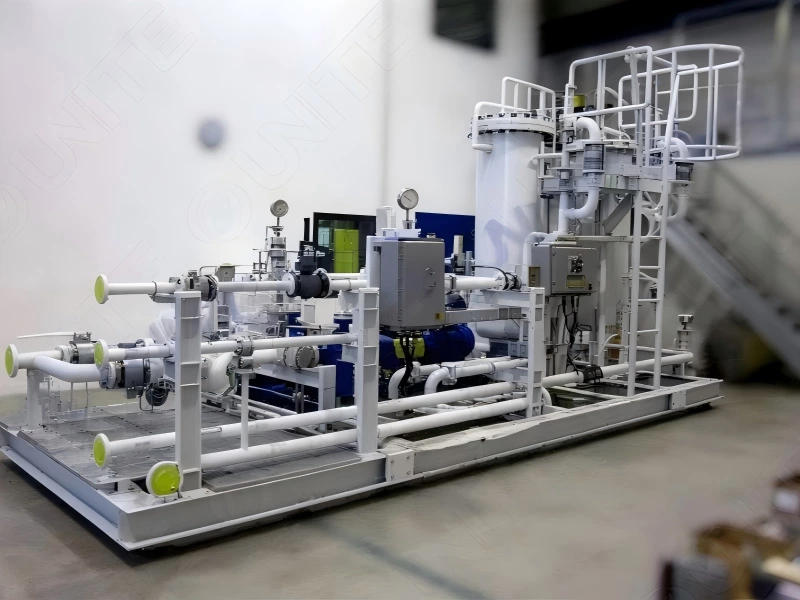
Upstream: Bag filter or self-cleaning filter removes bulk contamination and particles >10–50 microns → protects the downstream precision filter from rapid blinding
Downstream: Precision cartridge filter provides final polishing to the required accuracy (0.1–5 microns) → protects downstream process or equipment
This two-stage approach dramatically extends cartridge life, reducing operating costs while achieving the required final filtrate quality.
Frequently Asked Questions
Q: Can a bag filter achieve the same filtration accuracy as a cartridge filter? No. The finest bag filters are typically rated at 1 micron nominal. Absolute-rated membrane cartridges achieve 0.1–0.2 microns. More importantly, the absolute/nominal distinction matters: a 1-micron bag filter and a 1-micron absolute cartridge offer very different levels of certainty regarding particle removal.
Q: Which is easier to change — a bag or a cartridge? Bag changes are generally faster (10–15 minutes for an experienced operator) than cartridge changes in multi-round housings (20–45 minutes). However, cartridge change procedures in pharmaceutical environments include additional steps (integrity testing, documentation) that add time.
Q: Are there any applications where bag filters should never be used? Yes: sterile filtration, pharmaceutical final product filtration, and any application requiring absolute-rated particle removal. These require validated, absolute-rated cartridge filters with integrity test capability.