Pipeline Filter vs Bag Filter: Key Differences & Which One Do You Need?
TL;DR: Pipeline filters (inline strainers) are compact, permanently installed devices designed to protect downstream equipment from occasional particles in otherwise clean process streams. Bag filters are larger, housing-based units designed to continuously filter high-solids-load liquids and produce a clarified product. The choice depends on whether you need equipment protection or active liquid clarification.
Quick Comparison Table
| Parameter | Pipeline Filter (Strainer) | Bag Filter |
|---|---|---|
| Primary Purpose | Equipment protection | Liquid clarification / solids removal |
| Installation | Directly inline in pipeline | Standalone unit with bypass |
| Solids Loading | Low (occasional/trace particles) | Medium to High |
| Filtration Accuracy | 75 microns – 5 mm (typically) | 1 – 1,000 microns |
| Dirt Holding Capacity | Low (screen volume only) | High (full bag volume) |
| Cleaning/Maintenance | Screen cleaning; pipeline isolation required | Bag replacement; simple |
| Flow Rates | DN15 – DN600 pipelines | 1 – 500+ m³/h |
| Pressure Loss | Very low (clean element) | Low-Medium |
| Capital Cost | Very low | Low-Medium |
| Footprint | Minimal (inline) | Standalone housing required |
| Typical Use | Pump/valve/instrument protection | Process filtration, product polishing |
What Is a Pipeline Filter?
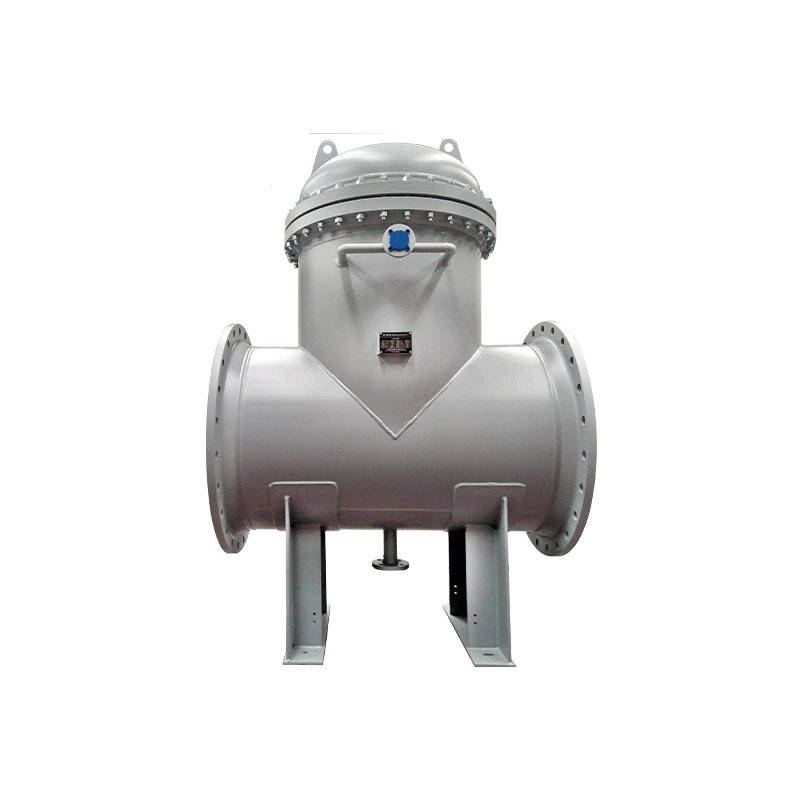
A pipeline filter — commonly called an inline strainer or Y-strainer — is a compact filtration device threaded or flanged directly into a pipe. Its role is primarily protective: it captures the occasional piece of pipe scale, weld debris, gasket material, or process-generated particle that would otherwise damage sensitive downstream equipment (pumps, control valves, flow meters, heat exchangers).
Pipeline filters are not designed for continuous high-solids filtration. Their small screen area and limited solids-holding volume mean they would require very frequent cleaning if the process fluid carries significant contamination.
Key characteristics:
- Installed as an integral part of the pipeline
- No separate housing, foundation, or bypass (though a bypass valve is recommended for maintenance)
- Screen cleaned by removing the cap/cover and extracting the basket for hosing down
- Available in virtually every pipeline size (DN15–DN600) and pressure class
What Is a Bag Filter?
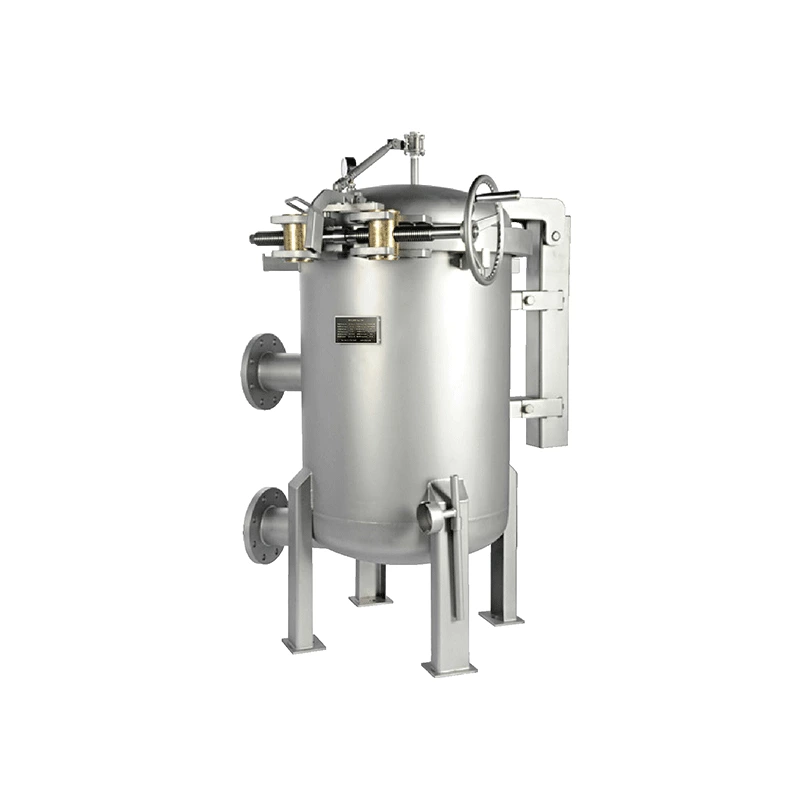
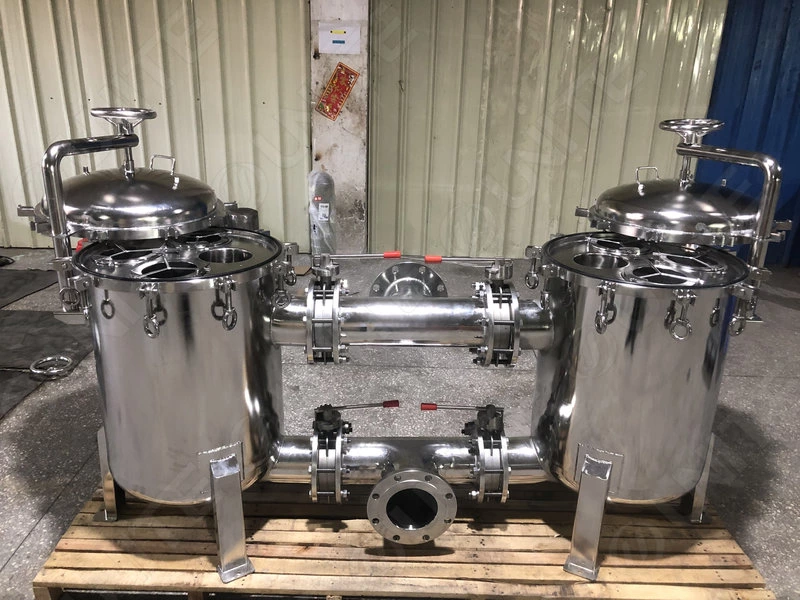
A bag filter housing is a standalone vessel — installed off the main pipeline run, typically with inlet and outlet isolation valves and a bypass — that contains a replaceable fabric filter bag. Its role is active filtration: continuously processing liquid that carries a meaningful concentration of suspended solids and delivering clarified filtrate to downstream processes or products.
Bag filters are the standard choice when the process stream itself requires treatment — not merely occasional protection. The large bag volume (typ. 0.5 m² filtration area per size-2 bag) provides the dirt-holding capacity needed for economical operation in higher-solids service.
Key characteristics:
- Standalone vessel with isolation valves and typically a bypass line
- Quick-opening cover allows bag replacement in minutes without tools (most modern designs)
- Available in single-bag to multi-bag configurations for high flow rates
- Operates continuously until bag is loaded; then brief shutdown for bag change
The Core Distinction: Protection vs. Clarification
This is the fundamental question that separates pipeline filters from bag filters:
Use a pipeline filter when: The liquid is essentially clean, but you want to protect expensive or sensitive equipment from the rare particle or debris slug. Think: pump suction strainer in a clean water system; strainer before a control valve in a process line; inline filter before a flow meter.
Use a bag filter when: The liquid itself contains suspended solids at concentrations that need to be reduced — to protect product quality, meet a process specification, or extend the life of downstream equipment. Think: filtering paint before packaging; clarifying process water; removing catalyst fines from a chemical product stream.
A practical test: if your process fluid would visibly discolor a white cloth after passing through, it needs a bag filter. If it looks clear but you want to protect a downstream instrument, a pipeline filter is appropriate.
Detailed Comparison by Key Criteria
Solids Loading Tolerance
Pipeline filter: Designed for low-solids service. The screen basket holds perhaps 50–200 grams of solid before the pressure drop becomes unacceptably high. In a high-solids stream, the pipeline filter would require cleaning daily or even hourly — which is not a practical maintenance burden.
Bag filter: A standard size-2 bag can hold 30–80 grams of solids at 5-micron rating, and significantly more at coarser ratings. Multi-bag housings multiply this capacity. Bag filters are explicitly designed to run for days to weeks between element changes in moderate-solids service.
Filtration Accuracy
Pipeline filter: Most Y-strainers and basket strainers have screen openings of 200 microns to several millimeters. Some fine mesh options exist down to 75 microns, but below this level, the pipeline filter's small screen area and manual cleaning requirement make it impractical.
Bag filter: Available from 1 micron (fine felt bags) to 1,000 microns. The full range of industrial accuracy requirements is covered. For accuracy finer than 1 micron, a precision cartridge filter is needed.
Installation and Infrastructure Requirements
Pipeline filter: Virtually no installation infrastructure beyond the pipe connections themselves. Fits directly into existing pipelines. No foundation, no housing, no separate bypass — though a drain plug and bypass valve are good practice.
Bag filter: Requires a standalone housing with inlet/outlet piping, isolation valves, bypass piping (recommended for continuous processes), vent and drain connections, and floor space for maintenance access. The total installation cost is higher than the housing cost alone.
Maintenance Approach
Pipeline filter: Cleaning a Y-strainer or basket strainer requires: closing isolation valves (or accepting a process interruption), opening the drain to relieve pressure, removing the screen basket, hosing it clean, reinstalling, and reopening isolation valves. This takes 15–30 minutes. A duplex strainer allows cleaning without interruption.
Bag filter: Bag replacement requires: closing inlet isolation valve, opening vent to relieve pressure, opening the quick-release cover, removing and disposing of the spent bag, inserting a new bag, closing the cover, venting to remove trapped air, reopening the isolation valve. This takes 5–15 minutes for an experienced operator — typically faster than strainer cleaning, and requires no cleaning — just replacement.
Cost Comparison
For a 100 m³/h clean-water pump suction protection application:
- DN200 Y-strainer: $500–$2,000 installed
- Annual maintenance cost: Minimal (2–4 cleanings per year)
For a 100 m³/h paint filtration application:
- Multi-bag filter housing: $3,000–$8,000 installed
- Annual bag cost: $500–$5,000 depending on change frequency and bag type
- Annual maintenance labor: Moderate
Application Decision Tree
Does the process fluid carry significant suspended solids (>10 mg/L)?
│
├── NO → Do you need to protect downstream pumps, valves, or instruments?
│         ├── YES → Pipeline filter (Y-strainer or basket strainer)
│         └── NO → No filtration required
│
└── YES → What filtration accuracy is required?
          ├── >100 microns → Bag filter (coarse bag) OR basket strainer (assess solids load)
          ├── 5–100 microns → Bag filter (standard bag)
          └── <5 microns → Precision cartridge filter (pre-filter with bag filter upstream)
Can You Use Both Together?
Yes — and this is often the best approach for continuous industrial processes:
- Coarse pipeline strainer on the main pump suction line → protects the pump from large debris slugs
- Bag filter downstream → provides active clarification to the required accuracy for the process
This protects both the pump (via the strainer) and avoids overloading the bag filter with large particles that would rapidly consume bag capacity.
Industry Examples
Cooling Tower System:
- Pipeline Y-strainer on each pump suction: protects pump impeller from debris
- Side-stream bag filter on the cooling water loop: continuously removes suspended solids to maintain water quality and prevent heat exchanger fouling
Chemical Plant:
- Basket strainers before all control valves and flow meters: equipment protection
- Bag filter units before catalyst reactors or product storage: active process filtration
Food Processing:
- Inline sanitary strainers throughout the process piping: protect pumps and instruments
- Bag filter housing on the product stream: clarification before packaging or next process step
Frequently Asked Questions
Q: Can I use a pipeline strainer instead of a bag filter to reduce costs? Only if the solids loading in your process is very low (trace particles only). Using a pipeline strainer in a high-solids stream will result in very frequent cleaning — practically daily or more — which eliminates any cost advantage over a bag filter and creates significant maintenance burden.
Q: My pipeline strainer keeps clogging every week — what should I do? Frequent clogging indicates the process stream has higher solids loading than a strainer is designed for. The solution is to install a bag filter (or self-cleaning filter for continuous operation) to actively remove the solids, with the strainer remaining as a last-line equipment protection device.
Q: Do pipeline filters come in the same filtration accuracy as bag filters? At their finest, pipeline filters (with fine mesh screens) reach approximately 75–100 microns. Bag filters start at 1 micron and are available across a much wider accuracy range. For fine filtration (<100 microns), bag or cartridge filters are the appropriate technology.