Jey Oil Project: High-Temperature Filtration Solution for Hot Oil Systems
Project Background: Controlling Carbon Deposits in Thermal-Oil Systems
Jey Oil is a major bitumen producer and exporter in the Middle East. In its refining process, the thermal-oil system and hot-oil heater provide a stable heat source for bitumen heating and distillation.
During long-term circulation at elevated temperatures, thermal oil can undergo carbonization or coking because of localized overheating. If hard carbon particles are not removed promptly, they may deposit on heat-exchanger tube walls, create additional thermal resistance, accelerate circulation-pump wear, or contribute to pipeline blockages.
To extend thermal-oil service life and support production continuity, Jey Oil selected a high-precision filtration system for its hot-oil circuit. The application is consistent with UNITE’s oil-refining filtration solutions, which focus on controlling particulate contamination, protecting heat exchangers and pumps, improving process efficiency, and reducing unplanned downtime.
Core Challenges
1. Extreme High-Temperature Operation
The thermal oil typically operates between 250°C and 320°C. The filtration equipment therefore required excellent thermal stability, reliable high-temperature sealing, and materials suitable for continuous circulation under demanding process conditions.
2. Fine and Abrasive Carbon-Particle Removal
Carbon deposits generated by thermal degradation can be small and abrasive. The filter media needed to provide micron-level particle interception while retaining sufficient mechanical strength and dirt-holding capacity under elevated differential pressure.
3. Maintenance without Interrupting Production
Refinery production lines operate continuously. Cleaning or replacing a filter element could not require a shutdown of the main thermal-oil circuit. The system therefore needed an online changeover arrangement that could transfer operation to a standby unit while maintenance was performed on the isolated vessel.
Customized Solution: All-Metal Online Thermal-Oil Filtration
1. SS316L High-Temperature Construction and Reliable Sealing
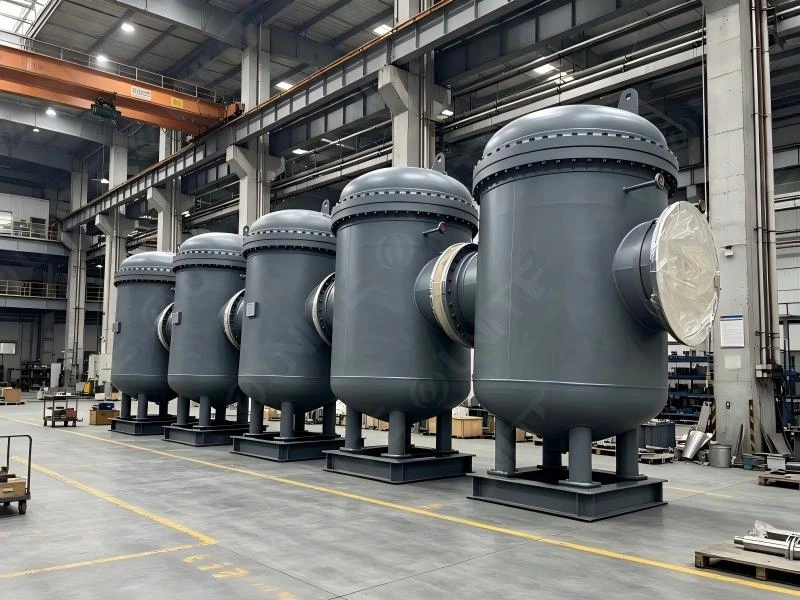
The filter vessel and internal components are manufactured from SS316L stainless steel. High-temperature graphite or specialty-alloy gaskets are used for sealing, supporting the project’s requirement for leak-resistant operation at continuous temperatures of up to 350°C.
The final allowable temperature, pressure rating, gasket selection, thermal-expansion allowance, and inspection requirements must be confirmed against the actual thermal-oil properties, operating envelope, and applicable design codes. The 350°C operating statement is specific to the project configuration and should not be treated as a universal rating for every UNITE filter model.
2. Duplex Twin-Tower Design for Online Changeover
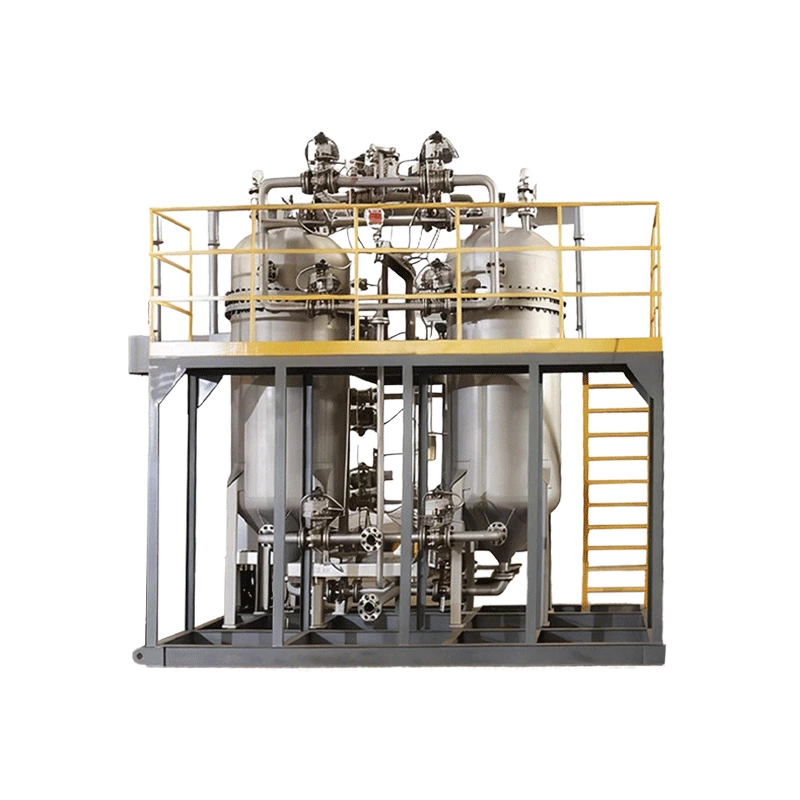
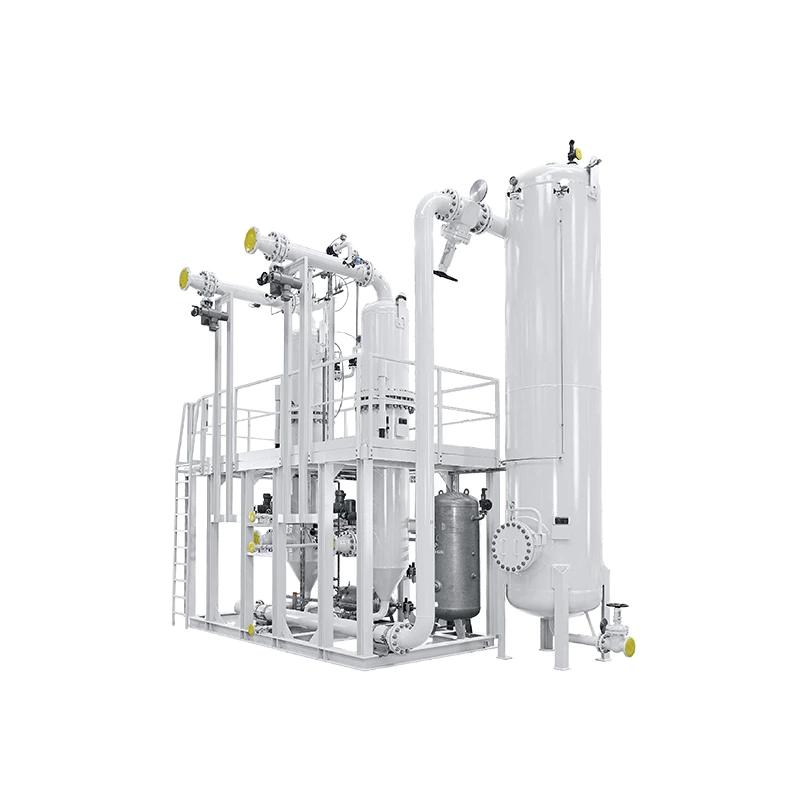
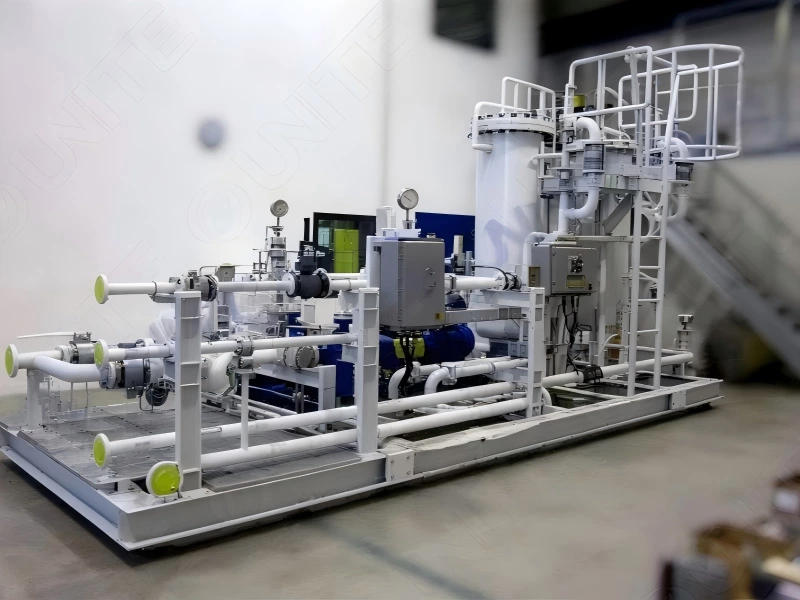
The system uses a two-vessel, or twin-tower, configuration equipped with synchronized changeover valves. When the operating element requires cleaning or maintenance, the flow can be transferred to the standby vessel without stopping the main circulation circuit.
This arrangement supports continuous production and reduces the risk of thermal-oil overheating or process interruption associated with a filtration-system shutdown. The final switching sequence, valve interlocks, isolation logic, and bypass safeguards should be validated during engineering design and commissioning.
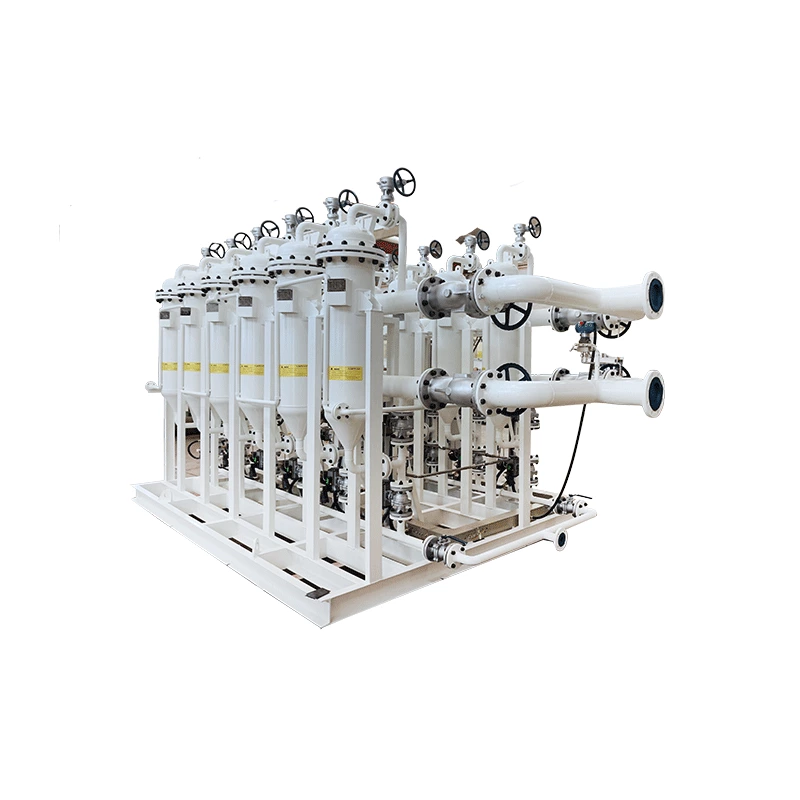
3. Multilayer Sintered-Metal Filter Elements
The system uses high-strength multilayer sintered-mesh elements selected for high dirt-holding capacity, mechanical durability, and backwash-regeneration capability. The elements are designed to intercept carbon particles in the approximate range of 5–20 μm under the project conditions.
The multilayer metal construction is suitable for applications requiring elevated-temperature compatibility and resistance to repeated cleaning. Actual filtration precision, pressure drop, cycle length, and regeneration performance depend on the carbon-particle size distribution, thermal-oil viscosity, flow rate, contaminant concentration, and selected element design.
UNITE’s Filtration System Series combines modular filtration, automatic control, and process-specific equipment selection for continuous industrial applications. The appropriate filter configuration should be determined through process data review and application testing.
4. Real-Time Differential-Pressure and Safety Monitoring
Specialized high-temperature and high-pressure differential-pressure alarms monitor the condition of the filter elements in real time. As the elements load with carbon particles, the increasing pressure differential provides an early indication that cleaning, changeover, or maintenance may be required.
Timely monitoring helps reduce the risk of excessive flow resistance and supports the protection of circulation pumps. It can also help operators identify operating abnormalities before they develop into more serious process or equipment problems.
Customer Value and Project Results
After the filtration system was commissioned at Jey Oil, the project delivered the following reported benefits:
•Improved thermal-oil quality: The clarity and physicochemical indicators of the thermal oil improved significantly;
•Approximately 15% higher heat-exchanger thermal efficiency: Better control of carbon deposits reduced thermal resistance on heat-exchanger surfaces, contributing to lower fuel consumption by the hot-oil heaters;
•More than doubled mechanical-seal service life: Effective carbon-particle interception extended the service life of circulation-pump mechanical seals by more than two times;
•Fewer unplanned maintenance shutdowns: Online duplex operation and improved contamination control reduced the frequency of unexpected maintenance interruptions;
•Stable operation at elevated temperature: Jey Oil reported strong satisfaction with the system’s stability under extreme-temperature conditions;
•Reference application for refinery optimization: The project became a regional reference for improving the reliability and efficiency of thermal-oil systems.
The reported 15% improvement in heat-exchanger thermal efficiency and more-than-twofold increase in mechanical-seal service life are specific to this Jey Oil project. Actual results depend on thermal-oil condition, carbon-loading rate, operating temperature, heat-exchanger design, circulation flow, filter configuration, cleaning frequency, and maintenance practice.
Conclusion
Thermal-oil systems in refineries require reliable filtration that can operate at elevated temperatures while controlling carbon deposits, maintaining low process resistance, and supporting continuous production. Conventional filtration arrangements may be unsuitable when the system must handle hot oil, fine abrasive solids, high differential pressure, and online maintenance simultaneously.
The Jey Oil project combines all-metal high-temperature construction, high-temperature sealing, duplex online changeover, multilayer sintered-metal elements, and real-time differential-pressure monitoring. By intercepting carbon deposits before they accumulate in heat exchangers, pumps, and piping, the system helps maintain heat-transfer performance, extend component life, and reduce unplanned refinery maintenance.
If your application involves thermal oil, hot-oil heaters, bitumen processing, refinery heat-transfer circuits, carbon-deposit control, or high-temperature liquid filtration, contact the UNITE engineering team with your operating temperature, fluid properties, flow rate, pressure, and contaminant data.
Related Pages
•Oil-Refining Filtration Solutions
•Industrial Filtration System Series
•Automatic Backwash Filtration System
•Jey Oil High-Temperature Filtration Project