Kazakhstan Atyrau Refinery Project: High-Efficiency Three-Phase Separator System
Project Background: Three-Phase Separation for a Major Central Asian Refinery
The Atyrau Refinery, also known as ANPZ, is one of Kazakhstan’s three major refineries and plays an important role in the country’s fuel supply and chemical-feedstock production.
As part of the refinery’s deep-processing and environmental-upgrade program, the plant required high-performance separation equipment for oily wastewater treatment and crude-oil pre-treatment. Local crude oil has a complex composition and may contain acid gases and other contaminants. The separator therefore had to remove gas, liquid, and solid phases reliably while operating under chemical corrosion, pressure fluctuations, and demanding flow conditions.
This application is closely aligned with UNITE’s oil-refining filtration and separation solutions, which are designed to control impurities, protect downstream heat exchangers and catalysts, improve product quality, and support reliable refinery operation.
Core Challenges
1. Extreme Continental Climate
The Atyrau region experiences very hot summers and severe winters, with temperatures falling to approximately −40°C. The equipment needed adequate low-temperature impact resistance, thermal insulation, and freeze protection to maintain reliable operation throughout the year.
2. High-Sulfur and Corrosive Process Media
The processed streams contain hydrogen sulfide (H₂S) and chloride ions, creating demanding corrosion conditions. The pressure vessel and internal components therefore required suitable corrosion resistance, high-quality welds, and materials compatible with acidic and chloride-containing media.
3. High-Flow, High-Precision Separation
The system had to process high flow rates while reducing oil-in-water and water-in-oil concentrations. Each separated phase needed to meet the required quality indicators so that downstream treatment and refining units could operate reliably.
4. International and Local Compliance
The equipment needed to satisfy both international ASME requirements and Kazakhstan’s local GOST quality-certification norms. The final design also had to address pressure-vessel integrity, material traceability, welding quality, inspection, and commissioning requirements.
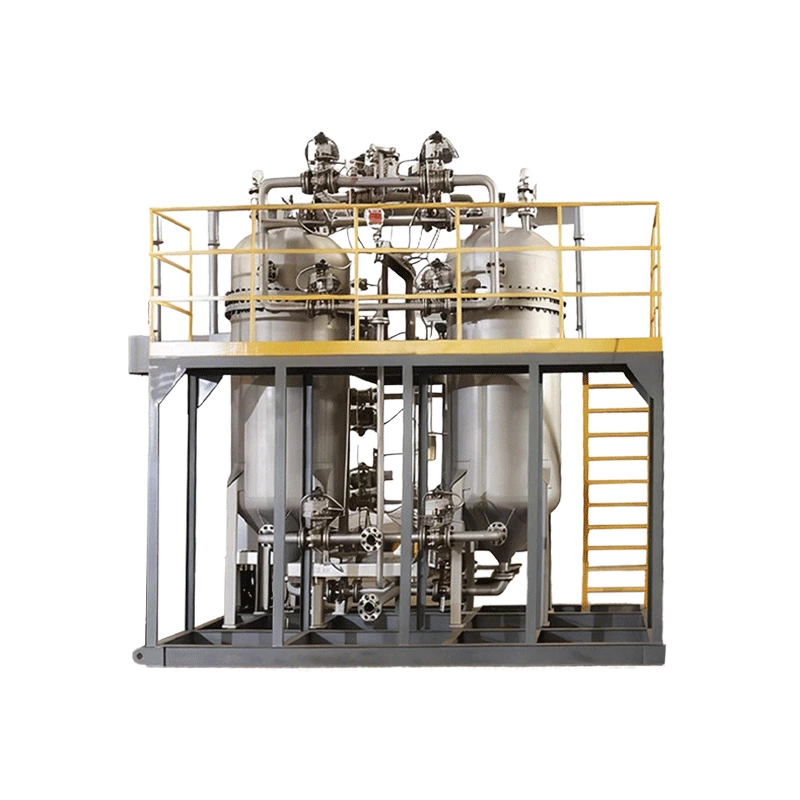
Customized Solution: Modular Gas-Liquid-Solid Separation System
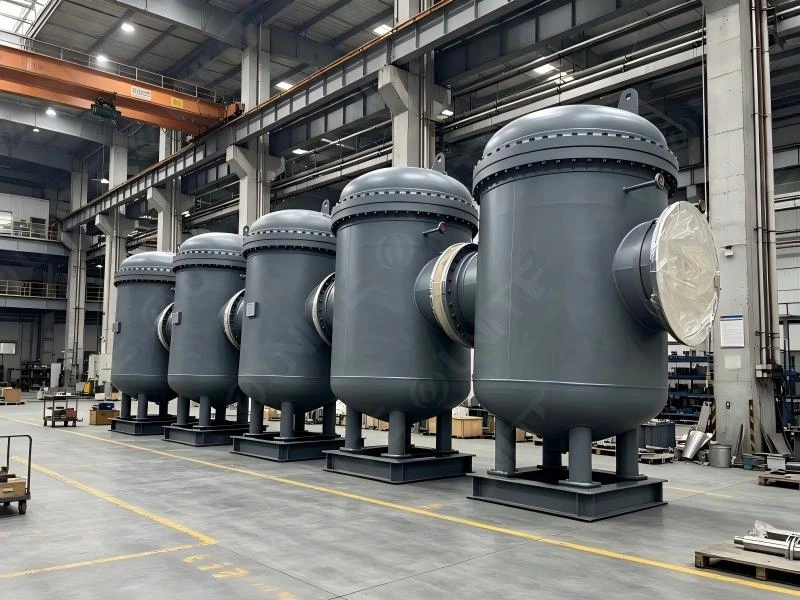
1. Corrosion-Resistant Pressure-Vessel Construction
The main pressure vessel uses HIC-resistant steel or specialty-alloy linings and anti-corrosive coatings, depending on the specific process conditions and design requirements. Core internal components use Hastelloy or super-stainless materials to support long-term service in acidic and chloride-containing environments.
This material strategy is intended to reduce corrosion-related degradation while preserving pressure-vessel integrity and separation performance. Actual material selection should be confirmed through process chemistry, H₂S exposure, chloride concentration, temperature, pressure, corrosion allowance, welding procedure, and applicable code requirements.
2. Corrugated-Plate, Cyclonic, and Coalescing Separation Internals
The separator integrates multiple internal separation mechanisms:
•Corrugated-plate mist eliminators help remove entrained liquid droplets from the gas phase;
•High-efficiency cyclones use centrifugal force to separate suspended solids and liquid droplets from the process stream;
•Corrugated-plate coalescers promote the merging and settling of fine oil or water droplets.
By combining physical coalescence with centrifugal separation, the system accelerates the settling of microscopic oil droplets and solid particles. This multi-stage arrangement helps improve the quality of the separated gas, oil, water, and solids streams while protecting downstream hydro-processing and reforming catalysts.
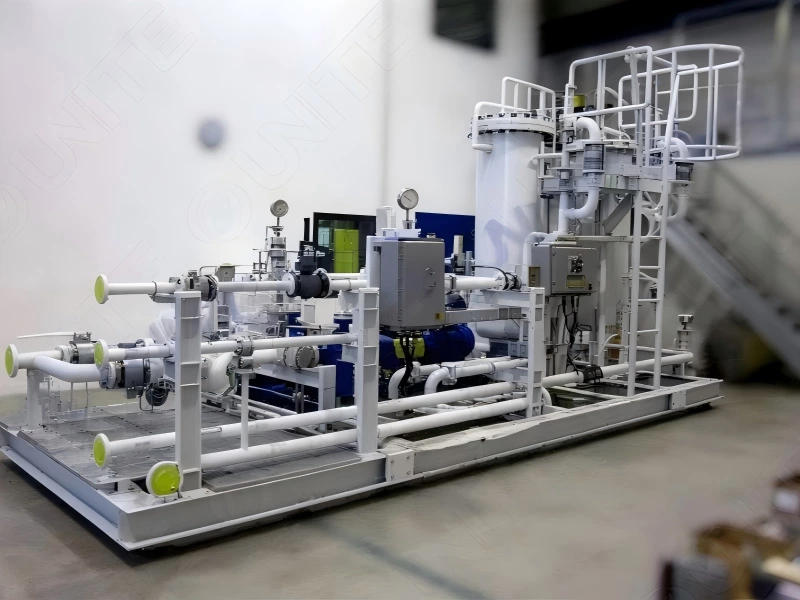
The system-integration concept is consistent with UNITE’s filtration and separation skid-mounted systems, which combine separation equipment, piping, valves, instrumentation, and control systems in a compact modular package.
3. Automated Interface and Discharge Control
The separator uses high-precision radar level gauges and interface meters to monitor the gas-oil and oil-water interfaces. These instruments work with automated pneumatic control valves to regulate the interface levels dynamically and maintain stable discharge quality.
Accurate interface control is essential in a three-phase separator. Excessive liquid carryover into the gas outlet, water entrainment in the oil outlet, or unstable solids accumulation can reduce separation efficiency and affect downstream equipment. The final control philosophy, alarm limits, valve characteristics, and measurement accuracy should be validated against the process design basis and commissioning data.
UNITE’s Coalescence-Separation Series also uses technologies such as coalescing, centrifugal, and separator mechanisms to remove liquid droplets and solid contaminants in demanding industrial applications. The applicable equipment configuration must be selected according to the actual fluid composition and phase-separation duty.
4. All-Weather Insulation and Heat Tracing
To address winter operation in Atyrau, the separator is equipped with comprehensive insulation jackets and self-regulating electrical heat-tracing systems. These features help prevent icing, maintain process temperature, and reduce the risk of wax precipitation during low-temperature operation.
The final insulation thickness, heat-tracing capacity, control logic, hazardous-area protection, and winterization design should be calculated from the minimum ambient temperature, process-fluid properties, shutdown scenario, wind exposure, and applicable site standards.
Customer Value and Project Results
Since commissioning, the three-phase separator system has delivered the following reported benefits at the Atyrau Refinery:
•Approximately 25% higher wastewater-treatment efficiency: Improved phase separation supported more effective oily wastewater treatment;
•Recovered oil meeting re-refining requirements: The quality of recovered oil met the project’s stated re-refining standards;
•Longer cleaning cycles for downstream equipment: Stable separation reduced contaminant loading on heat exchangers and catalytic reactors, extending cleaning intervals;
•Nearly 15% lower operation and maintenance costs: Improved process stability and longer cleaning cycles reduced O&M expenditure by approximately 15%;
•More reliable operation in extreme climate conditions: Corrosion-resistant materials, insulation, and heat tracing supported operation across severe seasonal temperature changes;
•Support for greener refinery production: Better wastewater treatment and oil recovery contributed to ANPZ’s environmental and resource-efficiency goals;
•Successful delivery for a large-scale energy project: The project demonstrated UNITE’s system-integration and engineering-delivery capabilities for complex refinery applications.
The reported 25% improvement in wastewater-treatment efficiency and nearly 15% reduction in O&M costs are specific to this Atyrau Refinery project. Actual performance depends on feed composition, flow rate, phase ratios, pressure, temperature, contaminant loading, separation targets, equipment configuration, and operating practices.
Conclusion
Three-phase separation in a refinery must perform reliably despite corrosive media, high flow, pressure fluctuations, severe winter conditions, and strict phase-quality requirements. A conventional single-stage separator may not provide sufficient control when gas, oil, water, and solids must be handled simultaneously.
The Atyrau Refinery project combines corrosion-resistant pressure-vessel construction, advanced mist elimination, cyclonic and coalescing separation, automated interface control, and all-weather winterization. By integrating these functions into a modular system, UNITE helped ANPZ improve oily wastewater treatment, recover oil for re-refining, protect downstream process equipment, and reduce operating and maintenance costs.
If your application involves refinery three-phase separation, oily wastewater, crude-oil pre-treatment, H₂S-containing media, high chloride levels, gas-oil-water separation, or extreme-weather operation, contact the UNITE engineering team with your process data, phase composition, operating envelope, and applicable standards.
Related Pages
•Oil-Refining Filtration and Separation Solutions
•Filtration and Separation Skid-Mounted Systems
•Coalescence-Separation Series