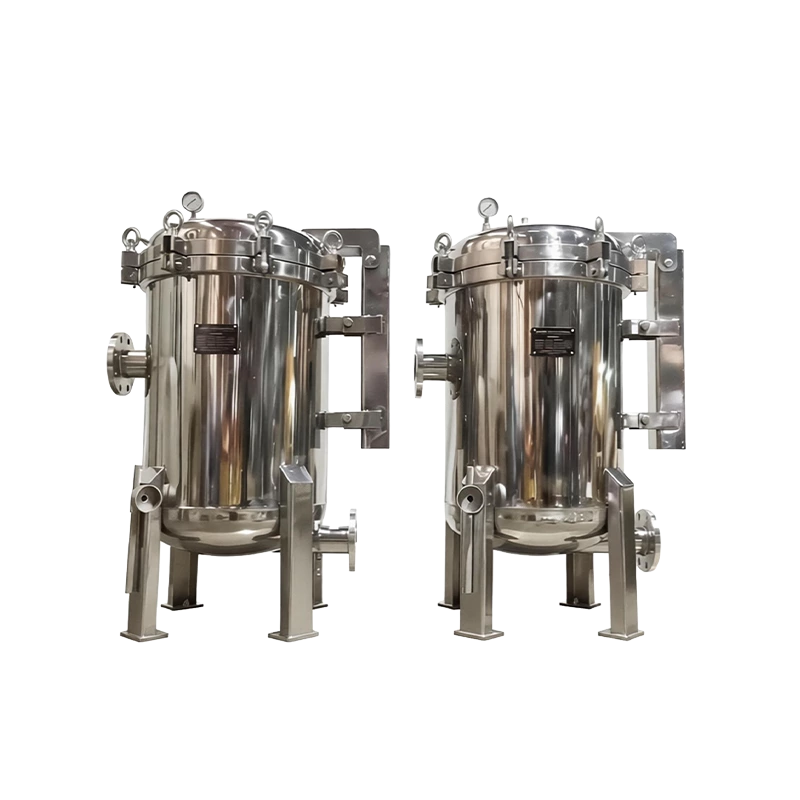
- Filtration accuracy
- 0.1μm - 100μm
- Temperature range
- 5°C - 120°C
- Flow rate
- 1 - 500 m³/h
- Operating pressure
- 0.6 - 1.0 MPa
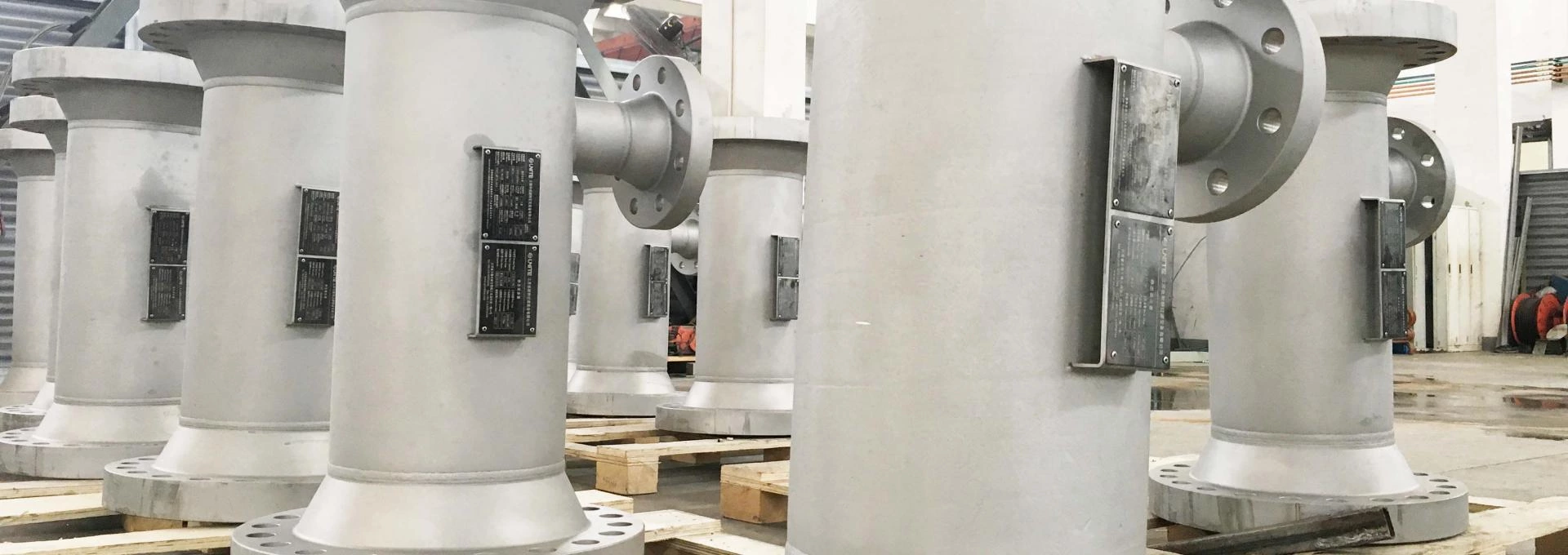
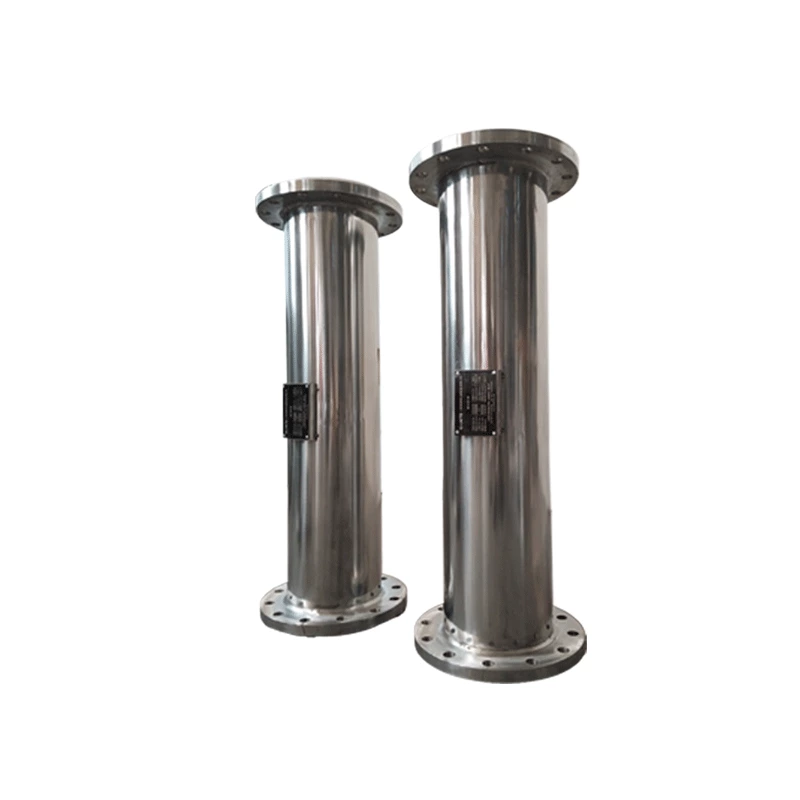
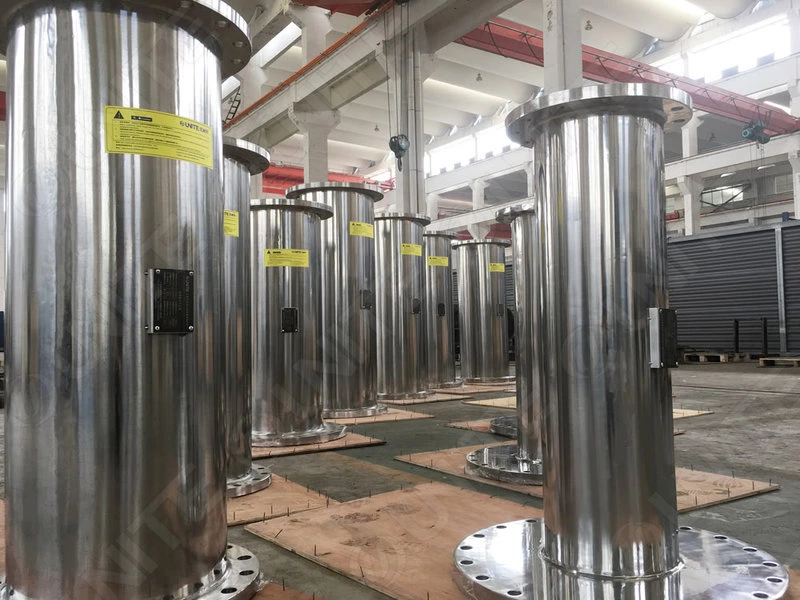
UNITE static mixers are available in three main types: SK static mixers, SV static mixers, and SX static mixers, providing efficient and reliable mixing solutions for different process requirements.
The SK type static mixer, also known as a single-helix static mixer, consists of helical elements twisted by 180° or 270°. When installed inside a pipeline, adjacent mixing elements rotate in opposite directions, creating turbulence and improving fluid mixing.
Compared with the SV type static mixer, the SK type provides a lower mixing efficiency and has a stronger scaling tendency, making it suitable for general mixing applications with less demanding requirements.
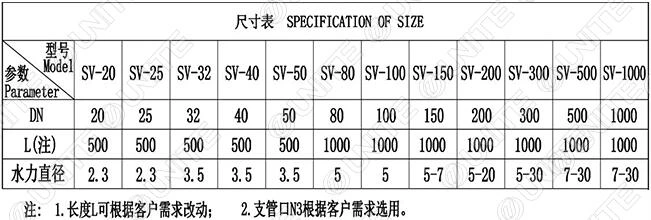
The SV type static mixer consists of cylindrical mixing elements assembled from specially designed corrugated plates. With no moving parts, it relies on its unique internal structure and fluid dynamics to divide, recombine, and disperse fluids.
The SV static mixer provides excellent mixing performance for immiscible fluids and is widely used where efficient and uniform mixing is required.
The SX type static mixer uses intersecting bar elements installed at a 45° angle to the pipe axis. Its mixing performance is between the SV and SK types, providing a balance between mixing efficiency and pressure loss.
For emulsification applications, the SX mixer can achieve droplet dispersion of 2–5 μm. In general mixing processes, the non-uniformity coefficient can reach ≤1–5%, while maintaining a relatively low scaling tendency.
Pressure drop calculations for the SX type static mixer are based on hydraulic diameter and consider the influence of friction coefficients caused by the open-area ratio.
No Moving Parts:
This means they are durable, low maintenance, and highly reliable.
Efficient Mixing:
Even without moving parts, they quickly and uniformly mix liquids or gases.
Energy Efficient:
They don't require external power (like a motor); they use the fluid's own flow to mix, which saves electricity.
Compact Design:
They are just a short section within a pipe, so they save space and are easy to install.
Wide Applicability:
They can mix various types of liquids or gases, making them very versatile.
The fluid containing impurities enters the bottom chamber (1) of thefully automatic filter. The fluid velocity decreases in this chamber, andthe fluid continues to flow upwards, passing from the inside out throughthe specially arranged and sealed filter element assembly (2) in the filterchamber. Impurities are intercepted on the inner surface of the filterelement, and the filtered clean fluid flows out through the outlet (3).Backwashing is accomplished by utilizing the pressure differencebetween the pipeline pressure and atmospheric pressure. When thedifferential pressure transmitter (4) is drivento rotate by the motor (5), and the drain port (6) opens. At this time, thedrain port is connected to the atmosphere, creating a pressuredifference. The clean fluid on the outside of the filter elementbackwashes the filter element assembly. The backwashing suction deviceselects the dwell time for each filter element assembly based on theimpurity characteristics and backwashes each set of filter elementassemblies in the filter chamber one by one.When the differential pressure returns to its initial value, the drain valvecloses, the motor stops driving, and the filter continues to filter. Theentire process is continuous, and the backwashing water volume is small,without affecting the outlet pressure.The control system (7) can be remotely controlled by DCS, and thebackwashing time is adjustable.
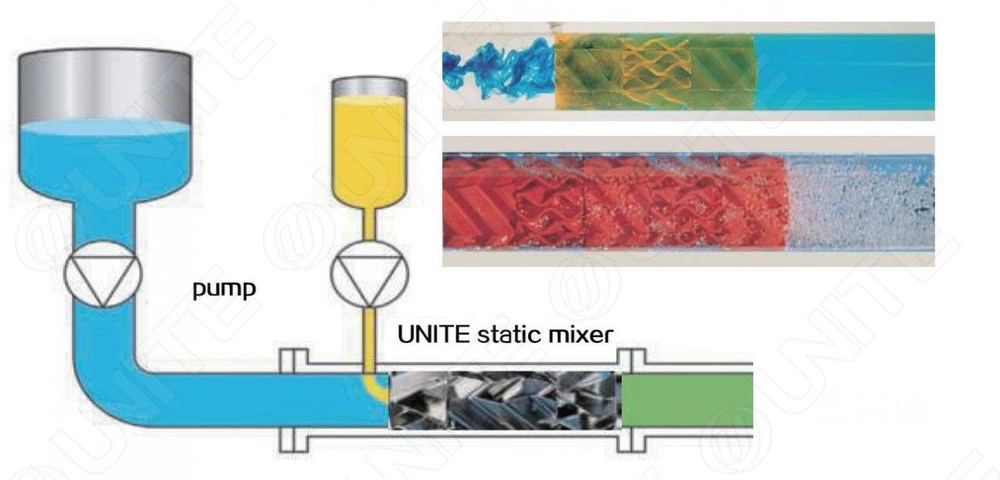
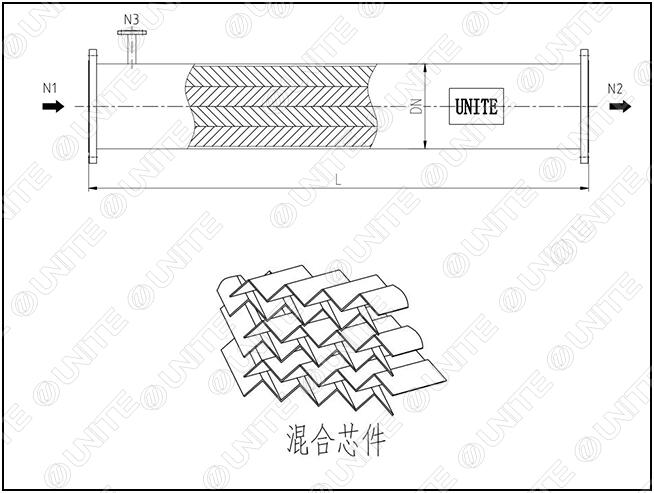
The mixing process in a static mixer is achieved by mixing elements fixedinside the pipe. Due to the action of these mixing elements, the fluidrotates alternately to the left and right, constantly changing its flowdirection. This not only pushes the central fluid flow towards theperiphery but also pushes the peripheral fluid towards the center,resulting in excellent radial mixing. Simultaneously, the fluid's ownrotational motion also occurs at the interfaces between adjacentelements. This complete radial circulation mixing action significantlyreduces temperature gradients, velocity gradients, and mass gradientsacross the pipe's cross-section.
Talk to Our Engineers to Get a Free, Customized Filtration Solution.
A Static Mixer is a device installed inside a pipeline that mixes fluids continuously without any moving parts. It uses internal mixing elements to create controlled turbulence and achieve efficient blending of liquids or gases.
As fluids pass through the mixer, specially designed fixed elements divide, rotate, and recombine the flow multiple times. This process creates uniform mixing of components such as chemicals, gases, or liquids.
Key advantages include no moving parts, low maintenance, compact design, energy efficiency, consistent mixing quality, and suitability for continuous industrial processes.
Static mixers are widely used in chemical processing, water treatment, oil & gas, pharmaceuticals, food and beverage, and polymer production where precise and continuous mixing is required.
Static mixers have no moving parts and rely on flow energy for mixing, while dynamic mixers use motors or rotating impellers. Static mixers are simpler, more energy-efficient, and require less maintenance.


For a large chemical plant in the Dalian Development Zone, UNITE supplied a modular automatic self-cleaning filtration unit for high-flow circulating cooling-water purification and reuse. The system combines stainless-steel wedge-wire screens, motor-driven suction or brush cleaning, automatic blowdown, differential-pressure and timer triggers, PLC control, touchscreen monitoring, remote communication, and corrosion-resistant construction. The reported result was an extension of heat-exchanger cleaning and maintenance cycles by more than 50%, together with zero manual intervention for automatic blowdown.

For Jiangxi Salt Chemical’s 55,000 t/y high-strength calcium sulfate project, UNITE supplied multiple large-scale automatic candle filters that integrate solid-liquid separation, displacement washing, pressure dewatering, back-pulse cake release, automatic discharge, and PLC-based process control. The project improved filter-cake washing, supported calcium sulfate quality above the stated industry benchmark, and reduced manual maintenance costs by approximately 60% compared with traditional filtration equipment.

Empowering China Minmetals' battery-grade production, this fullyautomatic separation solution achieves nano-level filtration and automateddischarge for high-efficiency expansion.


We use cookies to collect information about how you use this site. We use this information to make the website work as well as possible and improve our services.more details