High Flow Filter: Working Principle, Applications & Selection Guide
High flow filtration is widely used in industrial processes where large liquid volumes must be filtered continuously while maintaining stable flow and manageable pressure loss. Compared with conventional cartridge filtration, a high flow filter is designed around a larger filtration area and high-capacity filter elements, allowing the system to process higher flow rates with fewer elements.
For applications such as industrial process water, cooling water, power generation, petrochemical processing, and chemical production, selecting the right high flow filtration system requires more than simply matching the flow rate. Engineers should also evaluate filtration accuracy, contaminant loading, operating pressure, temperature, fluid compatibility, maintenance requirements, and the filtration duty of the downstream equipment.
This guide explains how a high flow filter works, where it is used, how it compares with conventional cartridge filtration, and which process parameters should be considered during selection.
What Is a High Flow Filter?
A high flow filter is an industrial filtration system designed to process large volumes of liquid through a high-capacity filter element or filtration module.
Compared with conventional small-diameter cartridge filters, high flow filters typically use larger filtration elements and a larger effective filtration area. This allows the equipment to handle higher flow rates while reducing the number of filter elements required for a given application.
A high flow filter is commonly considered when a process requires:
-
High liquid flow capacity
-
Continuous or long-duration operation
-
Effective suspended-solid removal
-
Compact equipment arrangement
-
Reduced filter element change frequency
-
Stable filtration performance
For a broader overview of industrial filtration technologies, see the Industrial Filtration Systems page.
For standard high-flow and cartridge filtration equipment, you can also compare the options in the Standard Product Series.
How Does a High Flow Filter Work?
The basic working principle of a high flow filter is straightforward: contaminated liquid enters the filter housing, passes through the filter element, and exits as filtered liquid.
1. Fluid Inlet
The process fluid enters the filter housing through the inlet connection and is distributed toward the high flow filter elements.
Proper flow distribution is important because uneven flow can cause premature loading of part of the filter media while other areas remain underused.
2. Particle Capture
As the liquid passes through the filtration media, suspended solids and other contaminants are retained by the filter element.
Depending on the selected filter media and filtration rating, the system can be configured for different particle-removal requirements.
3. Clean Fluid Outlet
After passing through the filter element, the filtered liquid leaves the housing through the outlet and continues to the downstream process.
4. Pressure Differential Monitoring
As contaminants accumulate on or within the filter element, filtration resistance gradually increases. Differential pressure across the filter is therefore an important operating indicator.
When the pressure differential reaches the appropriate maintenance level, the filter element can be cleaned or replaced according to the specific equipment design and process requirements.
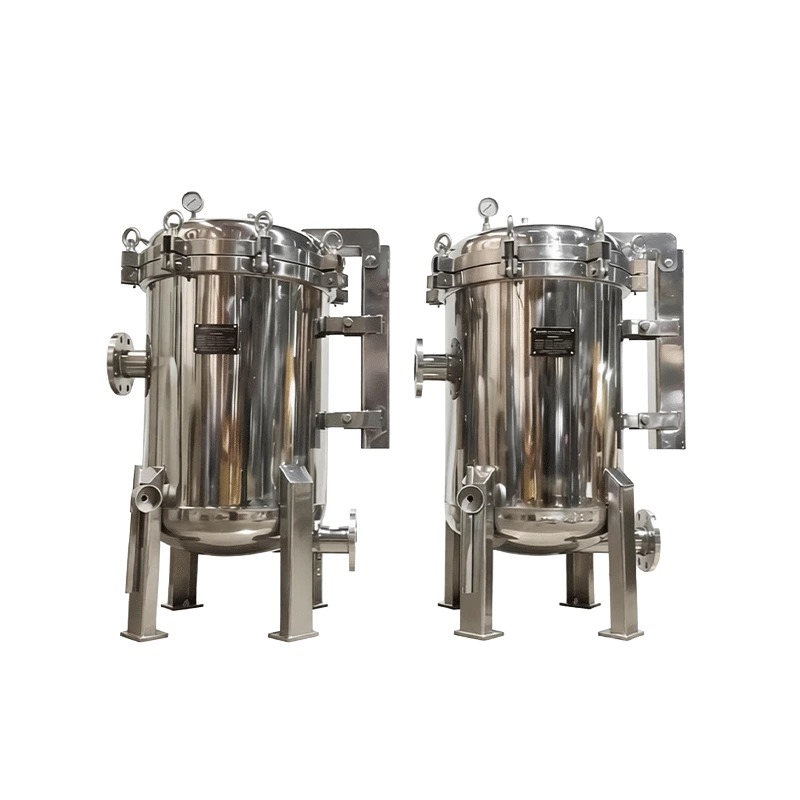
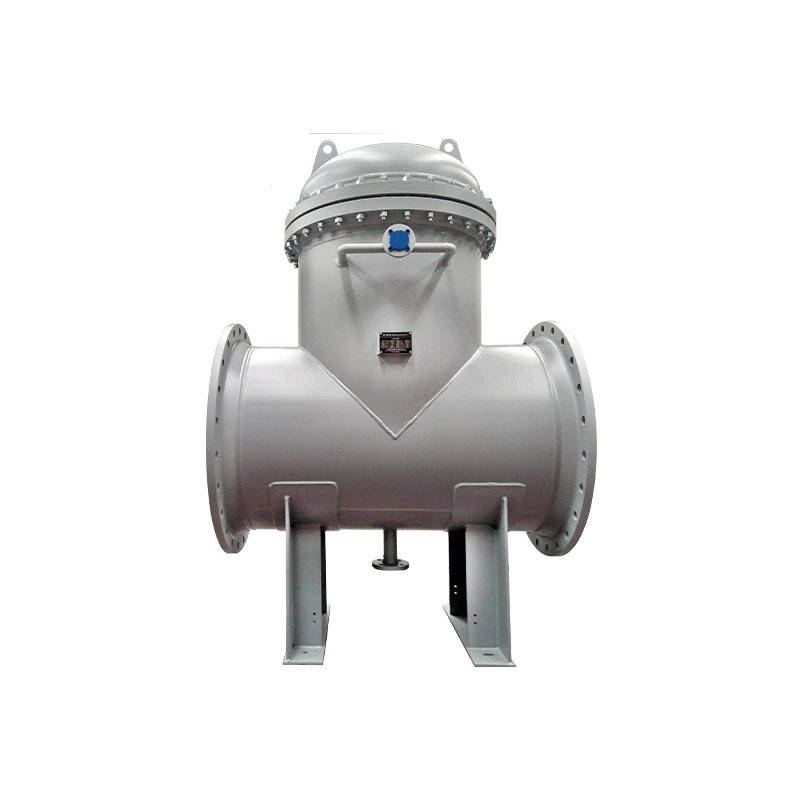
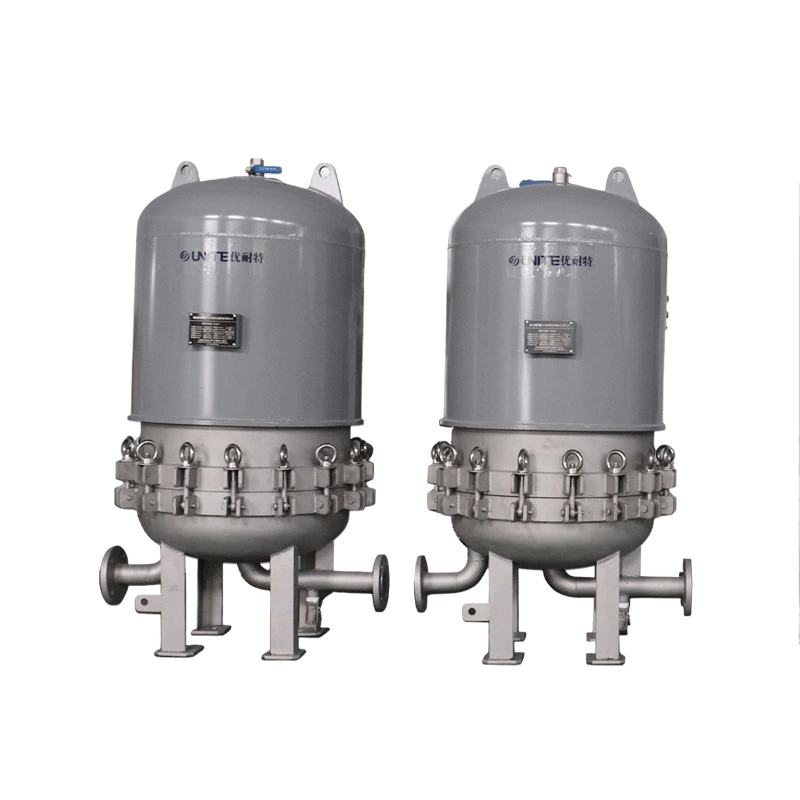
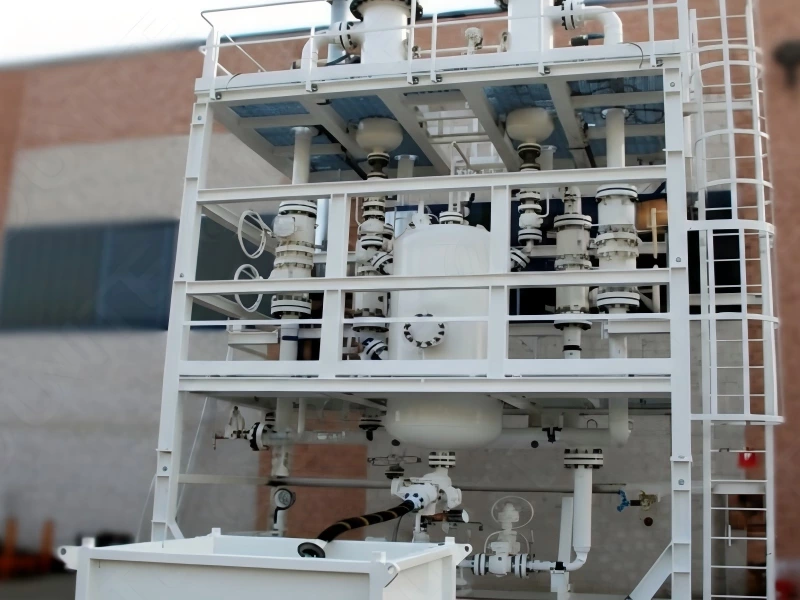
UNITE's High-flow Filter uses large-diameter filter elements and a high-capacity filtration configuration for large-flow industrial applications.
Key Advantages of High Flow Filters
1. High Flow Capacity
The main purpose of a high flow filter is to handle larger liquid volumes without relying on a large number of conventional filter cartridges.
This makes high flow filtration particularly suitable for:
-
Industrial process water
-
Cooling water
-
Large-scale water treatment
-
Petrochemical process streams
-
Power generation systems
The appropriate capacity should always be determined from the actual process flow, contaminant loading, fluid properties, and required filtration performance.
2. Large Filtration Area
A larger filter element provides a greater effective filtration area.
This can help distribute contaminant loading more evenly across the filter media and support stable operation at higher flow rates.
The design is particularly useful when conventional cartridge housings would require many elements in parallel.
3. Reduced Number of Filter Elements
For high-flow applications, using fewer high-capacity elements can simplify:
-
Housing configuration
-
Installation
-
Element replacement
-
Routine maintenance
The exact number of elements required depends on the filter model, filtration rating, fluid characteristics, and design flow rate.
4. Compact Equipment Arrangement
A high flow filtration system can provide substantial filtration capacity without requiring an unnecessarily large number of individual filter housings.
This can be useful where plant layout, skid dimensions, or maintenance access are important design considerations.
5. Flexible Industrial Applications
High flow filters can be adapted to a range of industrial liquid filtration duties, particularly where large flow rates and suspended-solid removal are important.
UNITE currently lists high-flow filtration applications in areas including water treatment, power generation, petrochemical processing, chemical processing, and industrial process water.
High Flow Filter Applications
High Flow Filtration for Industrial Water
Industrial water systems can contain suspended solids, rust particles, process debris, and other contaminants that need to be removed before downstream equipment.
High flow filtration can be considered for:
-
Cooling water
-
Circulating water
-
Process water
-
Water reuse systems
-
Pretreatment applications
For larger industrial water filtration duties, high flow filtration can be integrated into a broader industrial filtration system.
High Flow Filters for Power Generation
Power plants and energy facilities often require continuous filtration of process and cooling water streams.
High flow filters can be used where the process requires:
-
Large liquid flow capacity
-
Continuous particle removal
-
Equipment protection
-
Stable filtration performance
The final filtration configuration should be determined according to the process medium and the requirements of the protected equipment.
High Flow Filtration in Petrochemical and Chemical Processing
Chemical and petrochemical processes may contain suspended solids, process residues, or other contaminants that can affect downstream equipment.
High flow filtration can be applied to suitable liquid streams for:
-
Process fluid filtration
-
Equipment protection
-
Circulating liquid filtration
-
Pretreatment before downstream separation
Material compatibility is particularly important when the process fluid is corrosive or chemically aggressive.
High Flow Filter vs. Conventional Cartridge Filter
High flow filters and conventional cartridge filters are not interchangeable in every application. The appropriate choice depends on flow rate, filtration duty, contamination level, required filtration accuracy, and operating conditions.
| Parameter | High Flow Filter | Conventional Cartridge Filter |
|---|---|---|
| Typical flow duty | Large-flow applications | Small to medium-flow applications |
| Filter element | Large-format/high-capacity element | Conventional cartridge |
| Number of elements | Fewer elements may be required | More elements may be required as flow increases |
| Filtration area | Large | Depends on cartridge type and number |
| Typical role | High-capacity industrial filtration | Fine or general-purpose filtration |
| Maintenance approach | Element cleaning or replacement depending on design | Cartridge replacement or cleaning depending on element |
| Suitable applications | Large-scale process filtration | General and precision filtration |
For more information about conventional cartridge filtration, see the Cartridge Filter product page.
You can also compare conventional bag and cartridge-style precision filtration in the Bag Filter vs. Precision Filter: Key Differences & Selection Guide.
High Flow Filter vs. Bag Filter: How Are They Different?
High flow filters and bag filters can both be used for industrial liquid filtration, but they are designed around different filtration configurations.
A bag filter uses a fabric filter bag installed inside a housing, while a high flow filter generally uses a larger-capacity filtration element.
A bag filter may be appropriate when:
-
The process requires straightforward liquid filtration
-
Solids loading is relatively high
-
Filter bag replacement is acceptable
-
Flexible bag configurations are preferred
A high flow filter may be more suitable when:
-
The flow rate is high
-
A compact high-capacity configuration is required
-
Fewer filter elements are preferred
-
Stable continuous operation is important
See the Bag Filter product page for more information about conventional bag filtration.
How to Select a High Flow Filter
Selecting a high flow filter should begin with the process requirements rather than the filter model itself.
1. Determine the Required Flow Rate
Flow rate is one of the most important parameters in high flow filter selection.
You should identify:
-
Normal flow rate
-
Maximum flow rate
-
Minimum operating flow
-
Expected future capacity
-
Continuous or intermittent operation
Do not size the equipment using only the average flow rate. Peak operating conditions and process fluctuations should also be considered.
2. Define the Required Filtration Rating
The required filtration rating depends on:
-
Particle size
-
Downstream equipment requirements
-
Product quality requirements
-
Process objectives
The filtration rating should be selected based on actual contaminant characteristics rather than using a generic micron value.
3. Understand the Contaminant Load
The amount and characteristics of solids in the feed directly affect filter loading and element life.
Important parameters include:
-
Suspended solids concentration
-
Particle size distribution
-
Particle shape
-
Contaminant variability
-
Expected solids loading during startup
High solids loading may require upstream separation or a different filtration technology rather than simply increasing the number of high flow elements.
4. Check Operating Pressure and Temperature
The filter housing, filter element, seals, and wetted materials must be suitable for actual operating conditions.
At minimum, confirm:
-
Operating pressure
-
Design pressure
-
Operating temperature
-
Design temperature
-
Pressure fluctuations
-
Fluid compatibility
5. Consider Fluid Properties
Liquid properties can significantly affect filtration performance.
Important parameters include:
-
Viscosity
-
Density
-
Chemical composition
-
Corrosiveness
-
Temperature-dependent viscosity changes
For chemical or petrochemical applications, material compatibility should be considered before equipment selection.
6. Evaluate Maintenance Requirements
A high flow filtration system should be evaluated over its entire operating life, not only by initial equipment cost.
Consider:
-
Element replacement frequency
-
Element cleaning requirements
-
Maintenance access
-
Spare element availability
-
Labor requirements
-
Disposal requirements
The most suitable solution is the one that meets the process requirements while maintaining practical operating and maintenance costs.
High Flow Filter Selection Checklist
Before requesting a high flow filtration solution, engineers should prepare the following information:
| Parameter | Information to Provide |
|---|---|
| Fluid | Type and composition |
| Flow rate | Normal / minimum / maximum |
| Operating pressure | Normal and design pressure |
| Temperature | Normal and maximum temperature |
| Filtration rating | Required micron rating |
| Contaminants | Type, concentration and particle size |
| Viscosity | Operating viscosity |
| Material compatibility | Required housing and element materials |
| Installation | Available space and connection requirements |
| Maintenance | Cleaning or replacement preference |
| Downstream equipment | Protection or quality requirements |
Providing this information helps the filter manufacturer evaluate the application and determine an appropriate filtration configuration.
When Should You Choose a High Flow Filter?
A high flow filter is worth considering when the application combines several of the following requirements:
-
Large liquid flow rate
-
Continuous industrial operation
-
Significant suspended-solid loading
-
Limited installation space
-
Need for high filtration capacity
-
Reduced number of filter elements
-
Stable filtration performance
For smaller-flow applications or applications requiring highly precise final filtration, a conventional cartridge or precision filter may be more appropriate.
See the Precision Filter: Working Principle, Types & Applications article for a closer look at fine filtration technology.
High Flow Filtration in a Complete Industrial Filtration System
In many industrial processes, a high flow filter is not an isolated piece of equipment. It can be combined with other filtration and separation technologies according to the process sequence.
For example, a complete process may include:
Pre-treatment → High Flow Filtration → Precision Filtration → Downstream Process
The actual configuration depends on the contaminant characteristics and the required outlet quality.
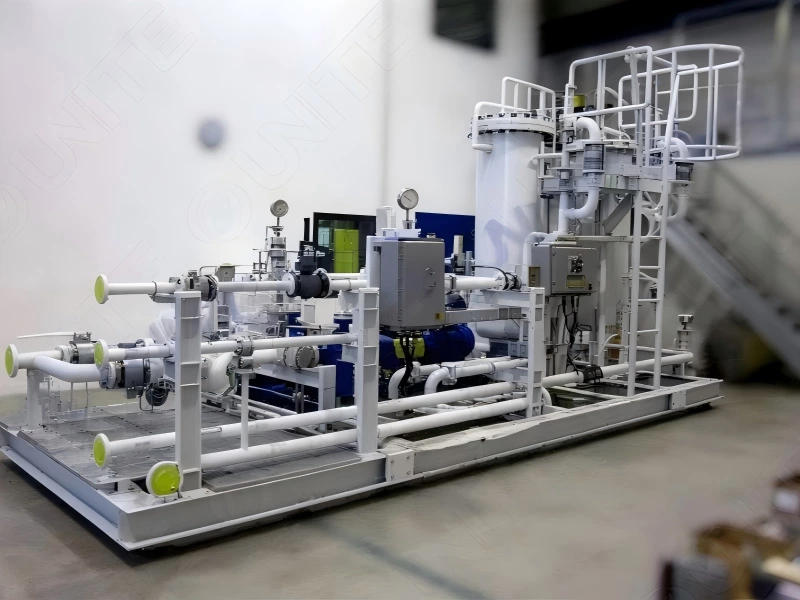
For more complex applications, UNITE provides both standard filtration equipment and customized industrial filtration systems. See the Industrial Filtration System Series for related technologies.
Frequently Asked Questions
What is a high flow filter?
A high flow filter is an industrial filtration system designed to process large liquid volumes using high-capacity filter elements and a large effective filtration area.
How does a high flow filter work?
Contaminated liquid enters the filter housing, flows through the filtration element, and leaves through the outlet after suspended solids and other targeted contaminants are retained by the filter media.
What are high flow filters used for?
High flow filters are used in applications such as industrial water treatment, power generation, petrochemical processing, chemical processing, and other large-scale liquid filtration processes.
What is the difference between a high flow filter and a cartridge filter?
The main difference is filtration capacity and element configuration. High flow filters are designed to process larger flow rates with high-capacity elements, while conventional cartridge filters are commonly used for general or precision filtration duties at lower flow rates.
How do I choose a high flow filter?
Start with the required flow rate, filtration rating, contaminant loading, operating pressure, temperature, fluid properties, material compatibility, and maintenance requirements. The complete process conditions should be evaluated before selecting the equipment.
Can a high flow filter be used for high solids loading?
It can be considered for applications with significant suspended solids, but the actual suitability depends on the contaminant concentration, particle characteristics, required filtration rating, and expected element loading. High-solids applications may also benefit from upstream separation.
Conclusion
A high flow filter is designed for industrial filtration applications where large liquid flow rates, high filtration capacity, and practical maintenance are important.
The correct selection should not be based on flow rate alone. Engineers should evaluate the complete process, including contaminant characteristics, filtration requirements, operating conditions, fluid properties, downstream equipment, and maintenance strategy.
For applications requiring large-scale liquid filtration, a properly selected high flow filtration system can provide an effective balance between filtration capacity, equipment configuration, and operational requirements.
To learn more about UNITE's high-capacity filtration solution, visit the High-flow Filter product page or contact UNITE engineers with your process data for a customized filtration solution.