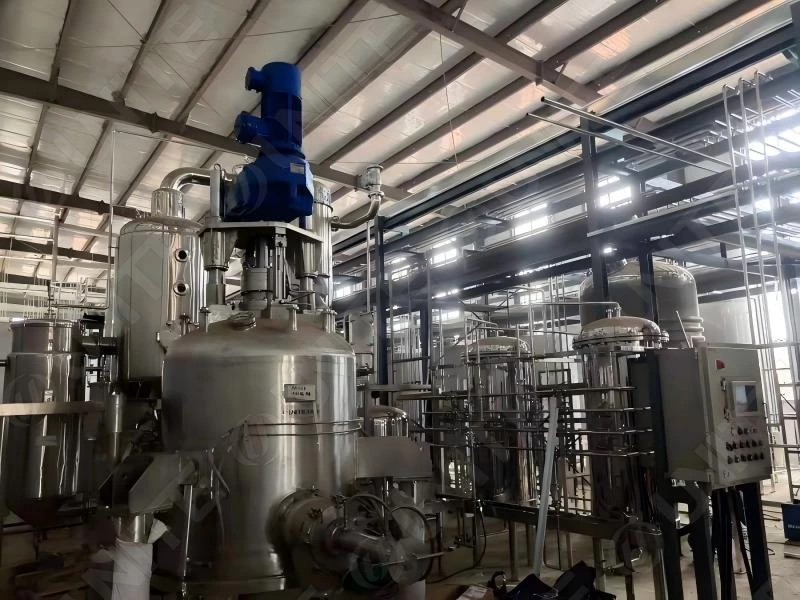
Tubular Filtration System: Working Principle, Published Parameters, Applications, and Selection Guide
1. What is a tubular filtration system?
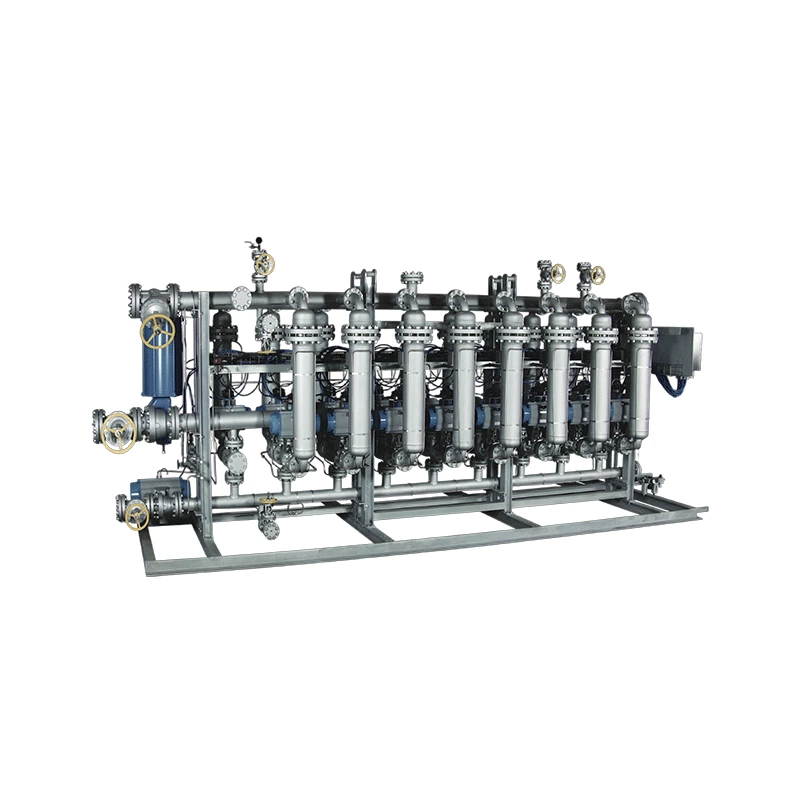
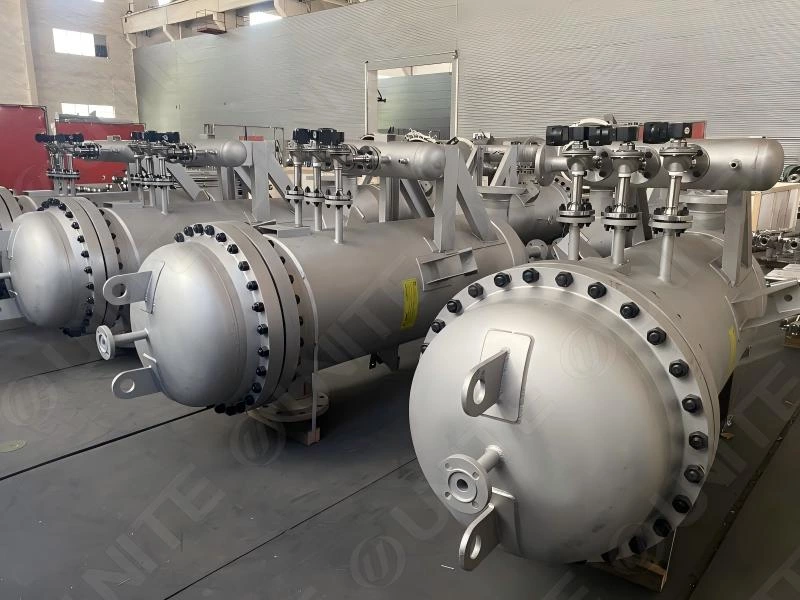
A tubular filtration system is a liquid-solid separation system built around tubular filter elements. Feed liquid enters a filtration manifold and passes through the filter elements. Suspended particles are retained on the element surface, while clarified liquid exits through the outlet manifold. The tubular configuration provides a large filtration area within a modular arrangement and can be adapted by adding or reducing filtration units according to the required flow rate.
UNITE positions its U-FB-T series as a fully automatic, modular tubular backwashing filter. The product page emphasizes high reliability, flexible expansion, automatic operation, reduced manual cleaning, and maintenance access to individual components. The broader filtration series describes tubular models for 1–500 μm filtration accuracy, 10–1,000 m³/h flow, 0.6/1.0/1.6 MPa operating pressure, and 0–250°C temperature range. These values should be treated as published reference information rather than a universal guarantee for every model or fluid.
2. Basic structure and key components
The system typically includes a feed manifold, multiple tubular filtration units, an outlet manifold, inlet and backwash valves, a backwash discharge manifold, pressure-difference monitoring, and an automated control system. The product page also identifies pneumatic drain valves and a Siemens PLC control system as design features of the described system.
The multi-tube arrangement is important for continuous service. Individual units can be isolated and cleaned while the remaining units continue filtering. This arrangement also allows the filtration area and throughput to be configured for different process requirements. The final vessel layout, materials, valve configuration, instrumentation, and control logic require project-specific engineering confirmation.
3. How does a tubular backwashing filter work?
3.1 Filtration
During normal filtration, raw liquid enters through the inlet manifold and flows into each active filtration unit. According to the product description, liquid passes from the outside of the filter element toward the inside. Particulates are intercepted on the outer surface and progressively form a filter cake. Clarified liquid then flows to the outlet manifold.
3.2 Fouling detection
As retained solids accumulate, the pressure difference across the filter units increases. UNITE states that the backwash sequence can be initiated when the differential pressure reaches a preset value, usually 70–130 kPa, or when a programmed cleaning cycle is completed. This is a published operating description, not a recommended setpoint for every process. Setpoints should be established through commissioning and process testing.
3.3 Sequential backwashing
When one unit requires cleaning, its inlet valve is closed and its backwash valve is opened. Clarified liquid from other active units flows backward through the selected element because of the pressure difference between the element interior and the backwash outlet. The reverse flow removes accumulated impurities from the element surface, and the backwash manifold directs the flushed material to drain. The selected unit returns to filtration after the backwash valve closes and the inlet valve reopens. The controller repeats the sequence across the filtration units.
3.4 Continuous operation and control
Sequential backwashing allows the system to maintain filtration while individual units are cleaned. The product page states that the system supports 24-hour continuous filtration and PLC-based remote control. Whether a particular installation can maintain the required production flow during cleaning depends on the number of parallel units, process variability, backwash duration, and system design margins.
4. Main advantages and limitations
The main operational advantage is reduced interruption during element cleaning. A modular multi-tube arrangement also supports flexible capacity configuration and access to individual components for maintenance. The product page further highlights high-flow processing, compact structure, high-pressure suitability, robust design for harsh conditions, extended element service life, and low-clogging operation. These are design-positioning claims from the manufacturer and should be validated against the target fluid and duty cycle.
The system is not automatically the best choice for every separation duty. Selection can be affected by particle-size distribution, solids concentration, viscosity, abrasiveness, chemical compatibility, temperature, pressure, required filtrate quality, backwash-fluid availability, and the disposal route for backwash solids. The page’s FAQ describes tubular systems in broader terms that include tubular membranes, high-velocity feed, cross-flow, and periodic cleaning. Because this wording is not fully aligned with the detailed U-FB-T backwash sequence, buyers should confirm the exact element type, flow path, separation mechanism, and model configuration during technical review.
5. Published reference parameters
| Parameter | Published information | Selection note |
| Product series | U-FB-T tubular backwashing filter; model table lists FC-T units | Confirm the exact model designation and configuration in the quotation. |
| Filtration accuracy | 1–500 μm for the Tubular Filtration System category | Confirm whether the stated accuracy is nominal or absolute and match it to the particle-size distribution. |
| Flow rate | 10–1,000 m³/h | Confirm flow at the actual viscosity, temperature, solids loading, and number of active units. |
| Operating pressure | 0.6, 1.0, or 1.6 MPa | Confirm design pressure, operating pressure, pressure drop, and relief protection. |
| Temperature range | 0–250°C | Confirm wetted-material limits, gasket and seal selection, and the allowable temperature during backwash. |
| Backwash trigger | Differential pressure usually 70–130 kPa, or completed cleaning cycle | Treat this as a published reference description; validate the control setpoint during commissioning. |
| Control | Siemens PLC and remote-control capability are stated product features | Confirm communication protocol, remote-access boundaries, alarms, and fail-safe behavior. |
| Dimensions | Model-specific dimensions are published for FC-T-3 through FC-T-116.8 | Confirm units, tolerances, nozzle orientation, access clearance, and transport limits before layout approval. |
Published model table
The product page lists the following reference models. The source labels the filtration-area column as “Filter Area (m)” and presents values such as “3.0*4”; the notation should be confirmed with UNITE before it is used for equipment sizing.
| Model | Caliber (DN) | Published filter-area entry | ΦD | L | W | H |
| FC-T-3 | 50 | 3.0 × 4 | 406 | 5,500 | 1,800 | 2,700 |
| FC-T-4.8 | 100 | 4.8 × 4 | 508 | 6,100 | 1,900 | 3,000 |
| FC-T-5.8 | 100 | 5.8 × 4 | 550 | 6,400 | 1,950 | 3,100 |
| FC-T-6.8 | 100 | 6.8 × 4 | 600 | 6,900 | 2,000 | 3,100 |
| FC-T-8.6 | 125 | 8.6 × 4 | 650 | 7,400 | 2,050 | 3,200 |
| FC-T-9.5 | 125 | 9.5 × 4 | 700 | 8,000 | 2,100 | 3,300 |
| FC-T-12 | 150 | 12 × 4 | 800 | 8,700 | 2,200 | 3,600 |
| FC-T-23.1 | 200 | 23.1 × 4 | 900 | 9,500 | 2,350 | 4,300 |
| FC-T-27 | 250 | 27 × 4 | 1,000 | 10,500 | 2,500 | 4,500 |
| FC-T-37.2 | 250 | 37.2 × 4 | 1,200 | 11,500 | 2,800 | 4,900 |
| FC-T-73.4 | 350 | 73.4 × 4 | 1,400 | 12,500 | 3,100 | 5,800 |
| FC-T-92.6 | 400 | 92.6 × 4 | 1,600 | 13,500 | 13,500 | 6,300 |
| FC-T-116.8 | 450 | 116.8 × 4 | 1,800 | 14,500 | 14,500 | 6,500 |
6. Industries and applications
Tubular filtration can be considered when a process needs continuous liquid filtration and the feed contains suspended solids, viscous material, or difficult-to-clean impurities. The product FAQ names chemical processing, mining, wastewater treatment, food and beverage, pharmaceuticals, and biotechnology as relevant industries.
UNITE’s environmental-water-treatment page explains that automatic backwash filters and multi-media filters are used to intercept sediment, fibers, grease, and particulate matter before advanced treatment units. This pretreatment can reduce pipe blockage and turbidity and can reduce the solids burden on downstream processes. The page also describes applications in industrial or municipal wastewater, water reuse, oily wastewater, solid-liquid separation, and side-stream filtration for circulating cooling water.
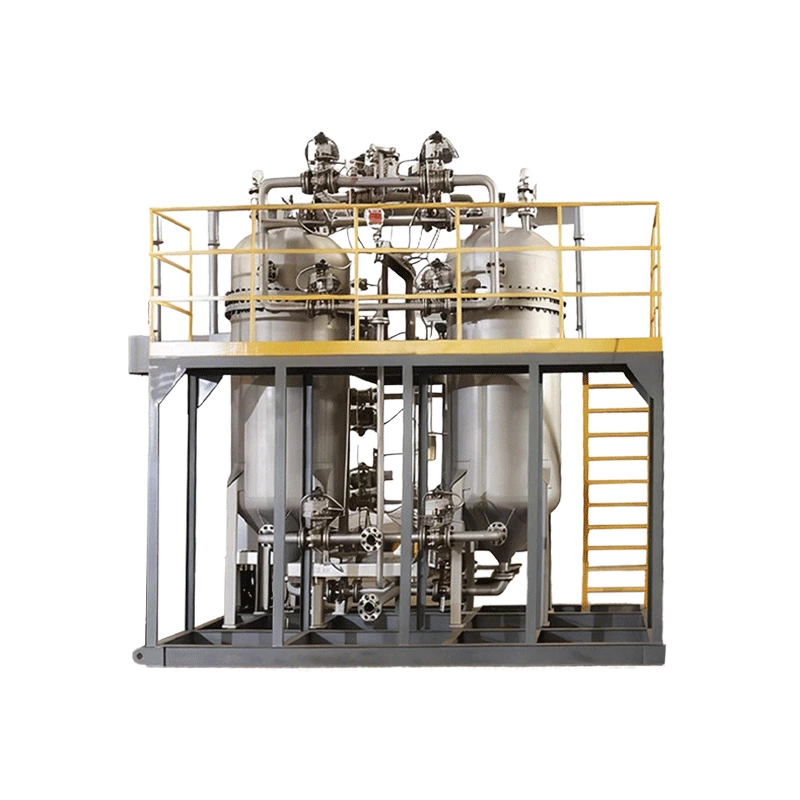
The mining application is especially relevant to the operating logic of automatic backwashing. In a published Xuzhou Mining project, a duplex backwash system was used for mine-water supply and gasification-related duties. The case describes coal fines, sand, and mineral scale, with one vessel filtering while the other was available for cleaning or standby. It reports an 85% reduction in nozzle failure rate for shearer cooling systems and a change from multiple manual screen cleanings per shift to once-daily inspections. These are project-specific claims and should not be generalized to all tubular-filter installations.
7. How to select a tubular filtration system
Begin with the process duty rather than the equipment label. Define the normal, minimum, and peak flow rates. Record the fluid’s viscosity at operating temperature. Measure or estimate total suspended solids, particle-size distribution, solids shape, abrasiveness, and expected solids loading. Identify whether the retained solids must be recovered, discharged continuously, or sent to a waste-treatment step.
Next, define the separation target. A nominal micron rating is not enough to predict filtrate quality without knowing the element construction, particle shape, fluid rheology, and test method. Ask the supplier to state the rating basis, expected pressure drop, cleaning performance, and test conditions.
Finally, check mechanical and control constraints. Confirm metallurgy, elastomers, temperature, pressure, corrosion allowance, backwash-fluid source, drain capacity, instrumentation, PLC integration, hazardous-area requirements where applicable, access space, and maintenance philosophy. For a continuous process, verify that the number of parallel units and the cleaning sequence preserve the required net flow during backwash.
| Selection question | Why it matters |
| What is the normal and peak flow? | Determines active filtration area, module count, and operating margin. |
| What are viscosity and temperature? | Affect pressure drop, element loading, materials, and pump duty. |
| What solids are present? | Determines element type, resistance to abrasion, cake behavior, and backwash effectiveness. |
| What filtrate quality is required? | Establishes the appropriate filtration rating and downstream protection objective. |
| Can the process tolerate a short flow reduction? | Determines whether sequential backwash, duplex configuration, or additional capacity is required. |
| Where will backwash solids go? | Influences drain design, environmental handling, and operating procedures. |
| How will the system be integrated? | Defines PLC signals, alarms, remote monitoring, valves, piping, and skid or field installation scope. |
8. System-integration perspective
A tubular filter is often one unit within a wider process train. In wastewater applications, it may serve as pretreatment before advanced purification. In mining, it may protect spray nozzles, cooling equipment, or downstream water systems. In chemical processing, it may protect pumps, instruments, heat exchangers, or reactors from suspended contaminants. The correct location depends on the contaminant and the consequence of carryover.
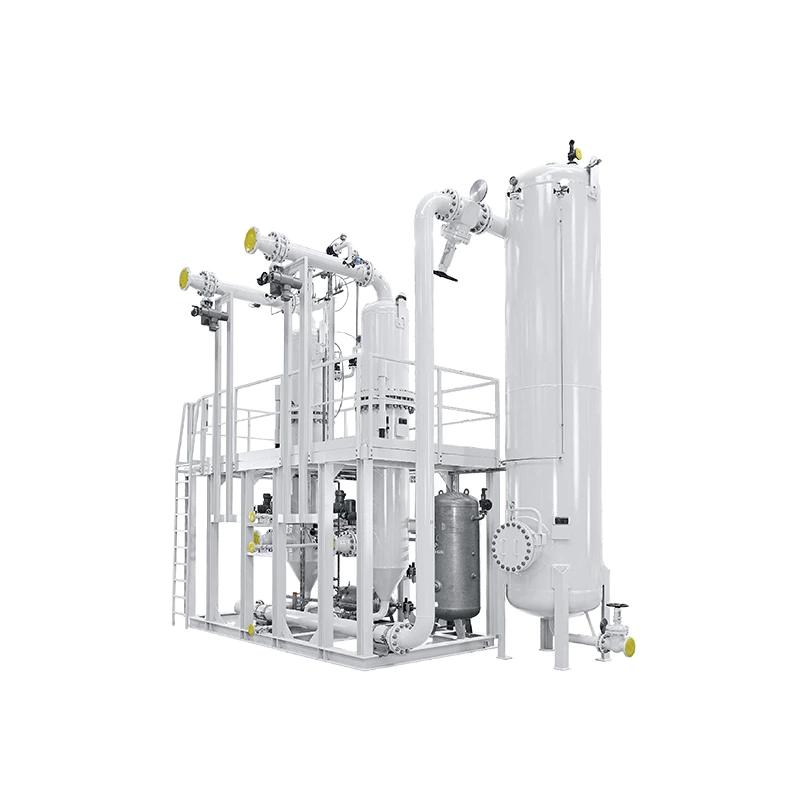
UNITE states that it supplies both standardized and customized filtration equipment and also offers skid-mounted and complete system-integration solutions. The Filtration System Series provides context for comparing tubular, automatic backwash, cross-flow, gas-solid, and microporous systems. A skid-mounted filtration and separation system may be relevant when the project prioritizes compact installation and integrated equipment delivery.
9. Frequently Asked Questions
Is a tubular filtration system the same as a tubular membrane system?
Not necessarily. “Tubular filtration system” can refer to systems using tubular screens, filter elements, or tubular membranes. The detailed U-FB-T product description focuses on modular tubular units with sequential liquid backwashing, while the page FAQ uses broader membrane and cross-flow language. Confirm the exact element and process configuration with the equipment supplier before final selection.
Can the system operate continuously during backwashing?
The described multi-unit arrangement is designed to backwash units sequentially while other units continue filtering. Whether the overall process maintains its target flow depends on system sizing, unit count, backwash duration, and feed conditions.
What filtration accuracy is published for the system?
The Tubular Filtration System category lists 1–500 μm. The suitable rating for a project must be confirmed against the feed, required filtrate quality, and the supplier’s stated rating method.
What flow rates are published?
The category page lists 10–1,000 m³/h. Actual capacity is application-specific and should be confirmed using the fluid’s viscosity, temperature, solids concentration, pressure drop, and selected model.
What starts the backwash cycle?
The product page describes differential-pressure control, with a usual reference range of 70–130 kPa, and time or cycle-based cleaning. The final control philosophy should be established during engineering and commissioning.
Which industries may use tubular filtration?
The website identifies chemical processing, mining, wastewater treatment, food and beverage, pharmaceuticals, and biotechnology. UNITE’s wider filtration portfolio also addresses petroleum, energy, new energy, and environmental applications.
How can I request a project-specific recommendation?
Provide flow rate, fluid composition, viscosity, temperature, pressure, solids data, required filtrate quality, operating schedule, and site constraints through UNITE’s contact page. The supplier lists ruby@unitefilter.com and +86 510 8595 5799 as contact routes.
Conclusion
A tubular filtration system is a practical candidate for continuous industrial liquid filtration when the process requires modular capacity, automatic cleaning, and controlled handling of suspended solids. UNITE’s published U-FB-T description emphasizes sequential backwashing, PLC control, compact modular construction, and flexible expansion. The published range of 1–500 μm, 10–1,000 m³/h, 0.6/1.0/1.6 MPa, and 0–250°C provides an initial screening point, not a substitute for process testing or engineering confirmation. The most important next step is to match the element and control configuration to the actual fluid, solids load, required filtrate quality, and continuity requirement.
References
[1] Tubular Filtration System — UNITE
[2] Filtration System Series — UNITE