Automatic Backwash Filtration System: Working Principle, Parameters, Applications, and Selection Guide
An automatic backwash filtration system is a self-cleaning industrial filter that removes solid particles from process liquids while maintaining filtration through sequential cleaning of parallel filter groups. UNITE’s published system uses differential-pressure or timer-controlled backwashing, V-SLOT gap-type metal filter elements, automatic valves, pressure monitoring, and PLC control. Published reference ranges include 1–100 μm filtration precision, 1.6–4.0 MPa standard design pressure, 0–250°C maximum design temperature depending on seals, and DN80–DN500 main-pipe connections. Final sizing and material selection require confirmation against the actual liquid, solids, flow, temperature, pressure, and discharge conditions.
1. What is an automatic backwash filtration system?
An automatic backwash filtration system is an industrial liquid-solid separation unit that captures suspended particles on filter elements and periodically cleans those elements by reversing the flow. Unlike a manually serviced filter, it is designed to detect contamination, initiate cleaning, discharge the removed solids, and return the cleaned group to normal filtration automatically.
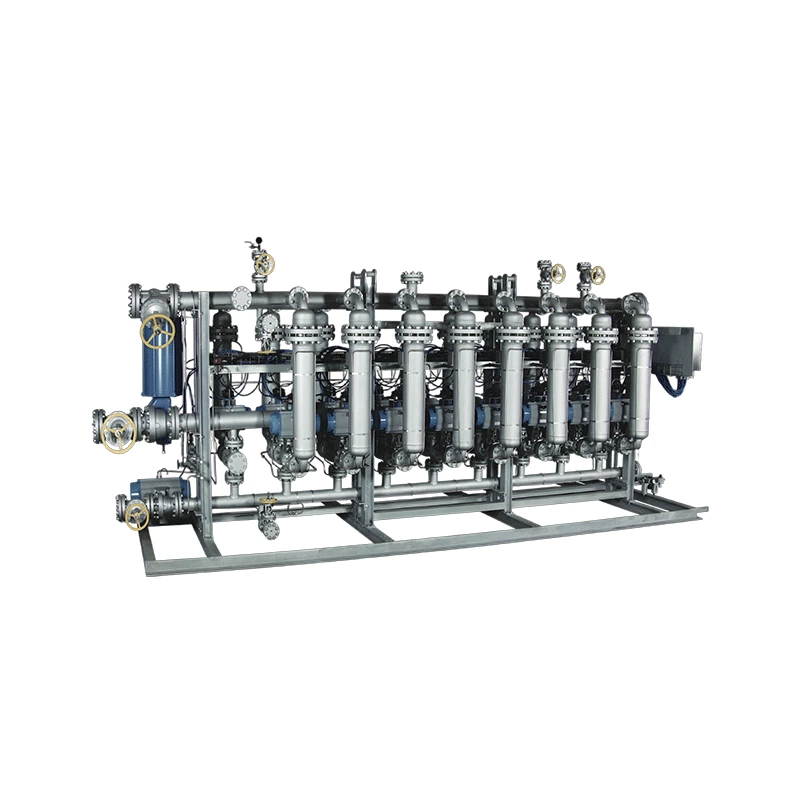
UNITE describes its system as a continuous self-cleaning solution for industrial process applications. Multiple filter units are arranged in parallel groups. While one group is backwashed, the remaining groups continue filtering, which helps maintain outlet flow and avoid a process shutdown.
This configuration is most relevant when a plant needs high availability, variable solids loading, protection for downstream equipment, or reduced routine intervention. It is not automatically the best choice for every liquid. Very high solids loading, sticky deposits, long fibers, severe abrasion, or dissolved-organic removal may require another cleaning mechanism or a staged treatment system.
2. Basic structure and key components
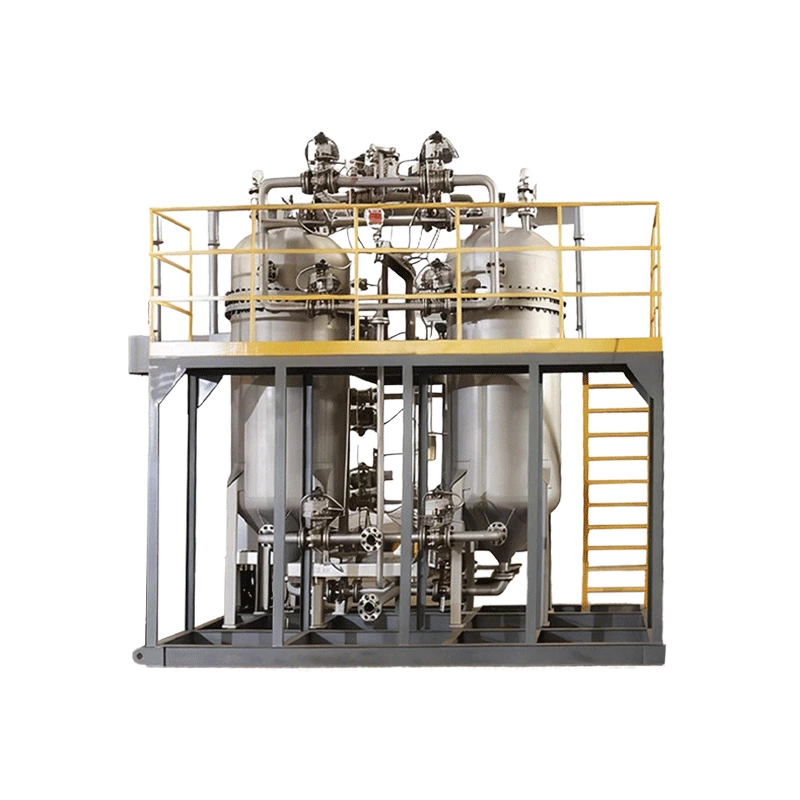
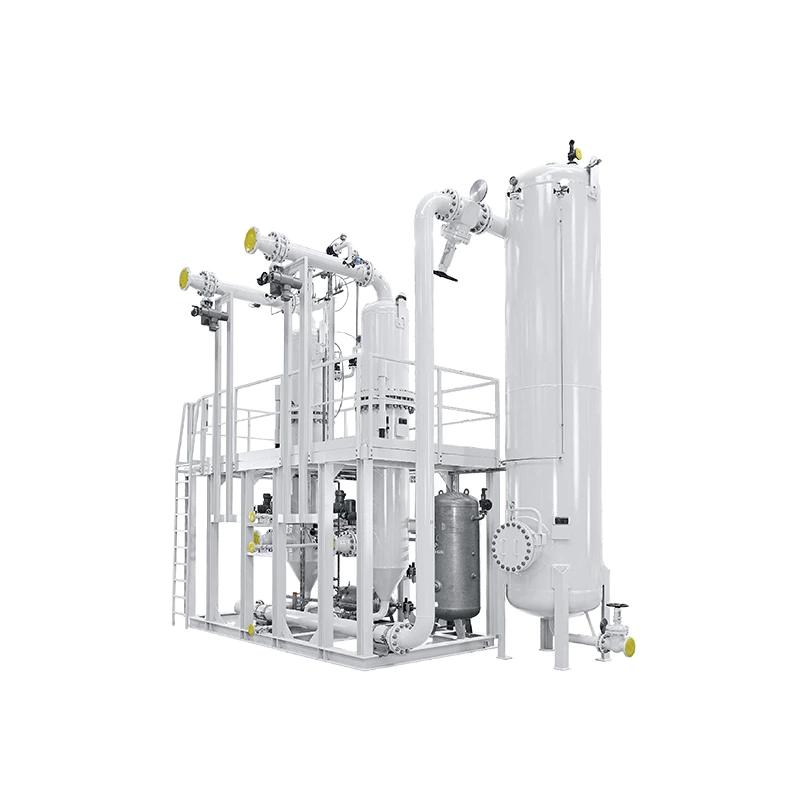
The system combines a pressure vessel or filter housing, internal metal filter elements, process and backwash valves, pressure instrumentation, a drain line, and an automatic control system. The exact arrangement depends on the required flow, number of units, process fluid, and operating pressure.
| Component | Function | Selection consideration |
| Filter vessel and shell | Contains the liquid and filter elements under process pressure | Confirm design pressure, temperature, wetted material, corrosion conditions, and connection standard. |
| V-SLOT gap-type metal filter elements | Retain solid particles at the specified filtration rating | Confirm target particle removal, solids shape, element material, and clean/dirty pressure drop. |
| Parallel filter groups | Allow one group to clean while other groups continue filtration | Size for normal and peak flow, required availability, and allowable temporary flow reduction. |
| Differential-pressure transmitter | Detects increasing resistance as solids accumulate | Set trigger and alarm values according to the process and available backwash pressure. |
| Pneumatic control valves | Isolate the group and direct clean liquid through the reverse-flow path | Confirm air quality, pressure, valve seat compatibility, fail position, and discharge conditions. |
| Drain or reject line | Removes the detached filter cake and backwash liquid | Check drain capacity, backpressure, solids handling, and environmental requirements. |
| PLC control system | Sequences valves, monitors pressure, and supports automatic operation | Confirm communication, alarm logic, voltage, enclosure rating, and plant-control integration. |
UNITE publishes 304, 316L, and duplex stainless steel options for filter elements, with additional shell materials including carbon steel and titanium depending on the design. Material compatibility must be checked against the actual chemical composition, concentration, temperature, and operating cycle.
3. Working principle
3.1 Inlet filtration
The process liquid enters the filter vessel and flows from the outside toward the inside of the filter elements. Suspended particles are retained on the outer surfaces, where they gradually form a filter cake.
3.2 Pressure monitoring
As the filter cake becomes thicker, the liquid experiences greater resistance. The differential pressure across the filter group increases. The control system monitors this pressure difference and can also use a time-based trigger.
3.3 Backwash activation
When the preset differential pressure or operating time is reached, the inlet valve of the affected group closes. The backwash valve opens rapidly. The system uses clean filtered liquid to create a reverse flow through the filter element.
3.4 Reverse-flow cleaning and discharge
The reverse flow travels from the inside of the element toward the outside. This dislodges the accumulated filter cake from the element surface. The removed material and backwash liquid leave through the drain line. Other groups are cleaned in sequence, after which the cleaned group returns to normal filtration.
The operational result is not “zero maintenance.” The system still requires inspection of valves, instruments, seals, control logic, filter elements, air supply, and discharge equipment. Automatic cleaning changes the maintenance pattern; it does not eliminate engineering and service requirements.
4. Main advantages and limitations
UNITE identifies continuous online filtration, reduced maintenance cost, stable filtration performance, automatic self-cleaning, and differential-pressure or timer-controlled backwashing as product advantages. These are design and operating features, not universal performance guarantees.
| Potential advantage | Why it may matter | Qualification |
| Continuous operation during cleaning | Parallel groups can preserve filtration while one group is cleaned | Confirm minimum operating flow while a group is isolated. |
| Automatic response to contamination | Differential-pressure control can adapt cleaning to solids accumulation | Trigger values must be set and validated for the actual process. |
| Reduced manual element servicing | Backwashing can reduce routine replacement of disposable media | Inspection and planned maintenance remain necessary. |
| Low backwash consumption | The published design emphasizes efficient cleaning | Actual consumption depends on solids loading, pressure, cycle time, and fluid properties. |
| High-flow arrangement | Multiple vessels and large main-pipe sizes support large process systems | Capacity must be calculated from flow, viscosity, pressure loss, and particle behavior. |
A backwash filter also has limits. The system needs a suitable clean-liquid source, sufficient pressure difference, a functional valve sequence, and a drain path that can accept the reject flow. A finer filtration rating is not automatically better because it can increase pressure drop, cleaning frequency, and element-blinding risk.
5. Published reference parameters
The following values are published by UNITE as reference parameters for the automatic backwash filtration system. They should not be interpreted as a guarantee that every configuration operates across the full range.
| Parameter | Published reference information | Selection note |
| Standard design pressure level | 1.6 MPa, 2.5 MPa, or 4.0 MPa | Select from normal and maximum pressure, transients, and applicable design code. |
| Maximum design temperature | 0–250°C, depending on seals | Confirm actual operating and upset temperature and elastomer compatibility. |
| Filtration precision | 1–100 μm | Base the target on downstream protection or product requirements, not nominal flow alone. |
| Filter unit valve size | 1–20 in | Confirm valve sizing, flow velocity, pressure loss, and maintenance access. |
| Filter unit filtration area | 1–60 m² | Size from flow, viscosity, solids loading, target pressure drop, and cycle strategy. |
| Backwash pressure difference | 50–200 kPa | Confirm available pressure at the cleaning point and drain backpressure. |
| Alarm pressure difference | Below 200 kPa | Final alarm and trip settings require process engineering confirmation. |
| Main-pipe inlet/outlet size | DN80–DN500 | Confirm line hydraulics, nozzle loads, and plant tie-in requirements. |
| Filter element | V-SLOT gap-type metal element; 304, 316L, or duplex stainless steel | Match material and slot rating to chemistry, temperature, and solids. |
| Shell liquid-contacting material | Carbon steel, 304, 316L, duplex stainless steel, or titanium | Verify corrosion allowance and compatibility with the process liquid. |
| Shell sealing material | NBR standard; VITON/FKM available | Check chemical, temperature, and pressure compatibility. |
| Control valve | Pneumatic ball valve; PTFE valve seat; IP65/IP65 listed on the source page | Confirm the intended enclosure and valve configuration for the project. |
| Utility supply | AC220V and 0.4–0.6 MPa clean, dry compressed air | Confirm plant utility stability and air quality. |
| Control system | Siemens PLC, S7-200 or S7-1500 series; 24V; IP55/IP65 | Confirm current PLC architecture, communications, hazardous-area needs, and project documentation. |
The source page contains some formatting ambiguity in the control-valve protection-class entry. It is reproduced cautiously above and should be confirmed in the final technical offer.
6. Industries and applications
UNITE positions automatic filtration systems for petroleum, chemical, energy, environmental, food, and pharmaceutical operations. The product page specifically mentions cooling water, circulating water, process water, wastewater pre-filtration, and chemical process liquids.
Cooling and circulating water
Automatic filtration can be used as side-stream or process protection to intercept suspended particles before they foul heat exchangers, block nozzles, or circulate through sensitive equipment. UNITE’s water-treatment page identifies dust, algae debris, and rust particles as examples of contaminants in cooling-water systems.
Wastewater pre-filtration and water reuse
For industrial or municipal wastewater, UNITE describes automatic backwash filters as a way to intercept larger impurities before advanced treatment units. The stated objective is to reduce blockage and turbidity and to reduce the solids burden on downstream treatment stages.
Chemical process liquids
Chemical applications require careful review of liquid composition, concentration, temperature, viscosity, and corrosion behavior. UNITE identifies special materials such as titanium for corrosive media on its industry pages, while the automatic backwash product page lists 316L, duplex stainless steel, and titanium among available shell or element material options.
Pharmaceutical and fine chemical service
UNITE reports a project in which micron-grade fully automatic backwash filters were adopted to remove suspended solids from bulk pharmaceutical chemicals. The company states that it provided process-package design, equipment manufacturing, and on-site installation and commissioning guidance. This is a project-specific account, not a universal performance claim.
7. How to select an automatic backwash filtration system
Selection should begin with the process duty rather than the nominal pipe size. UNITE’s selection guidance recommends supplying normal and peak flow, liquid composition, temperature, viscosity, solids concentration, particle-size distribution, target filtration rating, and available discharge conditions.
Define the liquid and contaminant
Identify the liquid chemistry, density, viscosity, normal and upset temperatures, solids concentration, particle-size distribution, and whether the solids are granular, fibrous, sticky, deformable, abrasive, or biological. Two liquids with the same nominal particle size may require different cleaning mechanisms.
Set the filtration target
The target micron rating should protect the smallest downstream restriction or meet the product-quality requirement. A smaller nominal opening can create higher pressure drop and more frequent cleaning. The target should therefore be balanced against flow, solids loading, and cleaning capability.
Check pressure and backwash conditions
Confirm normal and maximum line pressure, allowable differential pressure, available backwash pressure, drain-line pressure, and reject-flow capacity. A backwash system cannot clean reliably if the drain is undersized or backpressured.
Confirm materials, seals, and controls
Specify the wetted materials, elastomers, valve seats, surface requirements, control voltage, alarm signals, communication protocol, enclosure rating, and any hazardous-area requirements. Final selections should be supported by compatibility review and, where necessary, process testing.
Compare alternative self-cleaning mechanisms
UNITE’s selection guidance distinguishes backwash, suction-scanner, brush or scraper, and hybrid or staged systems. Backwash may suit relatively free-flowing liquids with a controlled flush. Sticky, fibrous, or difficult-to-remove solids may favor brush, scraper, or another mechanism.
8. Case study and system-integration perspective
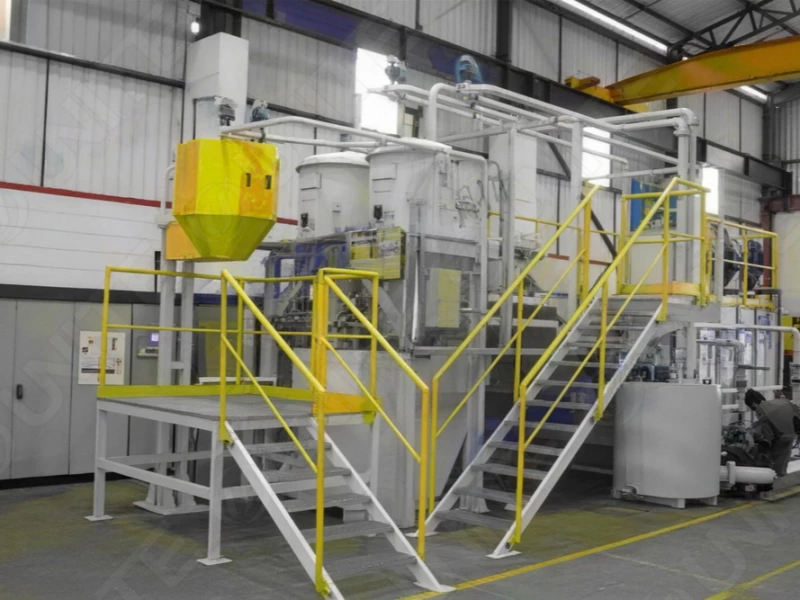
The automatic backwash filter is part of a broader filtration system rather than an isolated vessel. The plant must provide suitable inlet and outlet piping, compressed air, power, control-system integration, drainage, maintenance access, and a realistic operating strategy.
UNITE presents a product-specific case study for a Heilongjiang biopharmaceutical factory. The stated project involved suspended-solids removal from bulk pharmaceutical chemicals, and UNITE reports responsibility for process-package design, equipment manufacturing, and on-site commissioning guidance. The page does not publish a universal capacity, removal efficiency, or payback figure. Those values should not be inferred from the case study.
For a complete packaged solution, readers can also review UNITE’s filtration and separation skid-mounted systems. For alternative self-cleaning configurations, compare the automatic suction-type filter and brush-type self-cleaning filter. These links were selected for topical relevance.
9. Frequently Asked Questions
What does an automatic backwash filter remove?
It removes suspended solid particles that are larger than the selected filter-element gap or rating. The actual result depends on particle characteristics, liquid properties, element condition, flow, and operating settings. It is not a universal dissolved-contaminant treatment device.
Does backwashing stop the filtration process?
The UNITE configuration uses parallel groups and sequential cleaning. The group being cleaned is isolated while other groups continue filtration. The actual flow continuity and temporary capacity depend on the system design and operating conditions.
How often does the system backwash?
Cleaning can be triggered by differential pressure or time. The appropriate frequency depends on contamination level, flow, particle behavior, pressure settings, and the cleaning response.
What filtration precision is available?
UNITE publishes a reference precision range of 1–100 μm for this system. The appropriate value must be selected for the application and confirmed for the chosen element and operating conditions.
Which materials are available for corrosive liquids?
The published options include 316L and duplex stainless steel for filter elements and, depending on the configuration, titanium and other shell materials. Compatibility must be evaluated against the actual chemistry and temperature.
What information is needed for a quotation?
Provide normal, minimum, and peak flow; liquid composition; temperature; viscosity; solids concentration and particle-size distribution; target filtration rating; pressure conditions; available backwash and compressed-air utilities; drain conditions; materials; automation requirements; and installation constraints.
Conclusion
An automatic backwash filtration system is a practical option for industrial liquid streams that require continuous or highly available suspended-solids removal with automatic cleaning. UNITE’s published design combines parallel filter groups, V-SLOT metal elements, differential-pressure monitoring, pneumatic valves, reverse-flow cleaning, and PLC control. The system can be considered for cooling water, circulating water, process liquids, wastewater pre-filtration, chemical service, and selected pharmaceutical applications.
The correct design cannot be chosen from micron rating or pipe size alone. Flow profile, liquid chemistry, particle behavior, pressure drop, backwash pressure, discharge conditions, materials, controls, and maintenance access must be reviewed together. For a project-specific recommendation, contact UNITE for a customized filtration solution.
References
[1] Automatic Backwash Filtration System | UNITE
[2] Industrial Filtration System Manufacturer | UNITE
[3] Self-Cleaning Filter Selection for Industrial Water and Process Liquids | UNITE