Horizontal Leaf Filter: Working Principle, Applications, Published Parameters, and Selection Guide
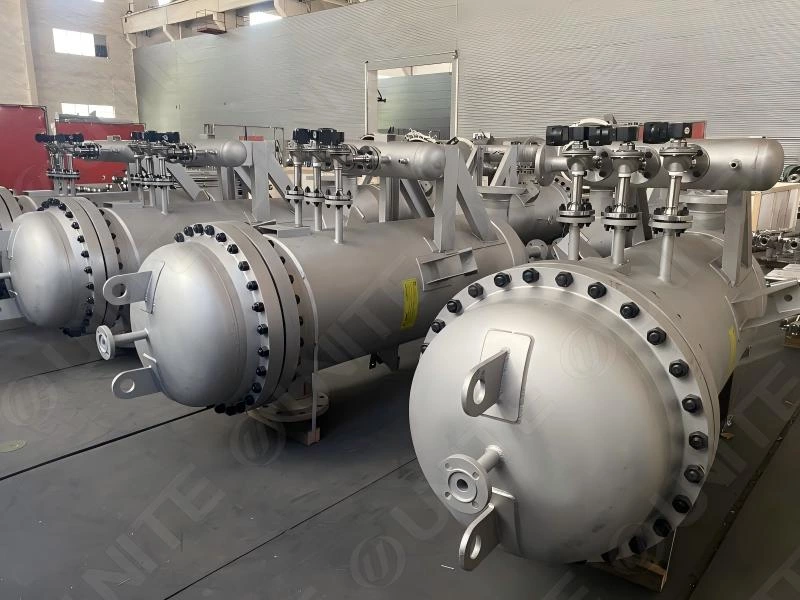
A Horizontal Leaf Filter is a closed pressure-filtration system that uses multiple horizontal filter discs mounted on a rotating central shaft. During operation, liquid passes through the filter cake and filter media into the internal channels of the discs, while solid particles are retained on the disc surfaces. Depending on the configuration and process requirements, the cake may be washed, dried, and discharged through a bottom hopper.
1. What is a Horizontal Leaf Filter?
UNITE describes its U-CL-V leaf filter as a leaf-filter system, also referred to on the product page as a pressure leaf filter or thickener. The system is designed for solid–liquid separation in industrial filtration processes. Its closed vessel, stacked filter-disc arrangement, and internal filtrate channels are intended to provide a compact filtration layout for slurry clarification and filter-cake separation.
The product page also presents the equipment as suitable for high-solids slurry filtration. However, suitability depends on the material and operating conditions. A published application range should therefore be treated as a starting point for process evaluation, not as a performance guarantee for every slurry.
2. Basic structure and key components
The main components described by UNITE include:
•a closed pressure vessel;
•multiple horizontal filter discs;
•a central hollow shaft;
•internal filtrate channels within the discs;
•filter media and the filter-cake layer;
•a low-speed rotating mechanism; and
•a scraper system for cake-thickness control and discharge.
The filter discs provide filtration surfaces on both upper and lower sides. The hollow shaft collects clarified liquid from the disc channels and routes it to the outlet at the bottom of the vessel, as described on the product page.
3. How does a Horizontal Leaf Filter work?
3.1 Slurry feeding
Unfiltered slurry enters the sealed vessel and is distributed around the horizontal filter discs. The actual feed arrangement, pressure profile, and filling sequence should be confirmed against the selected equipment design and process duty.
3.2 Optional pre-coating or pre-filtration
When required, the process can circulate filtrate and filter aid to form a pre-coat layer on the filter-disc surfaces. A pre-coat may be considered when the process needs additional protection of the filter media or improved clarification. Whether it is necessary depends on particle characteristics, filtrate-quality targets, and the filtration test results.
3.3 Pressure filtration and cake formation
Under operating pressure, liquid passes through the filter cake and filter media. The clarified liquid then enters the internal channels of the discs and flows to the hollow central shaft. Solid particles remain on the disc surfaces and gradually form a filter cake.
UNITE states that a scraper system continuously controls cake thickness on the discs. The stated purpose is to reduce the rate of resistance increase and help maintain stable filtration performance. This is a design description from the product page, not an independently verified result under all process conditions.
3.4 Cake washing and drying
The product page says that the filter cake can be washed to recover product or remove residual liquid. It also states that compressed air, inert gas, or steam may be used for cake drying when required. These are configurable process steps rather than assumptions that every Horizontal Leaf Filter installation includes all three functions.
3.5 Cake discharge
During discharge, the filter discs rotate slowly so that washed or dried cake can detach and fall by gravity into the bottom hopper. The collected cake is then removed through the bottom outlet. Cake discharge performance will depend on factors such as cake adhesion, moisture, compressibility, particle size, and the selected discharge arrangement.
4. Main advantages and limitations
Potential advantages described by UNITE
The product page and the solid–liquid separation series page identify several design and application advantages:
•closed pressure filtration for selected slurry duties;
•a large filtration area within a compact vessel;
•high-concentration slurry capability as a listed product advantage;
•optional pre-coating, cake washing, and cake drying;
•low-speed mechanical cake discharge to a bottom hopper;
•applications across chemical, petrochemical, edible-oil, fine-chemical, environmental, and other industrial processes; and
•a design intended to support cleaning and maintenance.
These statements describe the product’s published features and positioning. They should not be interpreted as universal guarantees of throughput, filtrate clarity, cake moisture, energy consumption, or uptime.
Practical limitations to evaluate
A Horizontal Leaf Filter may not be the right choice for every solid–liquid separation duty. The process team should evaluate:
•whether the slurry forms a permeable and dischargeable cake;
•the required filtrate clarity and whether a pre-coat is needed;
•whether the solids are valuable, disposable, sticky, abrasive, or hazardous;
•cake-washing objectives and acceptable residual mother liquor;
•drying requirements, gas compatibility, and solvent safety;
•corrosion and materials compatibility;
•cleaning, inspection, and maintenance access; and
•whether the duty is genuinely batch, semi-continuous, or requires another filtration architecture.
5. Published reference parameters
The UNITE Solid-Liquid Separation Series publishes the following reference ranges for Horizontal Leaf Filter. They should be confirmed for the selected model and process conditions.
| Parameter | Published reference information | Selection note |
| Filtration accuracy | 10–200 μm | Confirm the required filtrate quality, particle-size distribution, and test method. |
| Temperature range | 0–150 °C | Confirm actual operating and cleaning temperatures, materials, seals, and thermal duty. |
| Flow rate | 5–100 m³/h | Treat as a reference range; actual flow depends on slurry properties, cake resistance, and cycle design. |
| Operating pressure | 0.4–1.0 MPa | Confirm pressure definition, model rating, relief protection, and process pressure profile. |
| Filtration mode | Product page describes a batch filtration process | Reconcile this with any continuous-operation requirement during process design. |
| Filter-disc arrangement | Multiple horizontal discs on a central rotating shaft | Confirm filtration area, disc diameter, media, and mechanical configuration for the selected model. |
The product page also contains a model table, but some entries appear malformed or ambiguously labelled—for example, values in the “Work Pressure” column resemble vessel dimensions. Those model-level values have therefore not been reproduced as confirmed specifications. Request the current technical datasheet or an engineer-confirmed quotation before making a final selection.
6. Industries and applications
UNITE lists the following application areas for the Horizontal Leaf Filter or its solid–liquid separation offering:
•chemical processing;
•petrochemical refining;
•edible-oil clarification;
•fine chemicals;
•metallurgy;
•wastewater treatment and environmental protection;
•energy and power;
•coal chemical and large-scale industrial processes; and
•industrial manufacturing.
The correct application fit depends on the separation objective. Clarification, valuable-solids recovery, cake washing, residual-liquid reduction, and cake discharge may lead to different equipment configurations and test requirements.
UNITE also describes filtration challenges in new-energy processes, including high-pressure, high-purity, and corrosion-sensitive conditions. That page is an industry-level overview and does not establish that every Horizontal Leaf Filter configuration is suitable for hydrogen, lithium-battery, or photovoltaic service.
7. Horizontal Leaf Filter selection checklist
Before requesting a quotation, prepare the following information:
1.slurry composition and solid concentration;
2.particle-size distribution and expected cake characteristics;
3.feed temperature, viscosity, solvent system, and corrosiveness;
4.required filtrate clarity or particle-retention target;
5.desired filtration rate and batch volume;
6.target cake moisture and whether cake washing is required;
7.discharge behavior, cake value, and downstream handling;
8.cleaning, inspection, and maintenance requirements;
9.applicable pressure-vessel, safety, and site requirements; and
10.process-test data or a representative sample for filtration evaluation.
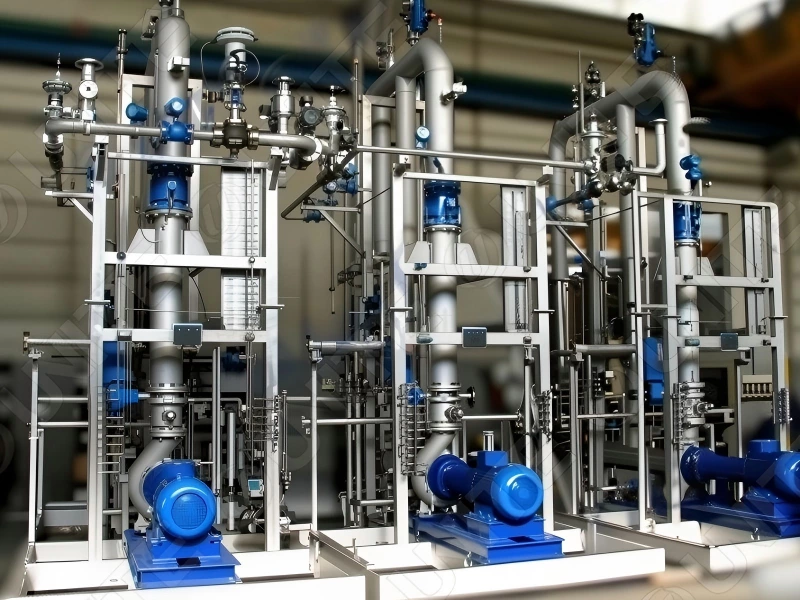
For larger integrated projects, UNITE also presents skid-mounted filtration and separation systems as a related solution path. The need for skid integration should be decided from the complete process scope rather than assumed from the product page.
8. Case-study and system-integration perspective
UNITE publishes a BASF case study involving a Candle Filter + Three-in-One Filter Dryer for high-value specialty and fine chemicals. The case study reports a project-specific 25% increase in solvent recovery rates and describes an enclosed, automated process.
That project is relevant as an example of UNITE’s broader filtration and process-integration work, but it is not a Horizontal Leaf Filter case study. Its reported results should not be transferred to the Horizontal Leaf Filter or presented as a general performance guarantee.
9. Frequently Asked Questions
What is the difference between a Horizontal Leaf Filter and a Pressure Leaf Filter?
Terminology can overlap. UNITE’s product page refers to its U-CL-V equipment as a leaf filter and also uses “pressure leaf filter.” The product series separately lists a “Pressure Leaf Filter” product, so the exact design, configuration, and published duty should be confirmed from the relevant product datasheet rather than inferred from the name alone.
Is the Horizontal Leaf Filter a continuous filter?
The product page uses continuous-operation language in its highlights, but its technical-system section describes the process as batch filtration. The intended operating mode should therefore be confirmed for the selected configuration and process cycle.
Can it wash and dry the filter cake?
The product page states that the cake may be washed and dried according to process requirements and mentions compressed air, inert gas, or steam for drying when required. Whether these functions are included, and what endpoint can be achieved, requires project-specific engineering confirmation.
What slurry flow rate can it handle?
UNITE’s solid–liquid separation series lists a reference flow-rate range of 5–100 m³/h for the Horizontal Leaf Filter. Actual capacity depends on slurry concentration, cake resistance, filtration area, pressure, temperature, cycle time, and other conditions.
What information should be sent for a quotation?
Provide the slurry composition, solids loading, particle size, viscosity, temperature, pressure, solvent or corrosive medium, filtrate-quality target, cake-washing and drying requirements, batch volume, and discharge constraints. A representative filtration test may be required.
Conclusion
UNITE’s Horizontal Leaf Filter is presented as a closed pressure-filtration system with multiple horizontal filter discs, internal filtrate channels, a hollow central shaft, and low-speed cake discharge. Its published series-level reference ranges are 10–200 μm filtration accuracy, 0–150 °C, 5–100 m³/h, and 0.4–1.0 MPa.
The most reliable selection process begins with the slurry and the desired separation result—not with a nominal equipment size. Because the product page contains ambiguous model-table entries and because performance depends on material and cycle conditions, final specifications should be confirmed through the current technical datasheet, process testing, and written engineering review.
References
[1] UNITE Horizontal Leaf Filter product page
[2] UNITE Solid-Liquid Separation Series
[4] UNITE BASF integrated Candle Filter and Three-in-One Filter Dryer case study