What Is a Candle Filter? Working Principle, Applications and Selection Limits
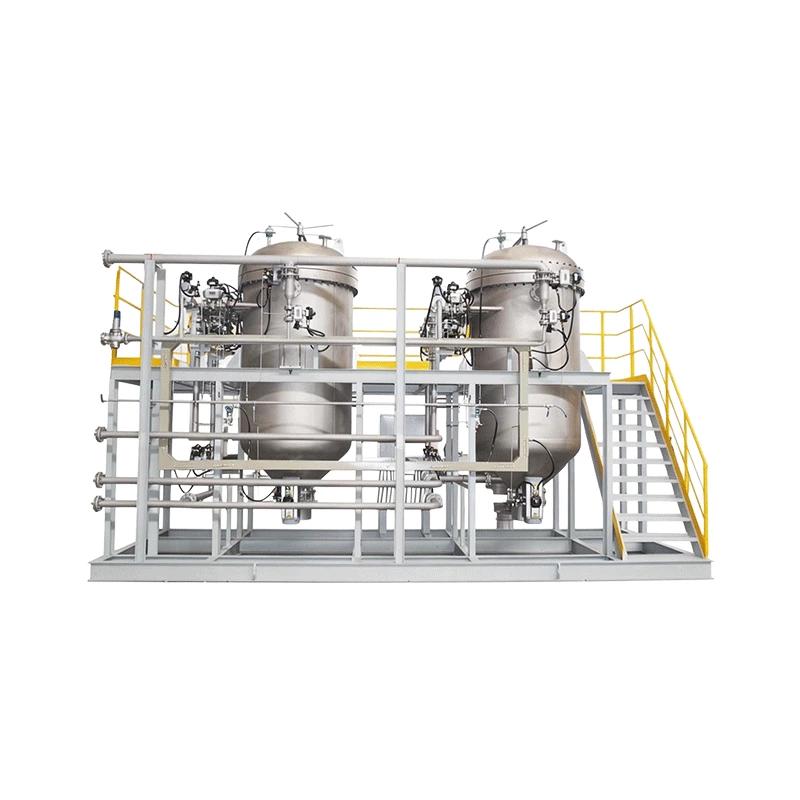
A candle filter is an enclosed pressure-filtration system used to separate fine solids from liquids. Inside the vessel, multiple vertical filter elements—often called candle elements—provide a large filtration area in a compact footprint. As slurry enters the vessel, liquid passes through the filter media while solids are retained on the outside of the elements and form a filter cake.
Candle filters are commonly considered when a process needs fine solid-liquid separation, valuable-solid recovery, controlled cake discharge, or a contained operating environment. They are used in applications ranging from chemical and petrochemical processing to pharmaceutical intermediates, specialty materials and selected battery-material processes.
The right design depends on the slurry, particle characteristics, throughput, required filtrate quality, material compatibility and cake-handling requirements. If you are evaluating equipment for a live project, explore UNITE’s industrial candle filter systems after reviewing the selection inputs in this guide.
Quick answer: A candle filter is best understood as a pressure vessel containing multiple tubular filter elements. It captures solids on the outside of the elements, lets clarified liquid pass through, and then removes the collected cake through a controlled cleaning and discharge sequence.
What Is a Candle Filter Used For?
A candle filter is generally selected for process streams where simple screening or disposable filtration is not enough. The technology is particularly useful when solids are fine, the recovered cake has value, product purity matters, or the process benefits from enclosed handling.
Typical reasons for considering a candle filter include the need to clarify a liquid before a sensitive downstream step, recover catalyst fines or other high-value solids, reduce product loss, or manage filtration in a controlled environment. In many projects, the question is not simply whether a filter can remove particles. It is whether the equipment can achieve the required separation while meeting the process requirements for containment, cleaning, automation, materials and downstream cake handling.
A candle filter is not a universal answer for every slurry. Coarse solids, easily handled low-value contaminants, short campaigns or simple low-cost duty may point to a different technology. A sound equipment decision starts with the full process requirement rather than the equipment name alone.
Candle Filter Working Principle: How the Process Operates
The candle filter working principle is based on pressure-driven filtration through multiple vertical elements inside a closed vessel. The exact sequence can vary with the process, but a typical operating cycle has four stages.
1. Feed and Filtration
The slurry enters the filter housing and is distributed around the candle elements. A pressure difference drives the liquid through the filter media and into the internal collection path. Solids are retained on the outer surface of the elements. The clarified liquid, or filtrate, then leaves the vessel through the outlet connection.
At the beginning of the cycle, the selected media provides the primary separation surface. As solids accumulate, they form a cake on the outside of the elements. Depending on the slurry, this cake can become an additional filtration layer and may improve clarity as the cycle progresses.
2. Cake Build-Up and Process Monitoring
As filtration continues, the cake becomes thicker and the resistance to flow increases. The control strategy may monitor differential pressure, flow, filtrate quality, time, level or another validated endpoint. The operating endpoint should be determined by the application. For example, one process may prioritize maximum filtrate clarity, while another may prioritize recovered-solid yield, cycle time or stable throughput.
A well-designed system does not treat every slurry in the same way. Particle size distribution, solids concentration, compressibility, viscosity and cake permeability all influence the required filtration area and the most practical operating cycle.
3. Dewatering, Displacement or Washing
After the required filtration endpoint is reached, the system can include additional steps to support the downstream process. Depending on the application, these may include liquid displacement, washing, gas-assisted dewatering or controlled drainage.
These steps are especially important when the retained solids contain valuable material, when residual solvent must be managed, or when the cake is transferred to another unit operation. The required sequence should be established from the process objective, not copied from a generic equipment specification.
4. Cake Release and Discharge
The cake must then be released from the candle elements and discharged from the vessel. A system may use backflush gas, liquid, mechanical movement or another appropriate method, depending on the product, filter media and required containment. The released cake is directed to a collection point, conveying system or downstream process.
Reliable cake discharge is one of the most important questions in candle filter selection. A slurry that filters well may still present an operating challenge if the cake is sticky, compressible, difficult to release or unsuitable for the planned discharge arrangement. This is why pilot testing, laboratory data or experience with comparable streams can be valuable before final equipment sizing.
Main Components of an Industrial Candle Filter System
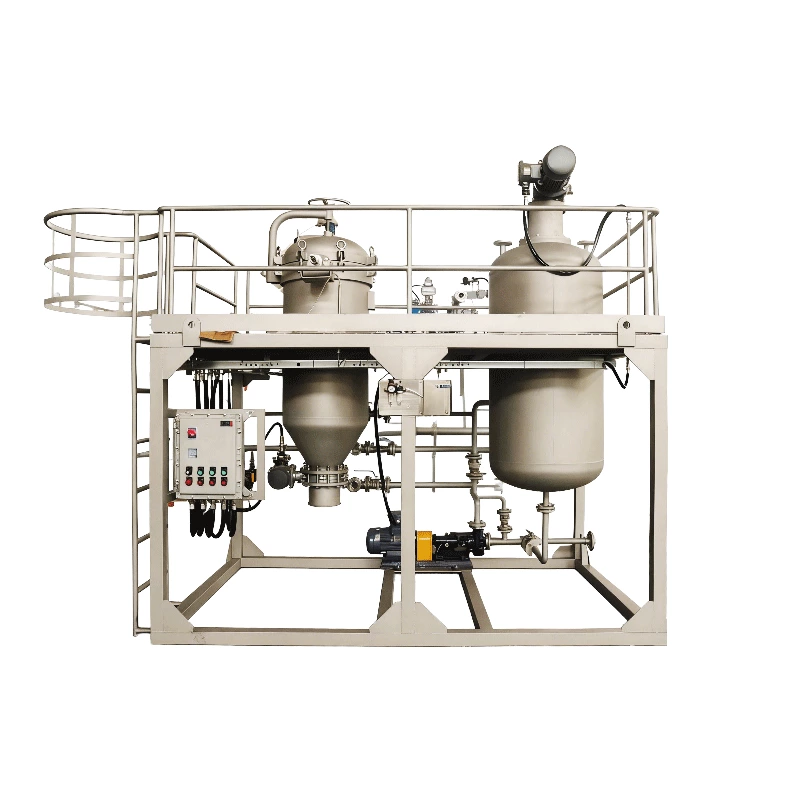
While equipment configurations vary, an industrial candle filter system normally combines the following functions in one engineered package.
| Component | Function in the filtration process | Selection question |
| Filter vessel | Contains the slurry and filtration process under the specified pressure and temperature conditions | What are the design pressure, temperature, corrosion and documentation requirements? |
| Candle filter elements | Provide the filtration surface on which solids are captured and cake is formed | What media, micron target and chemical compatibility are required? |
| Feed and distribution system | Brings slurry into the vessel and promotes suitable flow distribution | Is the feed continuous or batch, and how sensitive is the slurry to shear or settling? |
| Filtrate collection system | Collects clarified liquid after it passes through the elements | What filtrate clarity and downstream protection are required? |
| Backflush and cake-discharge system | Supports cake release and transfers retained solids from the vessel | Is the cake dry, wet, sticky, hazardous or valuable? |
| Instrumentation and controls | Monitors the filtration cycle and executes the selected operating sequence | Which signals, alarms, interlocks and plant-control interfaces are needed? |
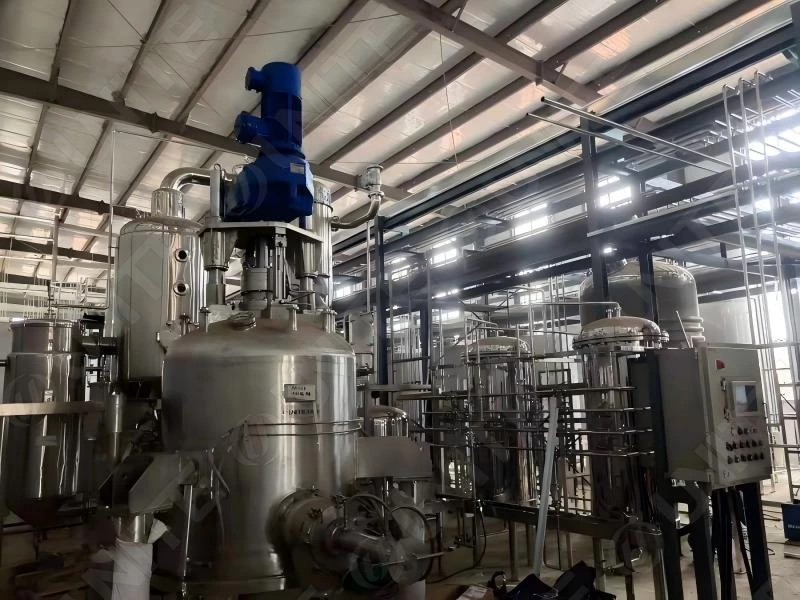
The vessel, media, seals, valves, instrumentation and controls should be selected as one process system. A strong design review considers not just initial filtration, but cleaning, inspection, maintenance access, safety and the full sequence from feed to cake discharge.
Common Candle Filter Applications
Candle filters are used in a wide range of solid-liquid separation duties. The fit depends on the actual process conditions, so the following examples should be treated as starting points for engineering review rather than universal recommendations.
Catalyst Recovery and Fine Chemical Processing
Catalyst fines and other high-value particles can be difficult to recover from chemical process streams. A candle filter may be considered when fine-particle retention, product recovery and contained operation are important. The final design should account for solvent compatibility, solids loading, cake washing needs and the required recovery route.
Petrochemical and Refinery Streams
Selected petrochemical and refinery duties require the removal of fine solids that can contribute to fouling, wear or downstream contamination. A process review should identify the stream composition, pressure, temperature, abrasive solids and expected variability before equipment is selected.
Pharmaceutical Intermediates and Specialty Materials
For applications involving product purity, controlled handling or sensitive solids, engineers often assess enclosed filtration methods. In these cases, the choice of construction materials, surface finish, cleaning validation, drainage, containment and documentation can be as important as the nominal filtration rating.
Battery-Material and High-Purity Processes
Fine materials and valuable solids in battery-material processing may require tightly managed filtration and recovery steps. The equipment must be evaluated against the specific slurry, chemical environment, particle characteristics and quality requirements. Do not assume that a filtration approach used in one battery-material process is automatically suitable for another.
Skid-Mounted Process Packages
When a project needs more than a filter vessel, the candle filter can be integrated with piping, valves, pumps, instrumentation and controls in a defined package. For projects that require a broader system boundary, review UNITE’s custom filtration and separation skids.
Benefits of Candle Filtration
A candle filter can provide several process advantages when it is matched to the duty. The value comes from the combination of filtration area, contained operation, selected media, automation and cake-handling design—not simply from the equipment name.
| Potential benefit | Why it may matter | Important qualification |
| Fine solid retention | Helps support filtrate clarity and recovery of small particles | Performance depends on media, slurry and operating conditions |
| Enclosed operation | Can support controlled handling of sensitive, volatile or high-value streams | Vessel, seals, valves and operating procedures must all meet the requirement |
| Large area in a compact vessel | Multiple elements can provide significant filtration area within one system | Final area must be sized for solids loading, throughput and cycle time |
| Controlled cake handling | Can support recovery, washing, dewatering or contained discharge | Cake release should be validated for the specific solids |
| Automation potential | Can reduce manual intervention and support repeatable sequencing | Automation design must reflect the plant’s safety and control philosophy |
When a Candle Filter May Not Be the Best Choice
An objective selection guide should also explain where a candle filter may be less suitable. If the process only needs coarse debris removal, a strainer or simpler screen filter may be more practical. If the solids are readily captured in a disposable bag and do not require recovery, a bag filter may be adequate. If the duty requires a different cake geometry, batch process approach or washing method, a pressure leaf filter or another solid-liquid separation technology may be a stronger fit.
The most common selection error is to choose equipment based on a familiar name before defining the process problem. A filtration technology should be selected around the required outlet quality, solids characteristics, operating mode, recovery objective and total operating needs—not based on a single nominal micron rating.
For applications where the filtration target or cake-handling requirement is uncertain, compare your process with pressure leaf filter systems before finalizing the specification.
How to Select a Candle Filter: Eight Inputs Engineers Need
A useful candle filter selection discussion begins with process data. The following inputs help an engineering team determine whether a candle filter is suitable and what configuration may be needed.
1. Fluid Composition and Chemical Compatibility
Provide the liquid composition, pH, solvent content, chlorides, cleaning chemicals and any known corrosion risks. This information guides the selection of the vessel material, filter media, seals, valves and lining or coating requirements.
2. Solids Type and Concentration
Identify what the solids are, their concentration, particle-size distribution, shape, density, abrasiveness and compressibility. Fine or compressible solids can behave very differently from coarse, free-draining particles.
3. Required Filtrate Quality
Define the outcome that matters: a target particle-removal level, visual clarity, downstream-equipment protection, product-purity target, catalyst recovery goal or another measurable requirement. A nominal filtration rating alone is not a complete process specification.
4. Flow Rate, Batch Size and Operating Mode
State the required continuous flow rate or batch volume, campaign length, expected variability and allowable cycle time. These inputs affect the required filtration area, vessel size, number of elements and operating strategy.
5. Pressure and Temperature
Supply normal and maximum pressure and temperature, including upset conditions where relevant. These conditions affect mechanical design, materials, seals, instrumentation and the operating envelope.
6. Cake-Washing and Dewatering Requirements
Clarify whether the cake needs washing, solvent displacement, dewatering, reslurry, recovery or direct discharge. A high-value recovered solid may require a very different system configuration from a waste stream.
7. Automation and Plant Integration
Identify required instruments, control valves, interlocks, hazardous-area classification, communication protocol, electrical standards and the interface with the plant control system. Define these requirements early if the filter will form part of a skid or automated line.
8. Project Standards and Documentation
Share the applicable design code, material traceability requirement, inspection plan, test requirements, certification needs, document language and delivery expectations. These project requirements influence the engineering scope as much as the physical equipment.
Candle Filter vs Pressure Leaf Filter vs Bag Filter
The following table is a practical starting point. It does not replace a process review, but it can help organize the first equipment discussion.
| Selection factor | Candle Filter | Pressure Leaf Filter | Bag Filter |
| Typical role | Fine solid-liquid separation and controlled cake handling | Batch filtration, clarification and applications that may use leaf/precoat configurations | Simpler contaminant removal and lower-complexity filtration duties |
| Filtration surface | Multiple vertical candle elements | Multiple filter leaves | Replaceable filter bag inside a housing |
| Enclosed operation | Often suitable for contained process design | May also be engineered for closed operation | Depends on housing and service approach |
| Cake recovery | Can be a central part of the process design | Often considered where cake handling or washing is required | Usually less suitable when controlled cake recovery is critical |
| Automation | Can be configured for automated sequencing | Can be configured according to batch process needs | Often simpler, though automated options exist |
| Key decision input | Fine solids, cake release, recovery and cycle requirements | Batch conditions, cake characteristics, washing and filtration area needs | Solids load, service interval, disposal and required simplicity |
The comparison becomes more useful when you add actual process data. In Week 2, UNITE should publish a deeper article titled “Candle Filter vs Pressure Leaf Filter: A Practical Selection Matrix” and link it here once available.
Frequently Asked Questions About Candle Filters
What is a candle filter?
A candle filter is an enclosed pressure-filtration system that uses multiple vertical filter elements to separate solids from liquids. Solids form a cake on the elements while clarified liquid passes through the filter media.
How does a candle filter work?
Slurry enters a vessel containing candle elements. Liquid passes through the elements, while solids remain on the outer surface and form a filter cake. After the cycle reaches its selected endpoint, the system uses a configured release and discharge method to remove the cake.
What is a candle filter used for?
Candle filters are considered for fine solid-liquid separation, catalyst recovery, clarification and contained process filtration. Common applications include chemical processing, petrochemical streams, pharmaceutical intermediates and selected specialty-material processes.
Can a candle filter recover valuable solids?
A candle filter can be configured for applications where retained solids must be recovered. The achievable recovery result depends on the slurry, filter media, filtration cycle, washing or dewatering sequence and cake-discharge design.
How do I choose the right candle filter system?
Begin with the fluid composition, solids characteristics, target filtrate quality, flow rate or batch size, pressure, temperature, cake-handling needs, materials compatibility, automation requirements and project documentation. An engineering review should use these inputs to determine whether a candle filter is suitable and how it should be configured.
Next Step: Discuss Your Filtration Requirement with an Engineer
A candle filter can be an effective solution for fine solids, valuable-solid recovery and enclosed process filtration—but only when it is designed around the actual process conditions. If you are evaluating a new project, modification or replacement system, provide your fluid details, solids information, flow requirement and operating conditions.
Request a technical review from UNITE to discuss a suitable filtration approach. You can also review UNITE’s industrial candle filter systems for product configuration and engineering options.