Pressure Leaf Filter: Complete Guide to Selection, Operation & Applications
Pressure leaf filters are selected when a closed system, recoverable filter cake and high filtration area are required for industrial solid-liquid separation. A pressure leaf filter is an industrial solid-liquid separation system using flat, disc-shaped filter elements (leaves) arranged inside a pressure vessel. It excels at handling high-solids slurries and is widely used in edible oil refining, chemical processing, and pharmaceutical manufacturing. This guide covers everything you need to know to select and operate one effectively.
What Is a Pressure Leaf Filter?
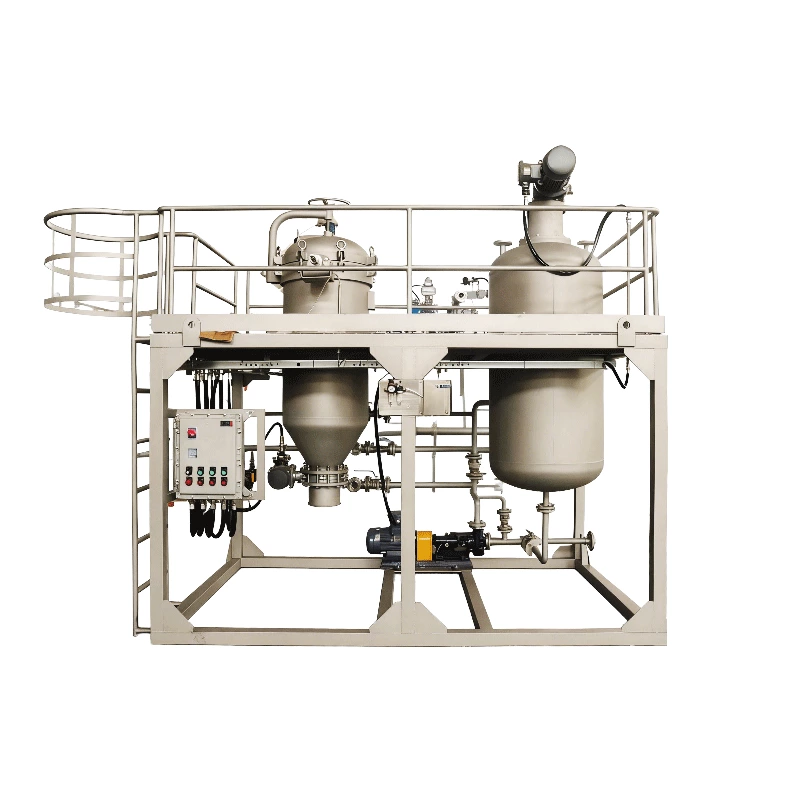
A pressure leaf filter is a pressure-driven filtration system in which multiple flat, disc-shaped filter elements — called "leaves" — are mounted on a central manifold inside a closed pressure vessel. Feed slurry is pumped into the vessel under pressure, and filtrate passes through the filter media on both faces of each leaf while solids build up as a cake on the leaf surfaces.
Pressure leaf filters are engineered for applications where:
- The process fluid contains a high concentration of solids (up to 10–30% w/w)
- A dry, recoverable cake is required
- Continuous operation is needed with periodic batch cake discharge
- The process requires closed-system handling (no open-air exposure)
They are one of the dominant filtration technologies in edible oil refining (dewaxing, bleaching earth removal), petrochemical processing (lube oil dewaxing, wax filtration), and pharmaceutical manufacturing.
How Does a Pressure Leaf Filter Work?
Refer to the detailed working principle article for a full step-by-step description: Pressure Leaf Filter Working Principle Explained in Detail
In summary, a pressure leaf filter operates through four phases:
Phase 1 – Precoat (optional): A layer of filter aid (diatomaceous earth, perlite, or cellulose) is applied to the leaf surfaces to improve filtration efficiency and prevent blinding for difficult slurries.
Phase 2 – Filtration: Feed slurry enters the vessel under pump pressure. Filtrate passes through the filter media and drains through the hollow interior of each leaf to a central manifold and exits as clarified product. Solids build up as a filter cake on both faces of each leaf, with typical cake thickness of 5–50 mm per side.
Phase 3 – Cake Washing (optional): Wash liquid is introduced to displace residual filtrate from the cake pores, achieving high-purity cake or high-yield product recovery.
Phase 4 – Cake Discharge: The vessel is opened (horizontal design) or the leaf assembly is retracted (vertical retractable design), and the cake is discharged by vibration, gas blowback, or reslurrying with wash liquid. For fully automated systems, cake discharge occurs without opening the vessel.
Pressure Leaf Filter Configurations
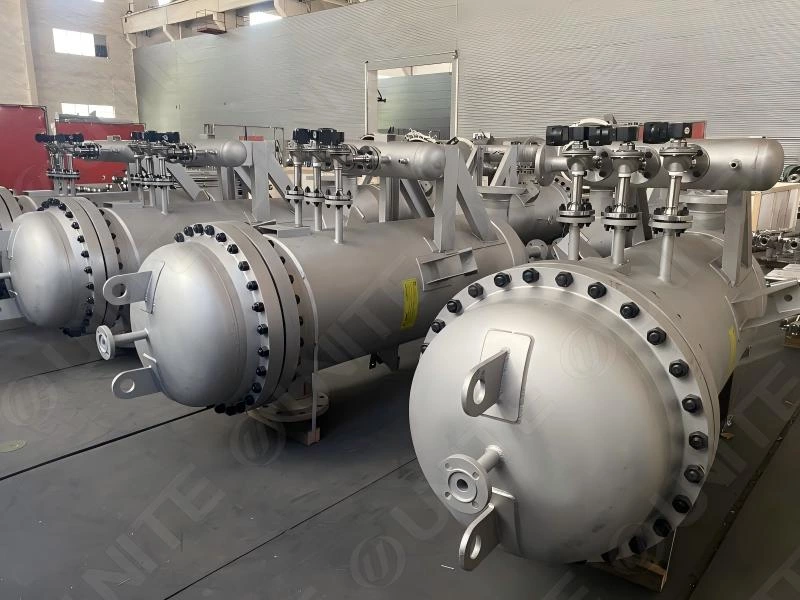
Horizontal Pressure Leaf Filter
The most common configuration for industrial applications. The cylindrical vessel is oriented horizontally with the leaf assembly on a trolley that rolls out on rails for cake inspection and discharge.
Advantages:
- Simple, robust construction
- Easy access to leaves for inspection and cleaning
- Large filtration area in a compact horizontal footprint
- Suitable for thick, difficult-to-discharge cakes
Best for: Edible oil processing, lube oil dewaxing, chemical cake recovery, general high-solids filtration
Limitations:
- Cake discharge requires vessel opening (labor-intensive for manual designs)
- Larger floor space requirement than vertical designs
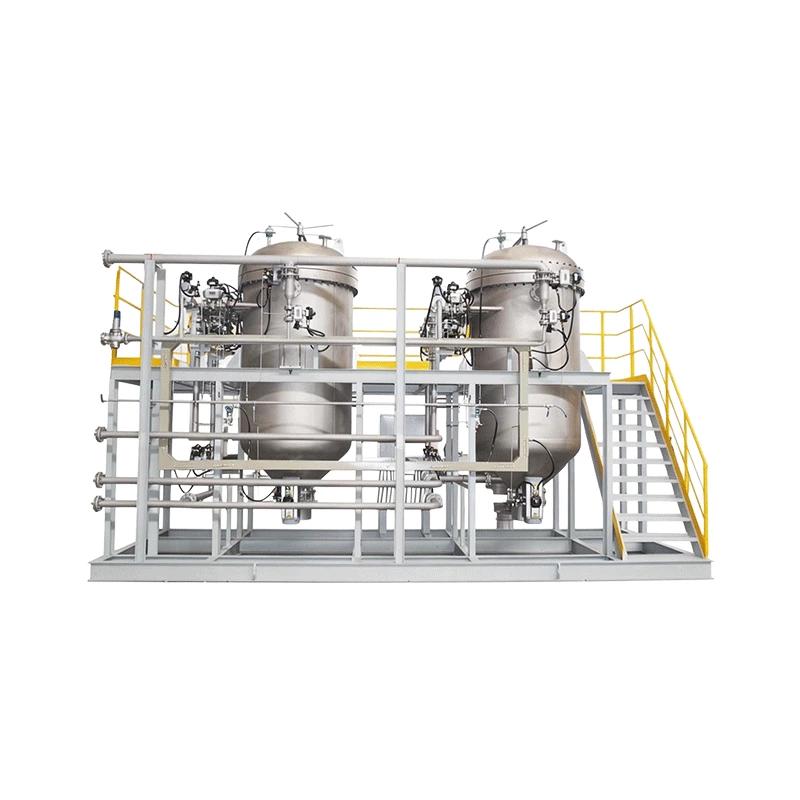
Vertical Pressure Leaf Filter
The vessel is oriented vertically. The leaf assembly can be designed as a fixed bundle or a retractable assembly (pulled upward out of the vessel for cleaning).
Advantages:
- Gravity assists cake discharge — cake falls away from leaves more readily
- Smaller floor footprint than horizontal designs
- Retractable design allows automated cake discharge without fully opening vessel
Best for: Pharmaceutical applications, fine chemicals, applications with free-draining cakes
Limitations:
- Limited cake thickness compared to horizontal designs
- Retractable designs are mechanically more complex
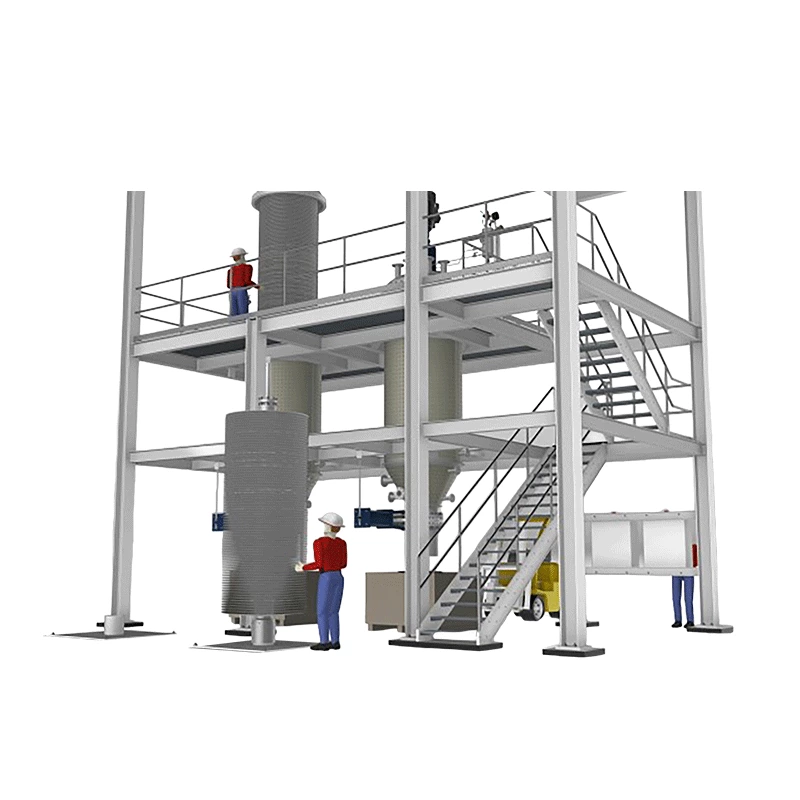
Automated Pressure Leaf Filter
Fully automated designs use gas pulsing (nitrogen blowback) or vibration mechanisms to discharge cake from leaves without manual intervention. Level sensors, automated valves, and PLC control manage the complete filtration-wash-discharge sequence.
Best for: Continuous production environments; hazardous or toxic media; GMP-compliant pharmaceutical processes
Pressure Leaf Filter Selection Guide
Step 1: Define the Separation Objective
- Are you recovering the cake (valuable solid), the filtrate (valuable liquid), or both?
- What purity level is required in the filtrate?
- Is cake washing required to remove residual filtrate or contaminants?
- What is the final moisture content requirement for the cake?
Step 2: Characterize the Feed Slurry
| Parameter | Why It Matters |
|---|---|
| Solids concentration (% w/w) | Determines vessel sizing and cycle frequency |
| Particle size distribution | Affects filter medium selection and filtration rate |
| Slurry viscosity | Affects filtration rate; higher viscosity = slower filtration |
| Compressibility of cake | Compressible cakes require filter aids or precoat |
| Chemical compatibility | Determines vessel and filter medium materials |
| Temperature | Affects viscosity, filter medium selection, and seal selection |
Step 3: Determine Filter Medium
Woven stainless steel mesh: Standard for most chemical and oil applications; reusable; ratings 25–500 microns
Woven synthetic fabric (polypropylene, polyester): Wider chemical compatibility; lower cost; some abrasion resistance
Filter paper / cellulose: High clarity filtrate; single-use; pharmaceutical and food applications
Metal fiber felt: High-temperature, high-pressure service; cleanable
Step 4: Determine Filter Aid Requirement
For slurries that form compressible, gelatinous, or impermeable cakes, a precoat of filter aid is essential:
- Diatomaceous Earth (DE): Most common; effective 0.1–100 micron range; not suitable for food applications where DE is restricted
- Perlite: Volcanic glass-based; food-grade; less efficient than DE
- Cellulose: Organic; fully food-grade; biodegradable; lower filtration efficiency
Step 5: Size the Filter
Pressure leaf filter sizing is based on the filtration area required to achieve the target throughput:
Required area (m²) = Flow rate (m³/h) ÷ Specific filtration rate (m³/m²·h)
Specific filtration rates vary from 0.1 m³/m²·h (difficult, compressible cakes) to 2.0 m³/m²·h (fast-filtering, low-solids feeds). Pilot testing is recommended for accurate sizing.
Technical Specifications (Typical Range)
| Parameter | Typical Range |
|---|---|
| Filtration Area | 1 – 300 m² per vessel |
| Operating Pressure | 0.3 – 0.6 MPa (standard); up to 1.6 MPa (special) |
| Operating Temperature | Up to 150°C (standard); up to 250°C (special designs) |
| Vessel Orientation | Horizontal or vertical |
| Number of Leaves | 4 – 100+ |
| Leaf Spacing | 50 – 150 mm (defines cake thickness per side) |
| Filter Medium Rating | 25 – 500 microns |
| Vessel Material | Carbon steel, SS 304/316L, Hastelloy, glass-lined |
Industry Applications
Edible Oil Refining: The dominant application worldwide. Pressure leaf filters remove spent bleaching earth (activated clay) from refined vegetable oils (palm oil, soybean oil, sunflower oil, etc.). A typical palm oil refinery processes hundreds of tonnes per day through pressure leaf filters.
Lubricant & Wax Processing: Dewaxing of base oils and separation of wax crystals from solvent-oil mixtures in lube oil refining. The wax cake is recovered as a co-product.
Pharmaceutical Manufacturing: Filtration and washing of API crystals, catalyst recovery, and intermediate separation in batch pharmaceutical processes. GMP-compliant designs with full automation and CIP capability.
Chemical Processing: Separation of pigments, dyes, resins, and specialty chemicals from reaction mixtures. Catalyst recovery in polymerization and hydrogenation processes.
Beverage & Food: Removal of diatomaceous earth or bentonite fining agents from wine, beer, and juices; sugar juice clarification.
Mining & Hydrometallurgy: Filtration of leachate from heap leach operations; precious metal recovery from slurries.
Pressure Leaf Filter vs. Alternative Technologies
| Parameter | Pressure Leaf Filter | Filter Press | Candle Filter | Centrifuge |
|---|---|---|---|---|
| Solids Concentration | Up to 30% w/w | Up to 50% w/w | Up to 20% w/w | 5–30% w/w |
| Filtration Area | High (per vessel volume) | Very high | Medium | N/A |
| Cake Moisture | Medium-Low | Low | Low | Low |
| Cake Washing | Good | Excellent | Excellent | Poor |
| Closed System | ✅ | ❌ (manual press) | ✅ | ✅ |
| Automation Level | High (modern designs) | Medium-High | High | High |
| Capital Cost | Medium | Low-Medium | High | High |
| Operating Cost | Low-Medium | Low | Low | High (energy) |
Advantages of Pressure Leaf Filters
- High filtration area per unit volume: More efficient use of plant space than filter presses for equivalent capacity
- Closed system: Suitable for hazardous, flammable, or toxic media with no open-air exposure
- High solids capacity: Handles slurries up to 30% w/w solids without frequent cycle interruptions
- Efficient cake washing: Counter-current or displacement washing achieves high product recovery
- Low operating cost: No consumable media (reusable leaves); low energy consumption
- Scalable: Modular leaf design allows filtration area to be matched precisely to process requirements
Frequently Asked Questions
Q: What is the typical cycle time for a pressure leaf filter in edible oil service? In edible oil refining, a typical cycle consists of precoat (15–30 min), filtration (2–6 hours depending on oil throughput and bleaching earth addition rate), and cake discharge (30–60 min). Total cycle time is typically 3–8 hours.
Q: How is the cake discharged from a horizontal pressure leaf filter? The most common methods are: (1) vibration discharge — an electric vibrator shakes the leaf assembly to dislodge the dry cake; (2) gas blowback — a pulse of compressed gas breaks the cake from the leaf surfaces; (3) reslurrying — solvent or wash liquid is sprayed onto the leaves to re-suspend the cake, which drains to the vessel sump and is pumped out.
Q: What is the difference between a pressure leaf filter and a plate-and-frame filter press? Both are pressure filtration systems with high filtration area. A filter press uses flat, rectangular plates with filter cloths; the press must be opened and the cloths cleaned/replaced manually. A pressure leaf filter uses fixed circular leaves inside a closed vessel; the cake is discharged automatically without the need to disassemble the filter.
Q: Can a pressure leaf filter be used without filter aid? Yes, for slurries that form incompressible cakes (e.g., coarse crystalline materials) and produce acceptable filtrate clarity without precoat. However, for slurries producing fine, compressible, or gelatinous cakes, filter aid precoat is essential to achieve acceptable filtration rates and filtrate clarity.