What Is an Agitated Nutsche Filter Dryer? Working Principle, Advantages, Applications, and Selection Guide
An Agitated Nutsche Filter Dryer, commonly abbreviated as ANFD, is a batch process machine that performs solid-liquid separation, filter-cake washing, vacuum drying, and discharge inside one enclosed vessel. Its primary value is reducing material transfer, cross-contamination, and solvent-loss risks while improving the purity, recovery, and batch consistency of high-value solid products.
1. Why Is the Agitated Nutsche Filter Dryer Important?
In pharmaceutical, fine chemical, agrochemical, polymer, new energy material, and high-purity chemical production, products are often generated as crystals, precipitates, catalysts, or wet filter cakes. A conventional process may use one piece of equipment for solid-liquid separation, another for cake washing, and a separate dryer for final moisture removal. Every additional transfer step can increase material loss, solvent evaporation, dust release, operator exposure, contamination risk, and labor requirements.
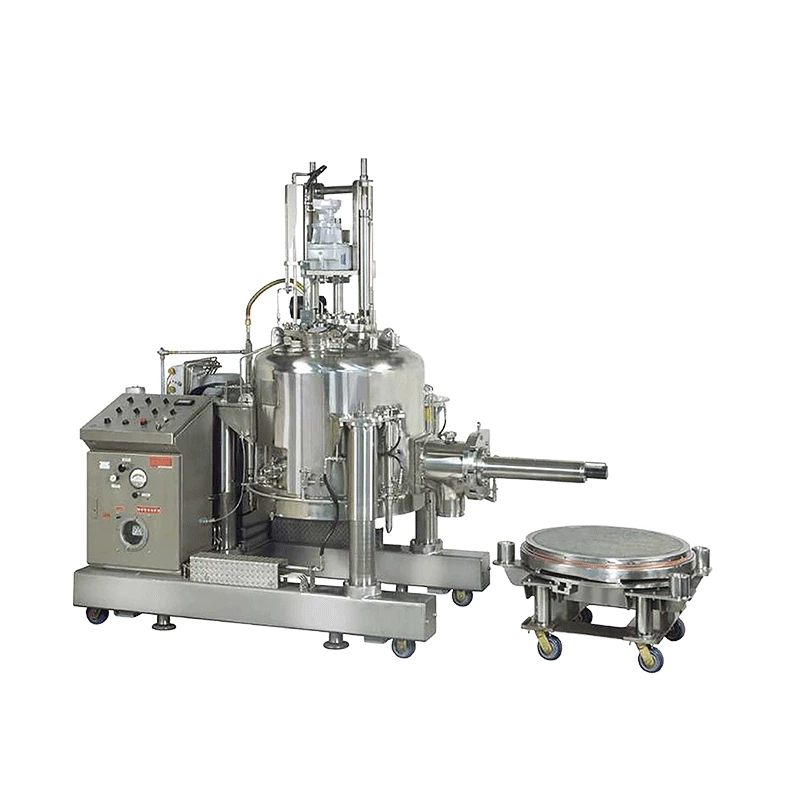
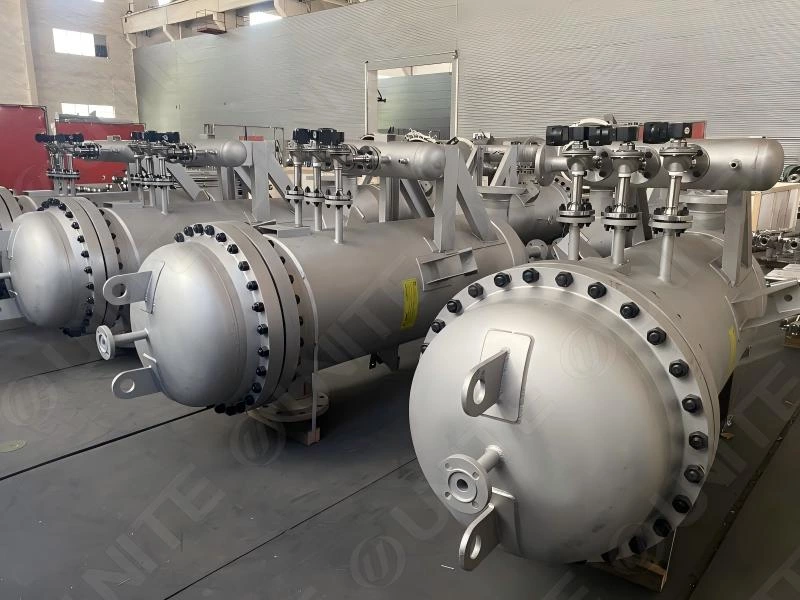
An ANFD consolidates these operations inside a controlled, enclosed vessel. The UNITE Agitated Nutsche Filter Dryer is described as an integrated filter-wash-dry system that performs filtration, washing, and drying in one closed unit. This configuration is particularly suitable for batch processes that require high cleanliness, process safety, and efficient handling of valuable solids.
However, integration does not mean that every slurry is automatically suitable for an ANFD. Equipment selection must be validated against slurry solids content, particle-size distribution, cake permeability, compressibility, adhesion, washing requirements, thermal sensitivity, solvent properties, target moisture, and production cycle time. ANFD technology generally provides the greatest benefit when the product is high value, oxidation-sensitive, contamination-sensitive, or requires repeated washing.
2. Basic Structure of an ANFD
A typical Agitated Nutsche Filter Dryer consists of an enclosed vessel, filter plate or filter base, agitator assembly, heating or cooling jacket, side or bottom discharge port, vacuum system, washing system, mechanical seals, and an automated control system.
The filter medium is installed at the bottom of the vessel. After the slurry enters, the liquid phase passes through the filter medium under a pressure differential, while the solids accumulate on the filtration surface to form a filter cake. After filtration, the agitator can level, loosen, reslurry, mix, dry, and discharge the cake. According to the UNITE product page, the agitation system can rotate in both directions and move vertically. It can level the cake, resuspend it with washing liquid, and push the dried solids through a sealed side discharge port.
For a cylindrical-conical configuration, heating or cooling jackets can be installed on both the cylindrical and conical sections. The UNITE Cylindrical Cone Filter Dryer uses a hollow shaft and a variable-angle, variable-pitch hollow spiral agitator to support material mixing, lifting, heat transfer, and discharge. This design is useful when the process requires improved circulation near the vessel bottom, fewer dead zones, or more uniform drying.
| Main component | Primary function | Key selection considerations |
| Enclosed vessel | Provides the space for filtration, washing, and drying | Working volume, design pressure, temperature, material, and cleanliness level |
| Filter base and filter medium | Retains solids and drains mother liquor | Pore size, flux, corrosion resistance, and cake-release performance |
| Agitator assembly | Levels, reslurries, mixes, dries, and discharges the cake | Torque, speed, lifting stroke, and seal design |
| Jacket and hollow agitator | Heats or cools the process material | Heat load, heat-transfer area, and temperature uniformity |
| Washing system | Provides spray washing or reslurry washing | Liquid distribution, number of washing stages, and mixing efficiency |
| Sealed discharge system | Removes dried product in a controlled environment | Leakage prevention, residual hold-up, automation, and cleaning validation |
| Vacuum and control system | Supports low-temperature drying and process control | Vacuum capacity, condenser duty, interlocks, and data recording |
3. How Does an Agitated Nutsche Filter Dryer Work?
3.1 Feeding and filtration
A slurry containing solid particles enters through the top or a designated feed connection. Filtration may be performed under vacuum or pressure. The liquid passes through the filter medium and the solids form a cake on the filter base. Cake thickness, pressure differential, and agitator speed affect filtration time and the final liquid content.
As the cake becomes thicker, it may crack or develop preferential flow paths. This can lead to uneven washing. The agitator is therefore used to level the cake surface and maintain a more uniform cake structure.
The current UNITE product page lists the following reference range for its related ANFD offering: filtration accuracy of 5–100 μm, a temperature range of -20°C to 200°C, batch capacity of 0.5–10 m³/batch, and operating pressure from atmospheric pressure to 0.6 MPa. These figures should be treated as published reference ranges rather than guaranteed performance for every material. Final parameters must be confirmed through process testing and mechanical design.
3.2 Filter-cake washing and reslurry
After filtration, washing liquid can be distributed over the cake through a spray system. Alternatively, the agitator can be lowered and a sufficient amount of washing liquid added to reslurry the cake. Spray washing is often considered when the process aims to reduce washing-liquid consumption and preserve cake structure. Reslurry washing is generally more suitable when the washing liquid must contact the solids thoroughly to remove residual mother liquor or soluble impurities.
For high-purity products, multiple washing stages may provide more stable impurity removal than a single wash. However, additional stages increase washing-liquid consumption, filtration time, and the drying load. The number of washing cycles should therefore be established through process development based on impurity distribution, cake permeability, washing-liquid viscosity, and the required product purity.
3.3 Vacuum drying
After washing, the wet cake is normally dewatered before drying. Heat is transferred to the material through the vessel jacket, hollow shaft, or hollow agitator blades. The vacuum system lowers the boiling point of the solvent, allowing drying at a relatively low product temperature. Agitation promotes internal heat transfer and moisture migration, helping reduce the risk of local overheating or a dry outer layer with a wet core.
For heat-sensitive, oxidation-sensitive, or volatile-organic-solvent-containing products, enclosed vacuum drying can reduce contact with air. Depending on the process, the system may also incorporate nitrogen protection, solvent condensation and recovery, inert-gas purging, and explosion-proof design. Actual drying performance depends on heat-transfer area, vacuum-pump capacity, condenser duty, product loading, agitation strategy, and the target residual-solvent specification.
3.4 Automatic discharge and cleaning
After drying, the agitator rotates in reverse and moves the solid product toward a side or bottom discharge port. A sealed discharge arrangement helps reduce dust release and product exposure. For pharmaceutical and high-purity chemical production, the design should also be assessed for CIP, SIP, drainability, dead zones, surface finish, and cleaning validation.
The UNITE product page states that the equipment can be configured with mechanical seals, CIP/SIP systems, and manual or fully automatic residual-material discharge devices, with cGMP and FDA requirements referenced in the design.
4. Main Advantages of an ANFD
Reduced material transfer. Filtration, washing, and drying take place in one vessel, reducing intermediate transfers and lowering the potential for product loss and operator-related contamination.
Improved containment. For volatile, oxidation-sensitive, toxic, or flammable solvents, an enclosed system helps control leakage, oxygen ingress, and operator exposure. UNITE’s chemical-industry solutions integrate solid-liquid separation, washing, and drying in closed equipment to reduce the risk associated with toxic or flammable solvents.
Improved purity and batch consistency. When washing and drying conditions are controlled in one vessel, the product follows a more consistent process route. This is valuable when the process has strict requirements for residual mother liquor, residual solvent, or moisture.
Lower space requirements. Compared with several independent machines, an integrated system can reduce transfer lines, intermediate handling, and the space required between units. UNITE states that its cylindrical-conical design can reduce equipment height by approximately 30% at the same effective volume; actual space savings depend on the selected model and plant layout.
Better automation potential. Pressure, temperature, vacuum, agitation, washing, and moisture-related parameters can be incorporated into a unified control strategy, supporting recipe management, process interlocks, and batch data traceability.
5. Typical Applications
In pharmaceutical and biopharmaceutical production, ANFDs may be used for the filtration, washing, and drying of active pharmaceutical ingredients, intermediates, crystallized products, and other high-purity solids. The priority is usually not filtration speed alone, but contamination control, residual-solvent management, cleaning validation, and batch reproducibility. UNITE’s Bio-Food Pharma filtration solutions emphasize safety, purity, and process reliability under GMP-oriented production conditions and describe a pharmaceutical-grade explosion-proof solid-liquid separation project.
In fine chemicals and specialty chemicals, the equipment may handle acids, alkalis, corrosive media, flammable solvents, or valuable catalysts. Material compatibility, seal design, explosion protection, nitrogen blanketing, and solvent recovery become particularly important. UNITE’s chemical-industry filtration and separation solutions address filtration, separation, drying, and recovery under challenging conditions such as high temperature, high pressure, strong corrosion, and flammability.
In new energy materials, ANFDs may be considered for selected battery materials, precursors, functional powders, and solvent-based solid-liquid separation processes. These applications often require control of metallic contamination, solvent recovery, powder morphology, and drying uniformity. Agitation intensity and the drying endpoint should be established through process testing.
In polymers, agrochemicals, and pigments, ANFDs can be used to wash and dewater precipitates, crystals, polymer particles, and pigment cakes. When the material is compressible, sticky, or prone to agglomeration, the filter medium, cake thickness, agitator geometry, torque, and discharge capability require careful evaluation.
6. How Should You Select an ANFD?
Selection should begin with complete process data rather than nominal vessel volume or filtration area alone. During an RFQ, it is advisable to provide the material name and chemical properties, slurry solids content, particle-size distribution, target capacity, batch size, mother-liquor viscosity, cake compressibility, filtration time, number of washing stages, washing-liquid volume, target moisture, residual-solvent limit, heating and cooling media, design pressure, vacuum level, operating temperature, explosion-protection requirements, and cleanliness requirements.
| Selection question | Design impact |
| Is the filter cake compressible or likely to crack? | Affects filtration pressure, cake-leveling strategy, and filter-base design |
| Are multiple washing or reslurry stages required? | Affects agitator lifting, spray distribution, and vessel volume allowance |
| Is the product heat-sensitive, oxidation-sensitive, or VOC-containing? | Affects vacuum, nitrogen blanketing, condensation, explosion protection, and controls |
| Are GMP, CIP, or SIP required? | Affects internal finish, seals, drainability, and validation documentation |
| Is the process media corrosive? | Affects the choice of stainless steel, titanium, Hastelloy, lining, or composite materials |
| Is the product sticky or prone to agglomeration? | Affects agitator geometry, torque, speed, and discharge design |
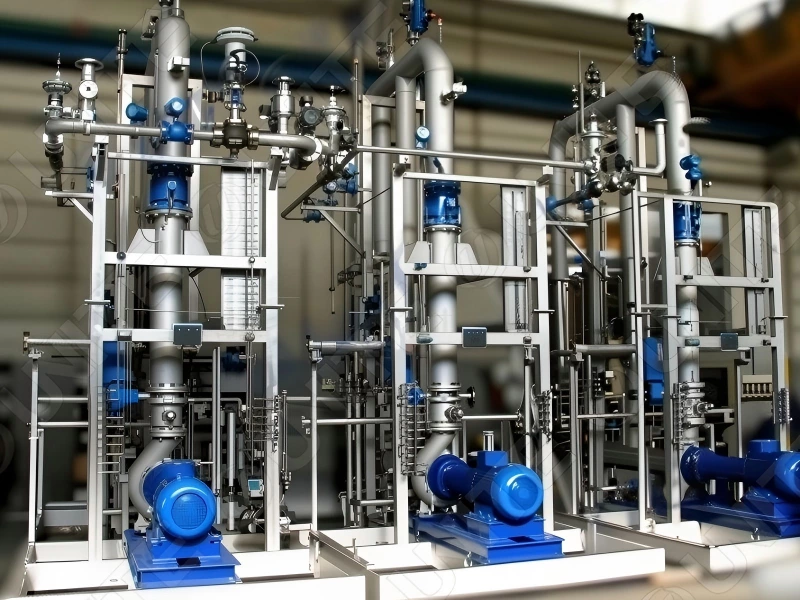
| Is a skid-mounted package preferred? | Affects piping, instrumentation, control panels, and site installation |
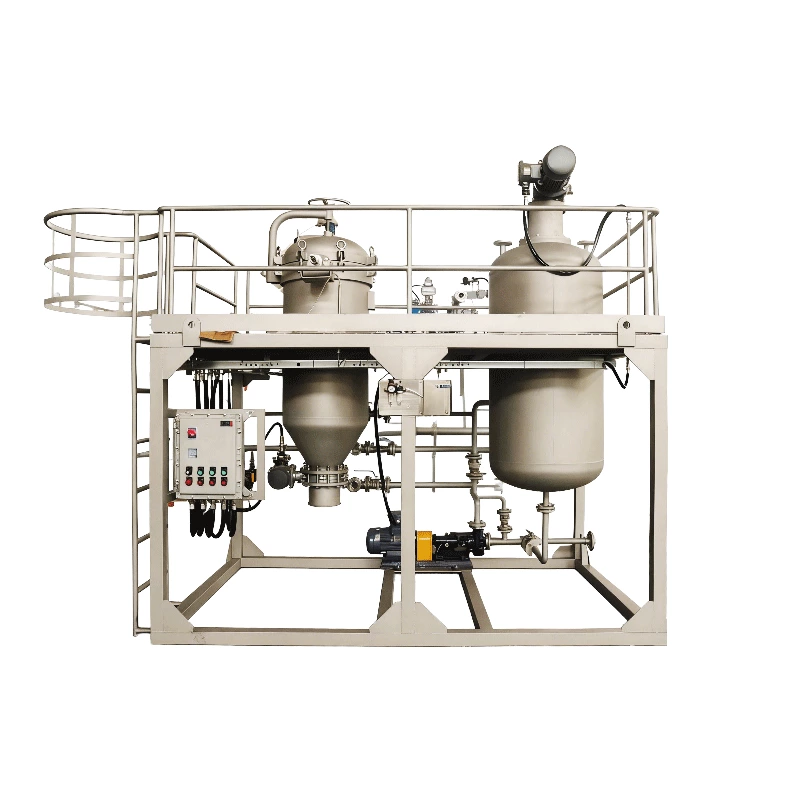
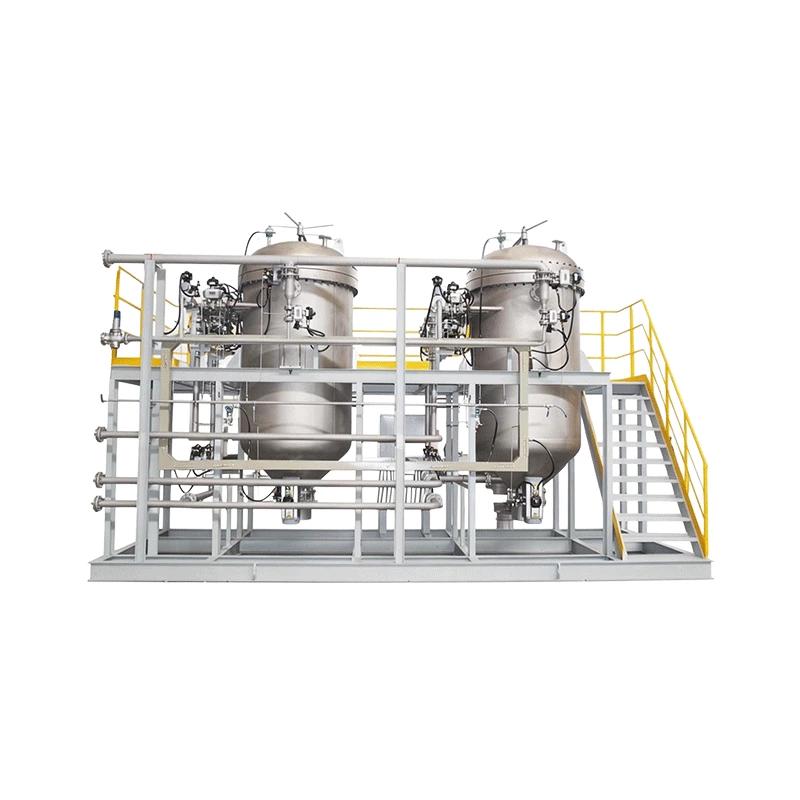
If the project also requires upstream clarification, downstream transfer, solvent recovery, or centralized control, evaluate a filtration and separation skid-mounted system. For processes with high upstream impurity loads or demanding clarification requirements, an ANFD may be combined with a candle filter or pressure leaf filter rather than being expected to perform every separation duty alone.
7. Engineering Example: From Pre-Filtration to Three-in-One Drying
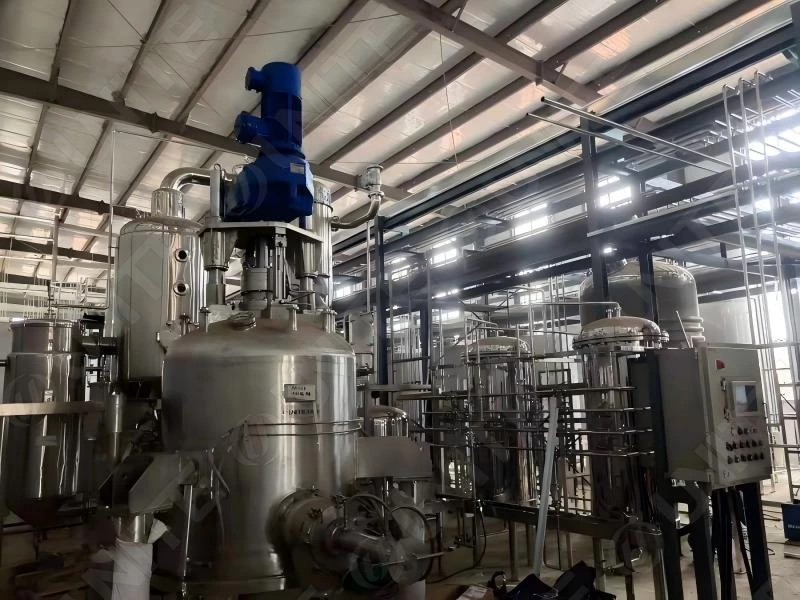
In UNITE’s BASF integrated candle filter and three-in-one filter dryer case study, the project used a modular combination of a candle filter and a three-in-one filter dryer. The upstream candle filter provided precision clarification, while the ANFD performed pressure filtration, spray washing, reslurry washing, and vacuum drying. An automated control system monitored parameters such as pressure, temperature, and moisture in real time.
The case demonstrates an important engineering principle: an ANFD does not always have to operate as a stand-alone unit. For processes involving trace impurities, volatile solvents, or high-purity requirements, upstream pre-filtration can reduce the load on the downstream filter base, while the three-in-one machine focuses on cake washing and drying. Modular integration can provide a better balance between purity, recovery, containment, and automation.
The case-study page reports that solvent recovery increased by 25% after commissioning. This is a result reported for that specific project and should not be interpreted as a universal performance guarantee for every material or operating condition.
8. Frequently Asked Questions
What is the difference between an Agitated Nutsche Filter Dryer and a conventional filter?
A conventional filter primarily performs solid-liquid separation. An ANFD integrates filtration, cake washing, vacuum drying, and discharge in one enclosed vessel. It is especially suitable for batch processes requiring high purity, low contamination risk, and fewer material-transfer steps.
Can an ANFD process liquids?
An ANFD is designed primarily for slurries containing solids or for wet filter cakes. It is not simply a high-flow liquid polishing filter. If the feed contains little or no solids capable of forming a filter cake, or if the process requires continuous high-volume liquid filtration, another filtration technology may be more appropriate.
What drying methods are used in an ANFD?
Common approaches include jacket heating combined with vacuum drying. Depending on the material, hot gas or inert gas may also be incorporated. Drying time and endpoint must be established through heat-load calculations, heat-transfer evaluation, vacuum testing, and material trials.
Is an ANFD suitable for pharmaceutical production?
It can be, but the equipment must be designed around the product, cleanliness level, GMP expectations, cleaning validation, explosion protection, CIP/SIP, sealing, and material compatibility. Suitability cannot be determined by the equipment name alone; it must be confirmed through process validation and applicable regulatory requirements.
How can a project-specific ANFD solution be obtained?
Prepare complete process data, including material properties, batch size, filtration and washing requirements, drying endpoint, temperature and pressure, solvent information, and explosion-protection requirements. The information can then be submitted for a technical quotation. Visit the UNITE contact page to discuss a customized filtration and drying solution.
Conclusion
The essential function of an Agitated Nutsche Filter Dryer is to integrate solid-liquid separation, filter-cake purification, and product drying into one controlled, enclosed, and potentially automated batch platform. For pharmaceutical, fine chemical, new energy material, and other high-value solid-product processes, this configuration can reduce transfer losses and contamination risks while improving washing, drying, and batch consistency.
The final performance of an ANFD depends on the match between the material, filter cake, equipment, and control strategy. Companies should avoid comparing machines only by nominal volume or filtration area. Instead, they should confirm filtration flux, cake thickness, washing efficiency, drying time, residual solvent, discharge performance, and cleaning strategy through testing and engineering calculations.
Using UNITE’s product range and engineering cases as a reference, users can assess not only the stand-alone filter dryer but also broader solutions involving solid-liquid separation, skid-mounted integration, corrosion-resistant construction, pharmaceutical-grade design, and automated process control.
References
[1] UNITE — Agitated Nutsche Filter Dryer
[2] UNITE — Cylindrical Cone Filter Dryer
[3] UNITE — Chemical Industry Filtration and Separation Solutions
[4] UNITE — Bio-Food Pharma Filtration Solutions
[5] UNITE — BASF Integrated Candle Filter and Three-in-One Filter Dryer System Case Study