Candle Filter vs Pressure Leaf Filter: A Practical Selection Matrix
Choosing between a candle filter and a pressure leaf filter is not a question of which technology is better in general. Both are established forms of pressure filtration for solid-liquid separation, and both can be engineered for demanding process duties. The right choice depends on the slurry, the desired filtrate quality, the behavior of the filter cake, the required operating sequence and the practical constraints of the installation.
A candle filter uses multiple tubular filter elements—often arranged vertically—inside a closed vessel. A pressure leaf filter uses a set of filter leaves that provide the filtration surface inside a pressure vessel. In both cases, liquid passes through a filter medium while solids are retained and form a cake. The differences that matter most are not the equipment names; they are the geometry, process sequence, cake-release method, cleaning requirements, automation strategy and integration with the wider plant.
Quick answer: Start with the separation problem, not the equipment label. A candle filter may be a strong option for fine solids, contained operation and controlled cake handling. A pressure leaf filter may be a strong option for batch clarification, precoat duties or processes whose cake-handling requirements align with leaf filtration. The final decision should be based on process data and, where needed, representative filtration testing.
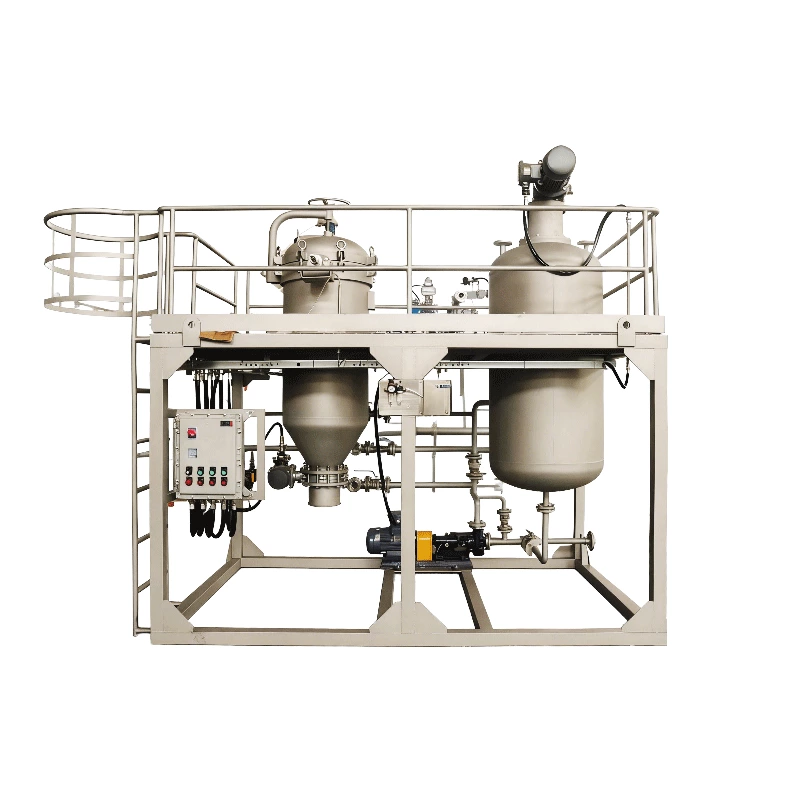
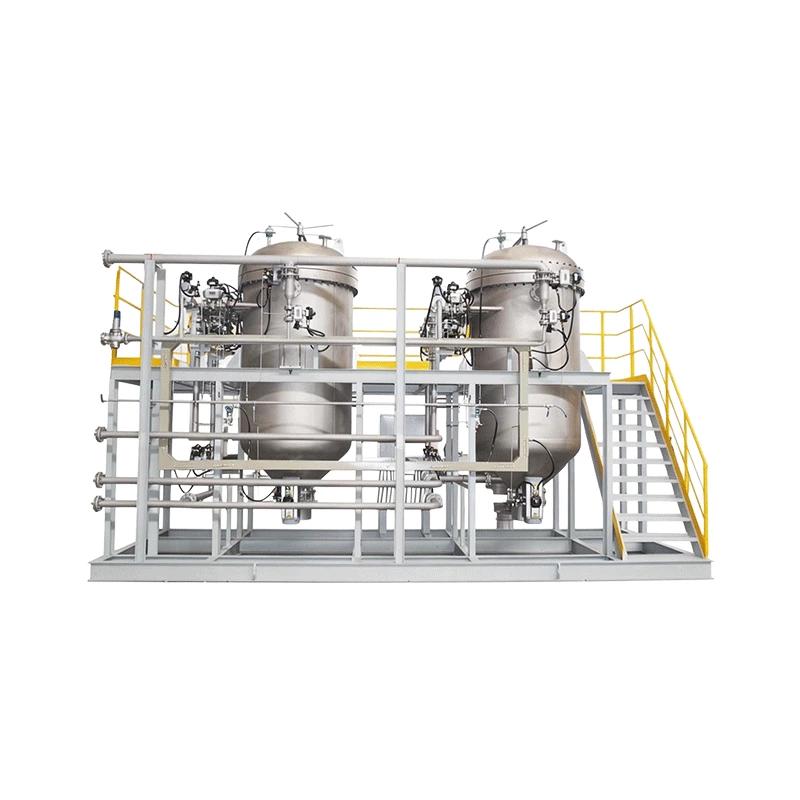
If you are already evaluating equipment, review UNITE’s industrial candle filter systems and pressure leaf filter systems. The comparison below will help you prepare the data needed for a focused technical discussion.
Candle Filter vs Pressure Leaf Filter: The Core Difference
The core distinction is the filtration element configuration. In a candle filter, the filtration area is provided by multiple candle-shaped elements inside the vessel. Feed contacts the external surface of the elements; liquid passes through the filter medium and is collected through the internal filtrate path, while solids form cake on the outside of the elements.
In a pressure leaf filter, the filtration area is provided by a group of leaf-shaped elements. Feed contacts the filter leaves, filtrate passes through the medium and internal channels, and solids accumulate as cake on the filtering surfaces. Pressure leaf filters can be designed in different orientations and configurations, so the exact process layout and maintenance arrangement must be reviewed on a project basis.
Both technologies can use engineered media, operating cycles and instrumentation. Both can be designed with steps for filtration, cake washing, dewatering and discharge. It would be inaccurate to select one purely because a process requires “fine filtration,” “closed operation” or “automation.” Those requirements are important, but they need to be translated into a complete process specification.
| Selection factor | Candle Filter | Pressure Leaf Filter | Why the distinction matters |
| Primary filtration elements | Multiple tubular candle elements | Multiple leaf-shaped filter elements | Element geometry affects vessel layout, filtration area arrangement and cake behavior |
| Typical process role | Fine solid-liquid separation, clarification and recovery duties requiring a controlled filtration cycle | Batch filtration, clarification and duties that may use leaf or precoat-based filtration approaches | The process sequence is more important than the product name |
| Cake formation | Cake develops on the outside of candle elements | Cake develops on the filter-leaf surfaces | Cake permeability, compressibility and release behavior must be evaluated |
| Enclosure | Commonly engineered as a closed pressure-vessel system | Can also be engineered as a closed pressure-vessel system | Containment requirements must be assessed at the system level |
| Cycle design | May include feed, filtration, wash/displacement, dewatering, release and discharge | May include comparable steps depending on duty and equipment configuration | Do not assume a standard cycle fits every slurry |
| Automation | Can be configured with automated valves, instruments and sequencing | Can be configured with automation appropriate to the batch process | Automation scope must reflect the plant control philosophy and safety requirements |
How a Candle Filter Works
A candle filter operates by introducing slurry into a vessel containing multiple filter elements. Differential pressure drives liquid through the selected filter media. Solids remain on the outer surface of the elements and gradually build a cake. The filtrate then exits through the internal collection system.
As the filtration cycle continues, the growing cake adds resistance to flow. The control endpoint may be based on differential pressure, flow, time, filtrate quality, level or a process-specific combination of these parameters. Once the target endpoint is reached, the system may carry out additional steps such as washing, displacement, dewatering or cake release before discharge.
The reliability of the full cycle depends heavily on the solids. A cake that is free-draining and releases predictably can support a practical operating sequence. A cake that is highly compressible, sticky, fragile or variable may require a different element design, operating strategy or equipment technology. For a more detailed introduction, read how a candle filter works and how to select one.
How a Pressure Leaf Filter Works
A pressure leaf filter also uses pressure-driven filtration, but its filtering surfaces are provided by leaves rather than candle elements. During the filtration stage, the slurry fills the vessel and passes across the leaf surfaces. Liquid moves through the selected medium and out through the filtrate system, while solids are retained and form a cake on the leaves.
Depending on the process, the cycle may include precoat preparation, body feed, cake build-up, wash, drain, dry or discharge stages. The appropriate sequence depends on the process objective. For example, a duty focused on polishing or clarification may be engineered differently from a duty where cake washing, product recovery or solids disposal is the primary concern.
The key question is how the solid behaves during and after filtration. Engineers should evaluate whether the cake forms evenly, whether it drains, whether it can be washed effectively, and whether it will release reliably from the filter surface. These considerations are more useful than generic claims that one technology always has “better” cake handling than the other.
Where Candle Filters Are Commonly Considered
Candle filters are often evaluated for applications involving fine solids, controlled cake handling and enclosed process operation. Examples may include catalyst recovery, selected fine-chemical streams, pharmaceutical intermediates, specialty materials and process streams where product loss or contamination control is a meaningful concern.
In these applications, the filter system is typically considered as part of a broader process. Engineers need to determine the required filtrate quality, solids-recovery objective, compatibility of wetted materials, wash and dewatering needs, instrumentation, cleaning approach and downstream handling of the discharged cake.
A candle filter may be especially worth evaluating when the recovered solids are valuable or when the process benefits from a defined, repeatable filtration cycle. This does not eliminate the need for testing. A small change in solids concentration, particle-size distribution or liquid viscosity can change cycle time, pressure profile and cake-release behavior.
Where Pressure Leaf Filters Are Commonly Considered
Pressure leaf filters are commonly evaluated for batch clarification and solid-liquid separation duties, including applications where precoat filtration or a leaf-filter process configuration aligns with the process. They may be considered in chemical, edible-oil, petrochemical and other industrial services, subject to application-specific engineering review.
A pressure leaf filter can be a practical option when the planned process sequence, leaf geometry, cake characteristics and maintenance approach fit the project constraints. The selection should account for the required filtration area, vessel access, space available for operation and service, intended washing or drying sequence, and the operational response to variable feed conditions.
Where a project has a known history of leaf filtration, the decision may also involve existing operating procedures, spare-parts strategy, maintenance familiarity and plant layout. These practical factors can be as important as the initial technical comparison.
The Selection Matrix: Which Questions Should Drive the Decision?
The following matrix provides a structured first-pass comparison. It does not replace a process design review, but it helps project teams identify what they need to validate before specifying equipment.
| Process question | When to examine Candle Filter closely | When to examine Pressure Leaf Filter closely | What to provide to the engineering team |
| What is the primary separation goal? | Fine-solid retention, clarified liquid, contained recovery or a repeatable discharge cycle are priorities | Batch clarification, a leaf-filter arrangement or a precoat-oriented approach is preferred | Target filtrate quality, solids-recovery target and downstream protection requirement |
| How do the solids behave? | Fine, variable or valuable solids require assessment of cake build-up and release on candle elements | Cake build-up, washing and release on leaf surfaces fit the operating concept | Particle-size distribution, density, shape, solids concentration and compressibility |
| Is cake washing or solvent displacement required? | Washing/dewatering steps need to be integrated with the filtration and discharge sequence | The process sequence requires leaf-based cake washing or treatment | Wash-fluid type, purity requirement, residual-liquid target and disposal/recovery plan |
| What is the required operating mode? | A defined automated cycle within an enclosed vessel supports the plant’s approach | A batch leaf-filtration cycle and operating layout fit the production schedule | Batch size, flow rate, campaign duration, cycle-time target and availability target |
| Are containment and safety important? | The system must support contained handling, controlled venting or hazardous-area requirements | The complete pressure leaf system can be designed to meet the required containment and safety basis | Hazard classification, emissions requirements, solvent properties and operating procedures |
| How critical is maintenance access? | Element inspection and service can be accommodated in the selected vessel and layout | Leaf access, cleaning and service space fit the plant layout | Maintenance philosophy, lifting restrictions, access envelope and planned shutdown windows |
| Is there a precoat requirement? | Confirm whether the media and process sequence support the validated precoat approach | Evaluate leaf-filter configurations suitable for the specified precoat process | Precoat material, dosage, cake objective and disposal/recovery method |
| What documents and standards apply? | The candle-filter package can be engineered for the required codes and testing | The leaf-filter package can be engineered for the required codes and testing | Design code, material traceability, inspection plan, FAT, documentation and certification requirements |
Cake Handling, Washing and Discharge: The Decision Is Process-Specific
For both technologies, the filter cake is central to the design. A filter can achieve the required initial filtration performance yet still fail operationally if the cake cannot be washed, dewatered, released or discharged in a stable way. This is why a general “micron rating” is not enough to select an industrial pressure filter.
Start by defining the role of the solids. Are they a waste stream, a valuable catalyst, a product intermediate or a contaminant that must be isolated safely? Then define the downstream path. Will the cake be recovered, reslurried, conveyed, packed, dried, reprocessed or disposed of? Each path affects the required filter cycle and the equipment interfaces.
Cake properties can also change during production. A filter that works acceptably with a clean feed may behave differently during upset conditions, high-solids batches or seasonal changes in raw material. Provide both normal and expected worst-case conditions during the design stage. If reliable representative data are not available, discuss test work or a staged engineering approach before committing to final sizing.
Filtration Area, Cycle Time and Throughput
Filter selection is often reduced to a requested flow rate. In batch or cake-filtration duties, throughput is also determined by the complete cycle: filling, filtration, wash, dewatering, discharge, cleaning, inspection and readiness for the next batch.
A higher nominal filtration area does not automatically mean a better process outcome. The required area depends on the resistance of the filter medium, the resistance of the cake, the viscosity of the liquid, solids loading, pressure limits, target cycle time and desired filtrate quality. Two streams with the same flow rate can require very different equipment configurations if their solids behave differently.
When requesting a proposal, provide the normal and maximum throughput, batch volume, allowable cycle time, operating schedule and expected variations in solids loading. These details allow the engineering team to evaluate capacity rather than simply quoting a vessel size.
Automation, Controls and Plant Integration
Both candle and pressure leaf filters can form part of an automated process package. The appropriate level of automation depends on the risks and operating requirements of the specific plant. A project may require local controls only, while another requires automated sequencing, remote monitoring, safety interlocks, historian integration and defined communications with a distributed control system.
The filter controls should be specified around the process sequence. Typical signals can include pressure, differential pressure, flow, level, temperature, valve position and filtrate quality indicators. However, the required instruments, trip points and logic must be determined by the process, safety review and client standards.
For projects that require pumps, piping, valves, instrumentation and controls as an integrated delivery boundary, a custom filtration and separation skid may provide a more useful starting point than specifying a filter vessel alone.
Total Cost of Ownership: Look Beyond Initial Equipment Cost
The most useful commercial comparison considers total cost of ownership, not only initial equipment price. A lower initial purchase cost may be outweighed by shorter service intervals, higher consumable use, lower recovery, longer cycle times or greater manual intervention. Conversely, an automated or more fully engineered system should be assessed against the actual reduction in operating risk, product loss and labor for the duty.
| Cost or risk area | Questions to ask before selecting a system |
| Product and solids recovery | What is the economic value of retained solids or lost filtrate? |
| Cycle time | How does the full cycle affect production capacity and schedule? |
| Consumables | What media, precoat, cleaning materials or spares are required? |
| Utilities | What compressed gas, wash liquid, power, drainage or ventilation needs apply? |
| Labor and maintenance | How much intervention, cleaning, inspection and replacement activity is required? |
| Safety and containment | What controls are needed for solvents, dust, emissions, pressure or hazardous areas? |
| Project risk | What testing, documentation, quality control, FAT and commissioning support are required? |
The right choice is the one that provides an acceptable technical outcome and operating profile over the project life. That conclusion should be supported by actual feed data, expected duty cycle and verified assumptions—not a generic comparison chart alone.
Common Selection Mistakes to Avoid
The first mistake is selecting on micron rating alone. Nominal retention is only one part of separation performance; media, cake formation, solids behavior and operating conditions all matter. The second mistake is specifying a flow rate without a full cycle-time requirement. In batch filtration, the complete sequence determines usable capacity.
The third mistake is assuming that cake discharge will be straightforward. Cake release, washing and downstream handling should be reviewed before finalizing the equipment layout. The fourth is treating containment as a vessel-only requirement. Containment also involves connections, seals, vents, drains, valves, instrumentation, operator procedures and the interfaces around the filter.
Finally, do not confuse an online comparison article with a validated process design. This guide should help your team ask better questions; it should not replace a review of the actual slurry and project standards.
What to Send When Requesting a Technical Comparison
To compare a candle filter and a pressure leaf filter efficiently, provide as much of the following information as possible:
| Information category | Minimum information to share |
| Process stream | Fluid composition, pH, density, viscosity, solvent content and corrosion concerns |
| Solids | Type, concentration, particle-size distribution, density, abrasiveness and compressibility |
| Process conditions | Normal/max pressure and temperature; batch volume or flow rate; operating schedule |
| Separation target | Filtrate clarity, downstream protection, recovery target and permitted residual solids |
| Cake requirement | Washing, dewatering, discharge, recovery, disposal and containment needs |
| Project requirements | Codes, materials, hazardous-area classification, automation scope, documents and inspection requirements |
The same information supports a more meaningful equipment recommendation, budgetary proposal and next-step test plan. For applications involving fine or valuable solids, see UNITE’s forthcoming catalyst recovery filtration guide once it is published.
Frequently Asked Questions
What is the difference between a candle filter and a pressure leaf filter?
A candle filter uses multiple tubular filter elements inside a pressure vessel, while a pressure leaf filter uses multiple leaf-shaped filter elements. Both use pressure-driven filtration and form a cake from retained solids. The practical difference depends on the element geometry, process sequence, cake behavior, access requirements and control strategy.
Is a candle filter better than a pressure leaf filter?
Neither is universally better. A candle filter may be a strong option for some fine-solid, recovery or contained filtration duties. A pressure leaf filter may be a strong option for some batch, clarification or precoat-related duties. The correct choice depends on the actual process conditions and should be verified by an engineering review.
Can both filter systems wash and dewater filter cake?
Both technologies can be engineered with process steps for washing, displacement or dewatering. The achievable result depends on the slurry, media, cake permeability, process sequence, utility availability and discharge design.
Which filter is better for catalyst recovery?
Catalyst recovery should be assessed from the particle characteristics, liquid chemistry, solids value, target recovery, containment needs and downstream handling. Candle filtration is commonly evaluated for fine-solid recovery, but the final selection should be based on validated process data and, where appropriate, representative test work.
What data are needed to request a filtration proposal?
Provide liquid composition, solids characteristics, flow rate or batch size, pressure, temperature, filtrate-quality target, cake-handling requirements, materials compatibility, automation needs and applicable project standards. These inputs enable an engineering team to compare technologies on an appropriate basis.
Next Step: Compare Your Process with an Engineer
A technology comparison is most useful when it is connected to real process data. If your team is evaluating a new filtration system, a replacement unit or a process upgrade, share the stream characteristics, solids information, required capacity and cake-handling objective.
Request a technical review from UNITE to discuss the appropriate solid-liquid separation approach. You can also review UNITE’s industrial candle filter systems and pressure leaf filter systems before submitting an RFQ.