How to Choose the Right Industrial Filter for Your Application?
Selecting the optimal industrial filter is crucial for maintaining operational efficiency, product quality, and equipment longevity. With a myriad of options available, understanding the key factors and filter types is essential for making an informed decision.
What are the key factors to consider when choosing an industrial filter?
Choosing the right industrial filter involves evaluating several critical parameters related to your process and fluid characteristics. These factors directly influence filter performance, maintenance requirements, and overall cost-effectiveness.
Key Selection Factors:
•Fluid Characteristics: Type (liquid/gas), viscosity, corrosivity, operating temperature, and pressure.
•Filtration Efficiency (Micron Rating): The smallest particle size to be removed, determining whether absolute or nominal filtration is required.
•Flow Rate & Pressure Drop: The volume of fluid to be processed and the acceptable pressure differential across the filter.
•Contaminant Load & Nature: Concentration, shape, and hardness of impurities, which impact dirt-holding capacity and potential for clogging.
•Operational Mode & Maintenance: Whether continuous or batch operation, and the preferred method for cleaning or replacing filter media (manual, automatic, backwash).
What are the common types of industrial filters and their applications?
Industrial filters come in various designs, each suited for specific applications and filtration challenges. Understanding their working principles, advantages, and disadvantages is vital.
Self-Cleaning Filters
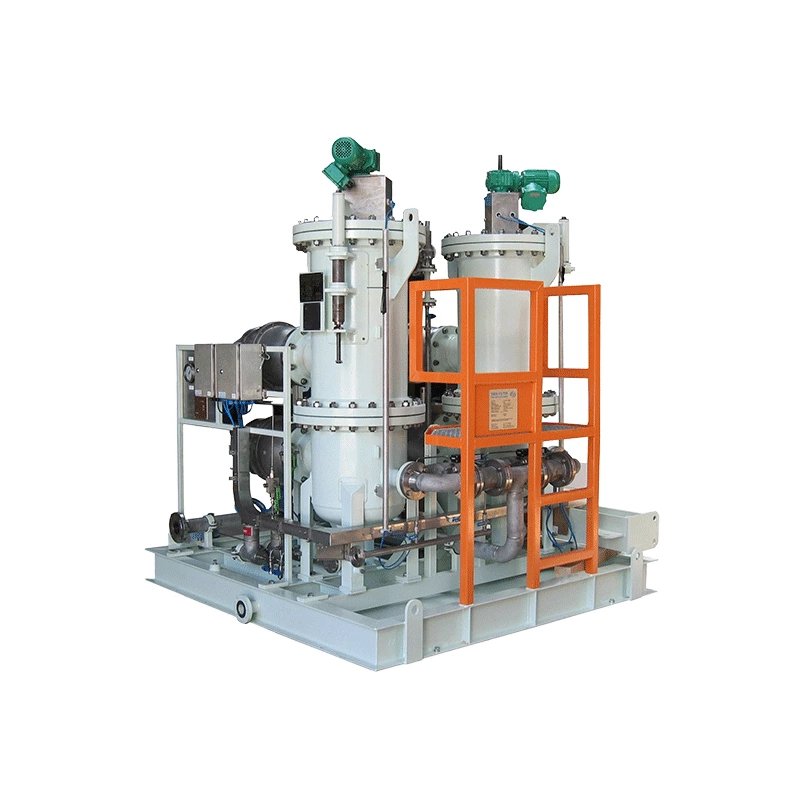
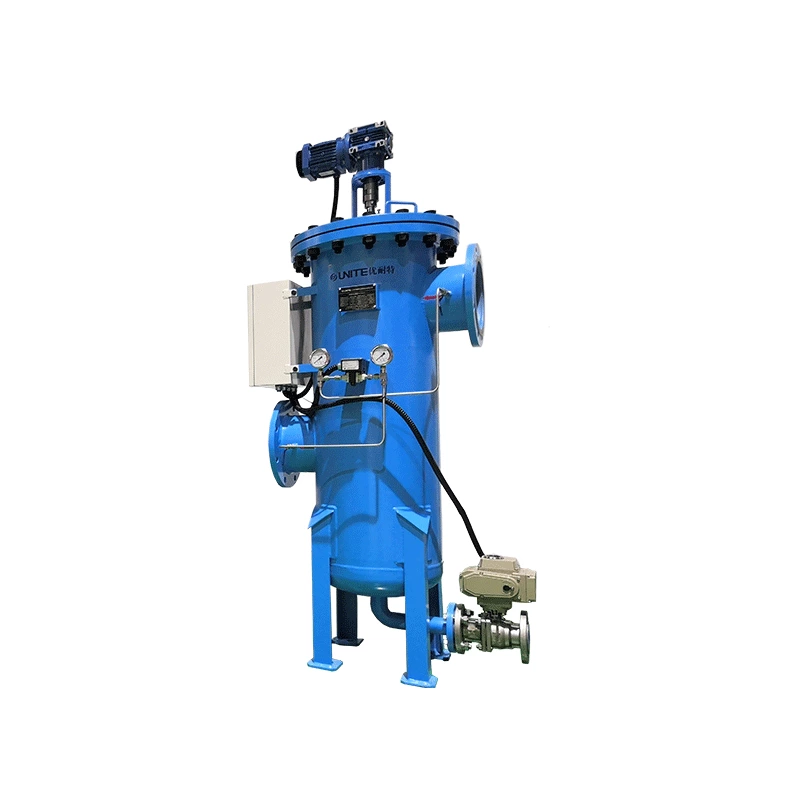
Self-cleaning filters are automated systems designed to continuously remove accumulated solids from the filter screen without interrupting the process flow. They utilize motorized mechanisms like brushes, scrapers, or suction scanners to clean the filter element. This category often includes Backwash Filters.
•Working Principle: Automated mechanical or hydraulic cleaning of the filter element while the process is running.
•Advantages: Continuous operation, reduced labor, high dirt-holding capacity, suitable for high contaminant loads.
•Disadvantages: Higher initial investment, requires power, more complex structure.
•Applications: High-volume processes, continuous production lines, unmanned installations, pre-filtration for finer filters, water treatment, cooling systems.
Backwash Filters
Backwash filters are a specific type of self-cleaning filter that reverses the fluid flow through the filter media to dislodge trapped particles. These particles are then flushed away, regenerating the filter element.
•Working Principle: Reverses flow to clean the filter media, expelling trapped contaminants.
•Advantages: Automated cleaning, continuous operation, effective for removing accumulated solids, extends filter element life.
•Disadvantages: Requires a clean backwash fluid source, may consume process fluid during backwash cycles, potential for backwash waste disposal.
•Applications: Water intake, cooling tower filtration, wastewater treatment, pre-filtration for RO systems, industrial process water recycling.
Candle Filters
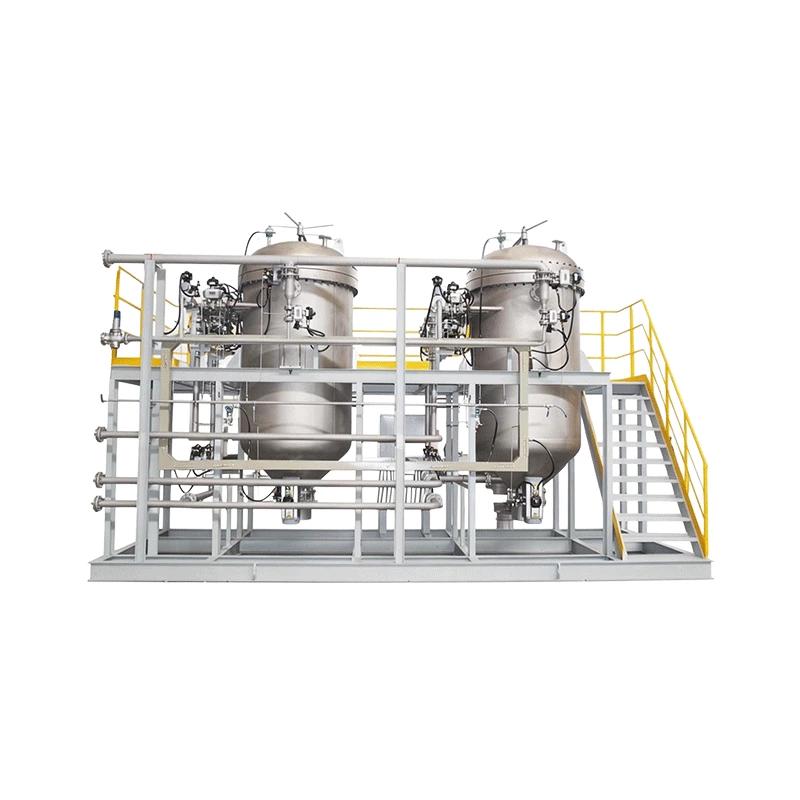
Candle filters utilize multiple cylindrical filter elements (candles) typically arranged vertically or horizontally within a pressure vessel. They offer a large filtration area within a compact design and are often used for fine filtration and cake filtration applications.
•Working Principle: Fluid flows through porous candle elements, forming a filter cake on the surface. Cleaning is often achieved via back-pulsing or mechanical shaking.
•Advantages: High filtration area, excellent for fine and sub-micron filtration, suitable for high pressure/temperature applications, efficient for solids recovery (cake filtration).
•Disadvantages: Higher initial cost, complex cleaning mechanisms, element replacement can be intricate, potential for blinding with sticky particles.
•Applications: Chemical processing, pharmaceuticals, food & beverage, catalyst recovery, high-purity liquid filtration, precious metal recovery.
Other Common Types
•Basket Strainers & Y-Strainers: Simple, low-cost options for removing large debris and protecting pumps/valves. Require manual cleaning.
•Bag Filters: High dirt-holding capacity, easy bag replacement, suitable for high flow rates and moderate contaminant loads.
•Cartridge Filters: High precision, capable of sub-micron filtration, used for critical applications requiring high product purity.
•Sand Filters: Cost-effective for large volumes, used for pre-filtration and removing suspended solids in water treatment.
•Activated Carbon Filters: Primarily for adsorbing organic compounds, odors, and chlorine.
How do Self-Cleaning, Backwash, and Candle Filters compare?
These three advanced filter types offer distinct advantages for continuous and demanding industrial applications. Their comparison is crucial for selecting the most suitable technology.
| Feature | Self-Cleaning Filter (General) | Backwash Filter (Specific Self-Cleaning Type) | Candle Filter |
| Cleaning Method | Automated (brush, scraper, suction) | Automated (reverse fluid flow) | Automated (back-pulsing, mechanical shaking) or manual |
| Process Continuity | Continuous | Continuous | Continuous (with automated cleaning) |
| Filtration Range | 25 µm to 3,000 µm | Typically 25 µm to 1,000 µm | Down to sub-micron levels |
| Dirt-Holding Capacity | High | High | High (especially for cake filtration) |
| Initial Cost | Medium-High | Medium-High | High |
| Maintenance | Low labor, occasional inspection | Low labor, backwash fluid management | Moderate (element replacement can be complex) |
| Energy/Resource Use | Electrical power | Electrical power, backwash fluid | Electrical power (for automated cleaning) |
| Key Benefit | Uninterrupted operation, labor saving | Efficient regeneration, extends media life | High precision, large area, solids recovery |
| Best Suited For | High contaminant loads, continuous processes | Water treatment, pre-filtration, continuous flow | High-purity, high-temp/pressure, catalyst recovery |
What is the Total Cost of Ownership (TCO) for industrial filters?
Beyond the initial purchase price, the Total Cost of Ownership (TCO) provides a holistic view of a filter's economic impact over its lifespan. TCO includes:
•Capital Cost: Initial equipment purchase and installation.
•Operating Cost: Energy consumption, water usage (for backwashing), and pumping costs due to pressure drop.
•Maintenance Cost: Labor for cleaning, filter media/element replacement, and spare parts.
•Downtime Cost: Production losses from filter maintenance or failures.
•Disposal Cost: Expenses for handling and disposing of spent filter media or waste.
For continuous and high-contaminant applications, automated solutions like self-cleaning and backwash filters, despite higher upfront costs, often yield a lower TCO due to reduced labor, downtime, and consumable expenses. Candle filters, while having a higher TCO due to specialized elements, are justified in high-value processes where their precision and operational continuity are paramount.
Common Mistakes to Avoid in Filter Selection
•Over-Filtration: Choosing a filter with unnecessarily high efficiency increases costs and maintenance.
•Ignoring Fluid Compatibility: Mismatched materials lead to corrosion and premature failure.
•Focusing Only on Initial Cost: Neglecting long-term operational and maintenance expenses.
•Underestimating Contaminant Load: Leads to frequent clogging and maintenance.
•Inadequate Space Planning: Critical for installation and servicing, especially for larger or complex systems.
Conclusion
Choosing the right industrial filter is a strategic decision that requires a thorough understanding of your application's specific needs. By carefully considering fluid characteristics, filtration goals, operational demands, and the TCO, and by leveraging the strengths of advanced filter types like self-cleaning, backwash, and candle filters, you can optimize your filtration process for peak performance and cost-efficiency. Consulting with filtration experts can further refine your selection, ensuring a robust and reliable solution for your industrial challenges.
References
[1] Industrial Filters: Comprehensive Guide to Types, Applications, and Selection Criteria.
[2] In-depth Analysis of the Working Principle of Backwash Filter.
[3] Self-cleaning filters | Industrial filtration equipment.
[4] Candle Filter Types: A Comprehensive Guide to Industrial Filtration Systems.