Industrial Filtration Skid Commissioning: FAT, SAT, Process Testing, and Acceptance Checklist
Direct answer
Industrial filtration skid commissioning should be managed as a sequence of evidence-based gates: document and design review, factory acceptance testing (FAT), site installation and verification, site acceptance testing (SAT), dry functional checks, water trials, process commissioning, performance trending and formal handover. FAT verifies the assembled package and controls at the supplier’s facility. SAT verifies the delivered and installed system at the owner’s site. Process commissioning then confirms behavior with the intended fluid, slurry or gas under agreed operating conditions.
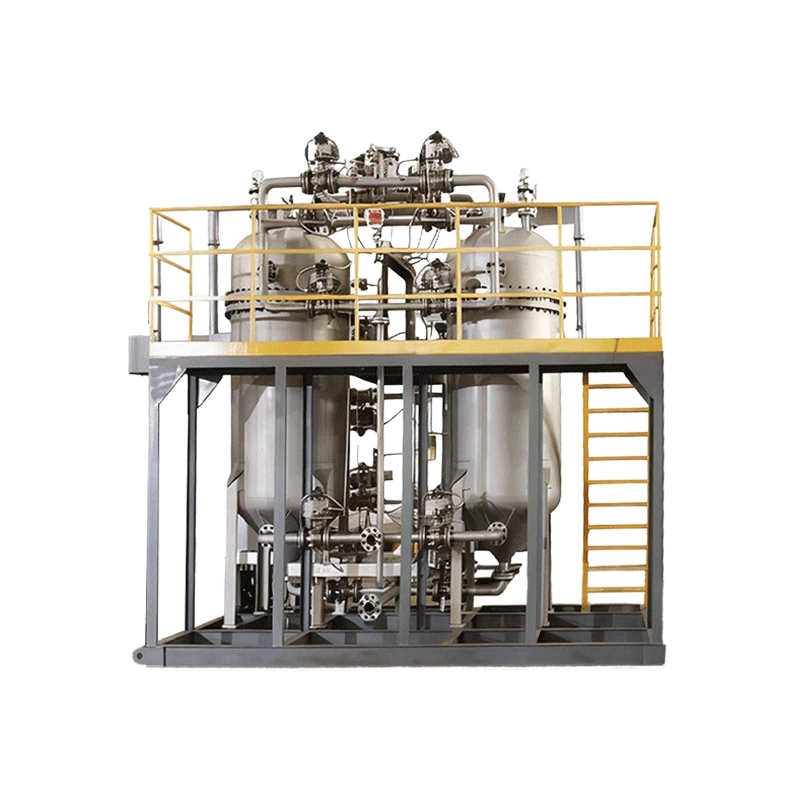
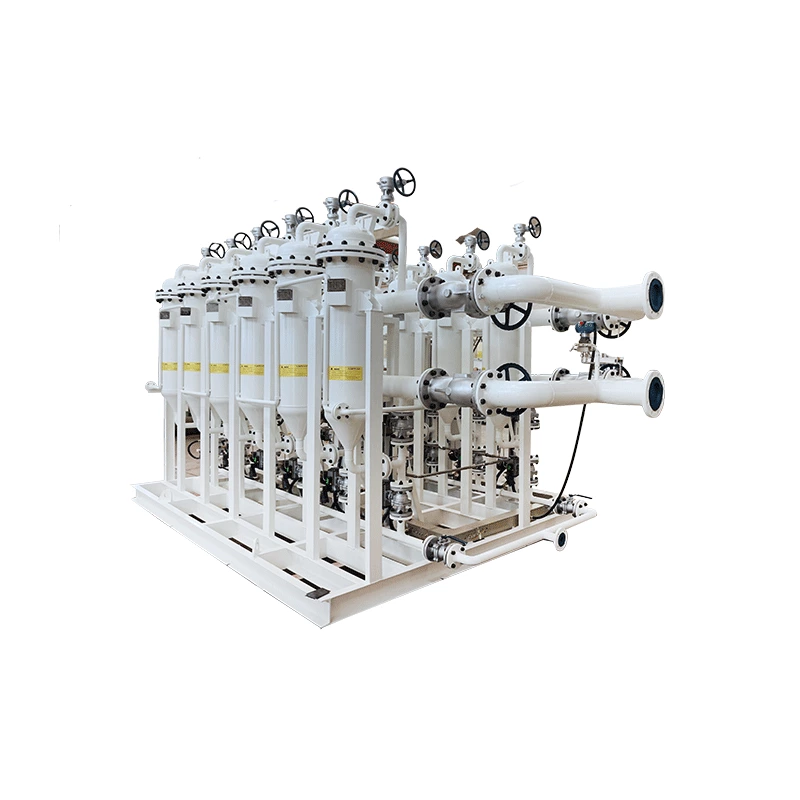
UNITE describes its skid-mounted filtration and separation systems as integrated packages that can combine filtration units, piping, valves, instrumentation and control systems. Its product page also states that the engineering team supports process-data review, factory testing and commissioning. These capabilities define a useful project framework, but actual pass/fail criteria must be agreed in the user requirements, purchase specification and test protocol for each project.
1. Why commissioning is part of filtration-system design
A filtration skid can pass a component inspection and still fail to deliver stable process performance if the piping arrangement, utilities, instruments, controls, media installation or process assumptions are not verified together. Commissioning is where the equipment package is checked against the process duty and where the initial operating baseline is established.
The commissioning plan should connect four layers:
1.Mechanical integrity: vessel, skid frame, piping, valves, filter elements, seals, supports and connections.
2.Control functionality: sensors, PLC/HMI logic, alarms, interlocks, valve sequencing, automatic cleaning and manual overrides.
3.Process performance: flow, pressure, differential pressure, temperature, filtrate or gas quality, cycle time, cake behavior and cleaning response.
4.Operational readiness: procedures, training, spare parts, safety controls, records and handover responsibilities.
Treating these as separate activities can leave gaps at the interfaces. A skid is an integrated system, so the acceptance evidence should also cover the integrated system.
2. FAT, SAT and process commissioning: what is the difference?
| Stage | Location | Main purpose | Typical evidence |
| Design and document review | Supplier and owner review | Confirm the package reflects the process scope and user requirements | Approved drawings, P&IDs, data sheets, instrument list, I/O list, cause-and-effect or sequence description |
| FAT | Supplier’s facility | Verify assembly, components, controls, alarms, interlocks and agreed functional tests before shipment | FAT protocol, test records, calibration evidence, punch list and release decision |
| Installation and pre-commissioning | Owner’s site | Confirm the skid was installed correctly and connected to safe, available utilities | Installation records, alignment, piping/utility checks, cleanliness and safety inspection |
| SAT | Owner’s site | Verify delivered equipment condition, site connections and site-specific functions | SAT records, I/O and alarm checks, utility verification, punch-list status |
| Process commissioning | Owner’s site with process fluid or representative material | Demonstrate performance under defined operating conditions | Flow, pressure, DP, quality, cycle, cleaning and repeatability data |
| Handover | Owner’s site | Transfer operation, maintenance and performance responsibility | As-built package, manuals, training, spares, baseline and signed acceptance |
FAT and SAT are not interchangeable. FAT is performed at the manufacturer’s site before shipment, while SAT is performed at the owner’s site after delivery and installation. Site utilities and environmental conditions can only be fully checked during the site phase.
3. Documents and process data to complete before delivery
Commissioning becomes difficult when the equipment arrives before the process boundary is clear. Before FAT, the project team should agree:
•User requirements and intended filtration objective
•Feed, filtrate, gas or separated-solid specifications
•Normal, minimum, maximum and design flow
•Operating and design pressure or vacuum
•Temperature range and heat-tracing or insulation needs
•Solids loading, particle-size distribution, viscosity and corrosive components where relevant
•Required filtration accuracy or product-quality measurement
•Cleaning, backwash, blowback, washing, drying and discharge sequence
•Utility requirements: power, instrument air, compressed gas, nitrogen, wash liquid, drainage and ventilation
•Materials of construction, seals, gaskets and filter-media requirements
•Hazardous-area, containment and pressure-protection requirements
•PLC/DCS interface, communication signals, alarms, interlocks and emergency-stop philosophy
•FAT, SAT and process-performance protocols with named responsibilities
•Acceptance criteria, sampling points, analytical methods and deviation process
UNITE’s skid page states that its systems are designed around process conditions and installation requirements, and that the engineering team reviews the full process flow to recommend filtration steps. The owner should provide complete process data early enough for these design decisions to be reflected in the test plan.
4. Pre-commissioning checklist: mechanical, piping and cleanliness
4.1 Skid and structural checks
Verify the skid frame, lifting points, supports, access platforms, equipment orientation, anchor points, nameplates and installation clearances against the approved drawings. Confirm that the foundation and supporting structure can carry the operating load and any relevant dynamic load.
For a modular package, also confirm transport damage, loose components, flange protection, drain points, vent locations and the condition of instruments and control cabinets after shipment.
4.2 Vessel, piping and valve checks
Inspect vessels, housings, piping, nozzles, flanges, gaskets, valves, supports and insulation. Confirm flow direction, valve tags, line numbers, drainability, venting and correct connection to the plant. Verify that pressure-relief and isolation arrangements match the approved design.
The inspection should include internal supports, filter elements, filter baskets, candles, leaves, screens or other media. Media should be installed according to the supplier’s instructions and protected from contamination during installation. Jonell Systems emphasizes mechanical inspection, internal cleanliness, seal integrity, correct media specification and seating before startup.
4.3 Cleaning and flushing
Remove welding debris, construction materials, packaging, foreign objects and residual test fluids. Flush process lines and confirm that the flushing procedure is compatible with the filter media, seals, instruments and downstream equipment. The initial contaminant load from new piping can distort differential-pressure and filter-life data if it is not controlled.
Record the cleaning method, fluid, temperature, duration, drain destination and inspection result. For sanitary or high-purity duties, add the project’s applicable cleaning and verification requirements rather than assuming that a general water flush is sufficient.
4.4 Utility and safety checks
Verify electrical power, grounding, instrument air, compressed gas, nitrogen, wash liquid, drainage, ventilation and any heating or cooling utilities at the actual connection point. Confirm pressure and flow under peak demand, not only static pressure.
Complete the site safety review before introducing process material. Check guards, access control, emergency stops, pressure protection, hazardous-area requirements, inerting, venting, spill containment and safe media-change procedures.
5. FAT checklist at the supplier’s facility
A filtration-skid FAT should be based on an approved protocol. Depending on the project scope, it can include the following checks.
5.1 Document and component verification
Confirm that the assembled package matches the approved P&ID, general arrangement, piping layout, valve list, instrument list, motor list, filter-media specification and bill of materials. Verify critical component identity, material certificates or traceability documents where required, calibration status and equipment nameplates.
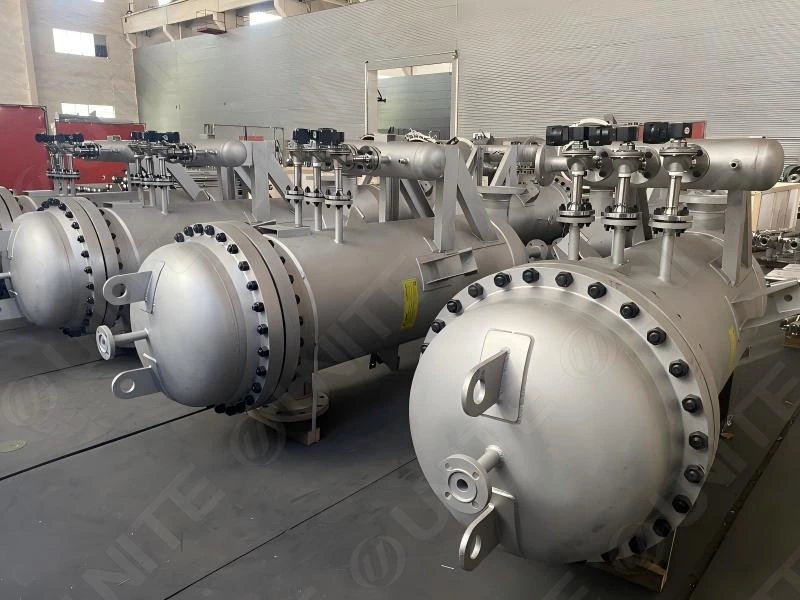
UNITE’s manufacturing page describes material and component inspection, batch identification, in-process production control and final inspection. These are useful quality checkpoints, but the project team should define which records form part of the contractual data package.
5.2 Mechanical and pressure-related tests
Confirm vessel, piping, valves and supports are complete and accessible for inspection. Perform the pressure, leak or safety tests required by the approved design and applicable project requirements. Record the test medium, pressure, duration, boundaries, instruments used, results and any deviations.
Do not treat a pressure test as proof of process-filtration performance. Mechanical integrity and separation performance are different acceptance questions.
5.3 Instrument, PLC and HMI tests
Verify sensor tags, ranges, units, calibration status, signal direction and alarm settings. Check pressure, differential-pressure, flow, temperature, level, oxygen or other project-specific instruments. Test input/output signals from field devices to the PLC/DCS and confirm the displayed values on the HMI.
Run the automatic sequence through filling, filtration, cleaning or backwash, washing, repulping, drying, discharge and in-situ cleaning where these functions are included in the package. Confirm manual modes, permissives, interlocks, alarm messages, failure responses, restart behavior and emergency-stop behavior.
UNITE describes HMI-supported process steps and fully automatic interlocking process design for its skid systems. The actual sequence must be confirmed against the project’s approved control narrative.
5.4 FAT punch list and shipment release
Record every deviation as open, corrected, accepted with action, or rejected. Assign an owner and due date. Confirm which open items prevent shipment and which can be closed during SAT. Shipment should be released only when the agreed preconditions are met and the owner has accepted the FAT result according to the contract.
6. SAT and site installation verification
After delivery, repeat the checks affected by transport and site conditions. Confirm that the equipment is undamaged, correctly positioned, level where required, connected to the correct lines and utilities, and accessible for operation and maintenance.
Perform site I/O checks, instrument verification, valve-stroke checks, alarm and interlock checks, emergency-stop checks and communication checks with the plant control system. Verify that the actual utility pressure, flow, voltage, grounding and network or signal interfaces match the design.
A SAT should not simply copy every FAT test. It should focus on what can change during transport and installation, plus what depends on the owner’s site environment. The protocol should identify any FAT evidence that is being accepted by reference and any test that must be repeated at site.
7. Dry run, water trial and process commissioning
7.1 Dry functional run
Run the sequence without process slurry or hazardous material. Confirm that pumps, valves, actuators, agitators, backwash devices, discharge mechanisms, sensors, alarms and interlocks respond correctly. Check timing, abnormal-condition responses and safe shutdown.
The dry run is the lowest-risk stage for finding incorrect valve logic, sensor direction, missing permissives, communication errors or mechanical interference.
7.2 Water or inert-fluid trial
Introduce water or another approved test fluid when compatible with the equipment and downstream system. Check hydraulic circulation, leaks, flow distribution, drainability, washing, backwash, venting, instrumentation and collection points. Water trials do not prove performance with the production slurry, but they can expose installation and control problems before process material is used.
Document the test fluid, temperature, flow, pressure, duration, sampling points, deviations and cleaning method after the trial.
7.3 Process commissioning
Introduce representative process material in controlled stages. Begin within conservative operating limits, then move toward the agreed production envelope while monitoring flow, pressure, differential pressure, temperature, filtrate or gas quality, solids recovery, cake behavior, cycle time, cleaning response and utility consumption.
The process test should use pre-agreed sampling and analytical methods. If the material is variable, run enough cycles to distinguish normal variation from equipment problems. BHS emphasizes that representative testing, clear process goals, repeatability and realistic operating limits are necessary for reliable scale-up and commissioning decisions.
8. Performance baseline and acceptance data
A useful commissioning baseline records the conditions and results of a stable run, not only a pass/fail statement. Include:
| Baseline item | Example of what to record |
| Feed condition | Flow, temperature, viscosity, solids loading, particle distribution or gas composition |
| Hydraulic condition | Inlet/outlet pressure, differential pressure, flow and valve position |
| Separation result | Filtrate clarity, particle carryover, gas quality, cake moisture or solids recovery |
| Cycle behavior | Fill, filtration, backwash/cleaning, discharge and total cycle time |
| Automation | Sequence status, alarm history, interlock response and operator interventions |
| Utilities | Power, instrument air, nitrogen, wash fluid, heating/cooling and drainage |
| Maintenance indicators | Media condition, cleaning result, residual hold-up and observed leaks |
The baseline should be linked to the acceptance criteria. For example, a project may require a specific flow and filtrate-quality result at a defined feed condition, or a stable differential-pressure trend over a specified number of cycles. The exact values must come from the project specification and material tests; they should not be invented from a generic industry range.
9. Handover, training and lifecycle maintenance
Commissioning is incomplete until the operating team can run and maintain the skid safely. The handover package should normally include the approved as-built drawings, P&IDs, operating and maintenance manuals, instrument list, calibration records, test records, deviation and punch-list closure, spare-parts list, recommended inspection intervals, cleaning procedure, emergency procedure and training records.
Train operators on normal sequence, startup and shutdown, alarm response, differential-pressure trends, cleaning, media replacement, sampling, safe isolation and abnormal conditions. Record which procedures were demonstrated and which require further site qualification.
UNITE’s skid page states that modular design is intended to simplify installation, commissioning and maintenance, and that key components can be configured for quick replacement or online cleaning depending on the system. The actual maintenance plan should be based on the selected equipment, media and process duty.
10. Limitations and design boundaries
FAT cannot prove every process-performance result because the supplier’s facility may not have the owner’s utilities, plant interfaces or production material. SAT cannot replace representative process testing when filtration performance depends on slurry properties, solids loading, viscosity, particle distribution or chemical conditions.
A water trial can demonstrate hydraulic and control behavior but cannot establish final filtrate quality or cake moisture for a production slurry. A successful laboratory or pilot test can reduce uncertainty but does not remove the need to verify installation, control logic, utilities, safety and actual plant operation.
Published product ranges are reference information for the named UNITE skid offering. The product page lists, among other items, standard design-pressure levels of 1.6, 2.5, 4.0 and 6.3 MPa, a maximum design-temperature range of 0–500°C depending on seals, a precision range of 0.22–100 μm, filtration area of 1–150 m², and control with Siemens PLC. These figures must not be transferred to every project or used as acceptance values without confirming the selected model and process conditions.
Frequently Asked Questions
Is FAT the same as commissioning?
No. FAT is a factory test of the assembled equipment and agreed functions before shipment. Commissioning is the broader process of installing, checking, starting and stabilizing the system at the owner’s site, including process testing where applicable.
What is normally tested during SAT?
SAT normally verifies the delivered condition, installation, site utilities, field connections, instruments, I/O, alarms, interlocks, startup procedures and agreed site functions. The exact scope should be defined in the SAT protocol and should reflect what changed or could not be tested at the factory.
Can a water trial replace a process trial?
No. A water trial can check hydraulic circuits, leaks, valve sequences, cleaning and control behavior. It cannot prove separation performance with a production slurry, solvent, gas or powder unless the test fluid represents the relevant process properties and acceptance measurements.
What process data should be recorded during commissioning?
Record feed conditions, flow, pressure, differential pressure, temperature, quality results, cycle times, cleaning response, solids or liquid recovery, utilities, alarms and operator interventions. Use the data to establish a stable baseline for future troubleshooting and maintenance.
When should operators be trained?
Training should be completed before routine production handover, with practical demonstration of startup, normal operation, cleaning, alarm response, isolation, sampling, media replacement and emergency actions. The training record should be part of the handover package.
Does a successful FAT guarantee plant performance?
No. FAT reduces equipment and control uncertainty before shipment, but plant performance also depends on installation, utilities, process material, plant interfaces, operator procedures and agreed operating conditions. Final acceptance should use the project’s defined site and process criteria.
Conclusion
A reliable filtration skid is commissioned through a controlled sequence, not a single startup event. Define the process duty and acceptance criteria early, verify the integrated package during FAT, repeat site-dependent checks during SAT, stage dry and water trials before process material, and record a stable performance baseline before handover.
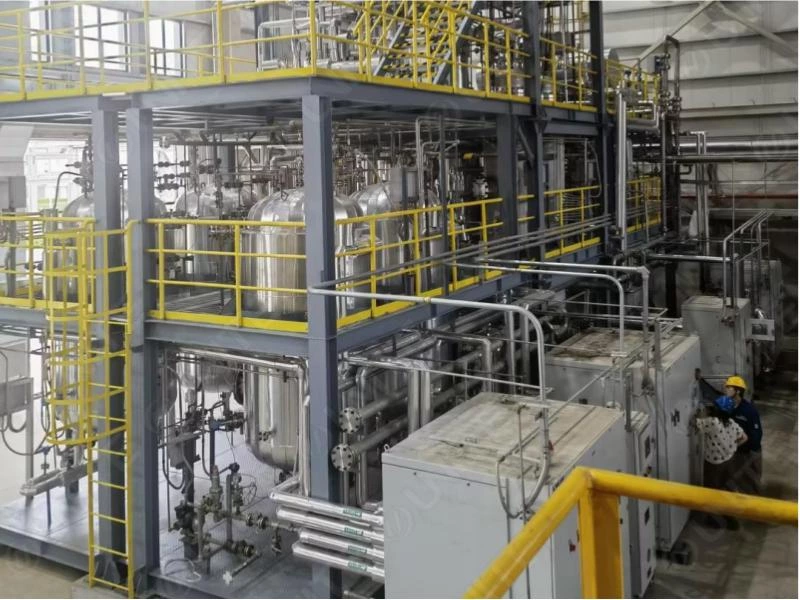
UNITE’s skid-mounted filtration and separation systems are described as integrated packages combining filtration, piping, valves, instrumentation and controls, with factory testing and commissioning support. For a project involving automatic filtration, multi-stage separation or a custom skid, review the UNITE Filtration and Separation Skid System, Filtration System Series, Manufacturing Capabilities, and the BASF integrated filtration and filter-dryer case before contacting the UNITE engineering team with the process data and proposed acceptance basis.
References
[1] UNITE Industrial Filtration System Manufacturer
[2] UNITE Filtration and Separation Skid System
[3] UNITE Filtration System Series
[4] UNITE Manufacturing Capabilities and Quality Control
[5] Roxia Pressure Filter Installation and Commissioning
[6] Jonell Systems Filtration Vessel Startup and Commissioning