Formosa Plastics Group Project: Large-scale Industrial Activated Carbon Filtration and Adsorption System
Project Background: Protecting Water-Reuse and Boiler-Feedwater Systems
Formosa Plastics Group is a globally recognized petrochemical company operating very large-scale production complexes, including the Mailiao and Ningbo bases. These facilities maintain demanding water-quality requirements across industrial wastewater reuse, process-water treatment, and boiler-feedwater systems.
Raw water may contain trace organic compounds, residual chlorine, odor-causing substances, and other contaminants. If these impurities are not removed before advanced treatment, they can contribute to heat-exchanger scaling, ion-exchange-resin degradation, and severe fouling or oxidative damage to reverse-osmosis (RO) membrane modules.
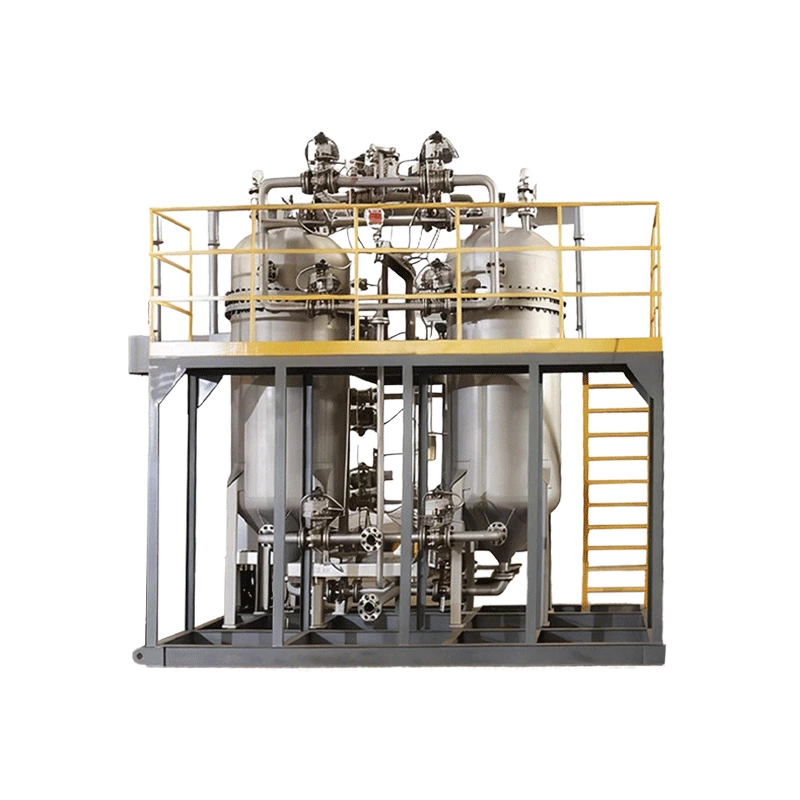
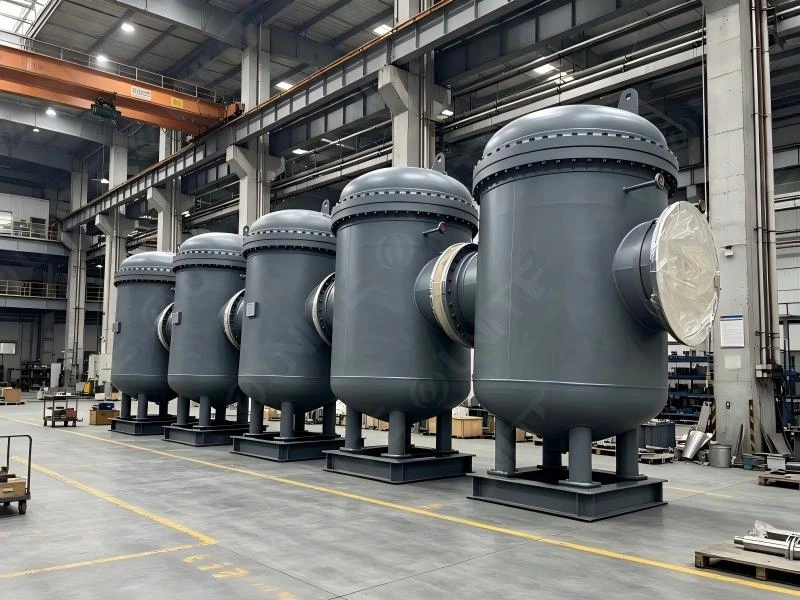
To support high-quality water reuse and protect downstream treatment assets, Formosa Plastics introduced multiple sets of UNITE industrial-grade activated carbon filtration systems. The application is consistent with UNITE’s chemical-industry filtration solutions, which address process-water purification, resource recovery, equipment protection, and stable operation in complex chemical-production environments.
Core Challenges
1. Ultra-High Throughput and Stable Hydraulic Performance
Petrochemical complexes consume large quantities of water. Individual filter vessels therefore needed to provide high hydraulic throughput, stable flow distribution, and reliable operation over extended service periods without excessive pressure loss or frequent manual intervention.
2. High-Efficiency Adsorption within a Short Contact Time
Residual chlorine and dissolved organic matter, including COD-related contaminants, needed to be reduced within the available contact time. The system required activated carbon with suitable adsorption capacity, bed depth, flow distribution, and empty-bed contact time for the actual water-quality target.
3. Structural Integrity and Corrosion Resistance
The vessels operate over long periods in water streams that may contain chloride ions and other chemically aggressive contaminants. The pressure vessel, internal lining, distribution system, collectors, valves, and seals therefore needed to provide reliable durability and corrosion resistance.
4. Automated Backwashing and System Management
Large activated carbon beds can accumulate suspended solids and other impurities. The system needed automatic backwashing and control to reduce manual maintenance, prevent bed compaction, preserve hydraulic performance, and support stable long-term operation.
Customized Solution: Modular Large-Scale Activated Carbon Filtration
1. High-Performance Activated Carbon Selection
The vessels are filled with premium activated carbon selected for high iodine number, high porosity, adsorption capacity, and mechanical strength. Depending on the contaminant profile and process objective, the media can be based on coconut shell or coal-derived activated carbon.
Coconut-shell carbon is often selected when micropore development and adsorption of smaller molecules are important, while coal-based carbon may offer a different pore structure and mechanical profile. The appropriate media should be selected through water analysis, contaminant characterization, adsorption testing, target residual-chlorine concentration, organic loading, backwash conditions, and required service life.
The published project description refers to activated carbon as the primary adsorption medium. It does not establish a universal carbon grade or guarantee performance for every water source.
2. Anti-Corrosive Vessel Lining
The vessel body is constructed from high-strength carbon steel with a thick modified-polyethylene (PO) or rubber lining on the internal walls. The lining is designed to reduce exposure of the structural shell to chloride-containing water and other corrosive constituents.
The project source reports a target service life of more than 15 years for the lined vessel configuration. Actual service life depends on lining material, thickness, adhesion, temperature, water chemistry, chloride concentration, pressure cycling, mechanical impact, inspection practice, and maintenance conditions. Final lining selection should be verified against the site’s chemical analysis and design code.
3. Optimized Distribution and Collection Internals
The system uses umbrella-type distributors and stainless-steel wedge-wire collectors to promote uniform flow through the activated-carbon bed. Even distribution is essential because channeling and short-circuiting can allow water to bypass portions of the media, reducing contact efficiency and causing uneven carbon exhaustion.
The internal arrangement is designed to maximize adsorbent utilization, support consistent contact between water and carbon, and improve backwash coverage. Distributor and collector design should be sized according to vessel diameter, service flow, backwash flow, media characteristics, freeboard, bed expansion, and water quality.
4. Fully Automatic Pneumatic Valve Control
The system includes pneumatic switching valves and a PLC-based intelligent control system. Backwash can be triggered according to runtime or differential pressure, allowing the system to respond to actual operating conditions rather than relying exclusively on a fixed manual schedule.
During backwashing, accumulated solids are removed and bed compaction is reduced. This supports stable hydraulic performance and helps preserve the activated carbon’s usable capacity. Backwash frequency, duration, flow rate, expansion target, rinse sequence, and discharge requirements should be determined through commissioning and operating data.
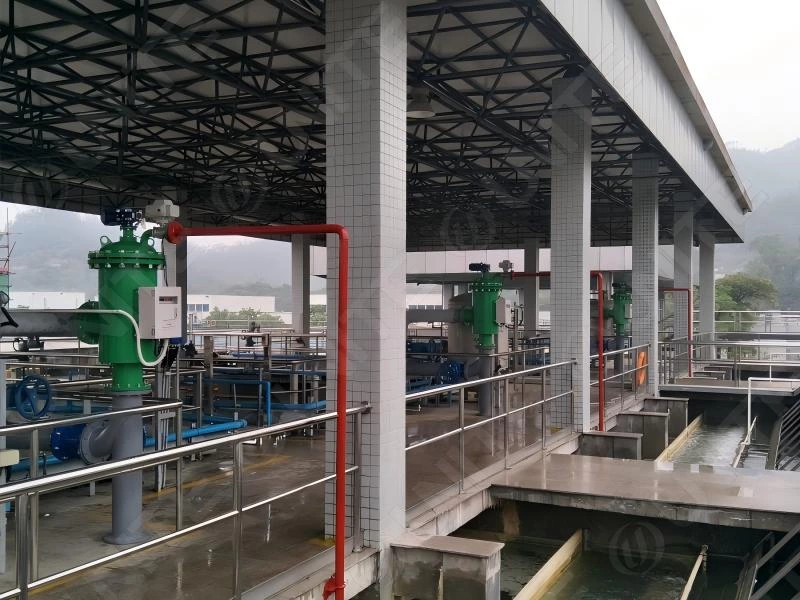
UNITE’s Eco Water Treatment solutions also emphasize automatic filtration for industrial water reuse, suspended-solids reduction, cooling-water protection, and improved performance of downstream advanced-treatment stages.
5. Modular System Integration
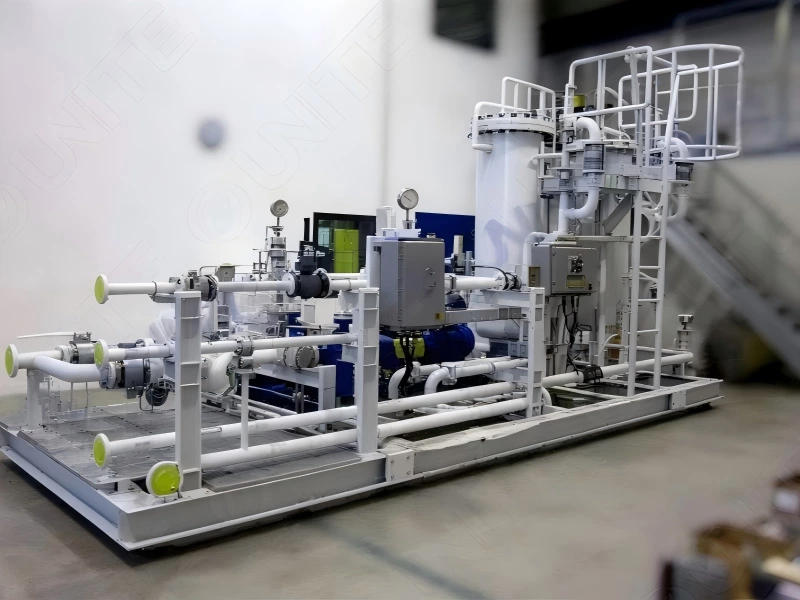
The activated carbon filtration units are designed as a modular integrated solution suitable for large industrial water-treatment systems. The package can coordinate filter vessels, valves, instruments, control logic, piping interfaces, and maintenance arrangements in a structured installation.
For projects requiring factory-integrated equipment and a coordinated process package, UNITE’s filtration and separation skid-mounted systems combine filtration equipment, piping, valves, instrumentation, control systems, and support components. The final architecture can be adapted to site layout, flow rate, filtration stages, automation requirements, and maintenance philosophy.
How the System Supports Downstream RO and Water-Treatment Equipment
Activated carbon filtration can support downstream treatment in several ways:
1.Residual-chlorine reduction: Activated carbon adsorbs or catalytically reduces residual chlorine, helping limit oxidative stress on chlorine-sensitive RO membranes;
2.Organic-contaminant control: Organic compounds and odor-causing substances can be reduced, depending on carbon type, loading, contact time, and water chemistry;
3.Suspended-solids protection: The carbon bed can retain some particulate matter, while upstream pretreatment may be required to prevent premature bed fouling;
4.Improved process stability: Consistent pretreatment reduces fluctuations in the load presented to ion-exchange, membrane, and polishing systems;
5.Lower maintenance pressure: Better pretreatment can help reduce cleaning frequency and contamination-related downtime in downstream equipment.
Activated carbon is not a universal substitute for clarification, multimedia filtration, dechlorination chemistry, softening, ultrafiltration, or RO pretreatment. System design should consider all contaminant classes and the complete water-treatment train.
Customer Value and Project Results
Since commissioning, the series of activated carbon filtration systems has delivered the following reported benefits:
•Effluent residual chlorine consistently below 0.1 mg/L: The reported result supported the protection of downstream RO membrane systems from oxidative damage;
•More than 20% longer activated-carbon service life: High adsorption efficiency and uniform backwashing extended media service life compared with conventional equipment;
•Improved protection for high-value downstream assets: The filtration systems helped protect RO membranes, heat exchangers, resins, and related water-treatment equipment;
•Reduced manual maintenance requirements: Automatic pneumatic valves, PLC control, and runtime or differential-pressure-based backwashing reduced the need for frequent manual intervention;
•Stable large-scale filtration performance: The system supported high-throughput industrial operation across demanding petrochemical water-treatment applications;
•Standardized configuration for expansion projects: Formosa Plastics highly evaluated UNITE’s large-vessel manufacturing quality and system-integration stability, and the solution became a standard configuration for water-treatment units in multiple expansion projects.
The reported residual-chlorine result and media-life extension are specific to the Formosa Plastics project. Actual performance depends on influent chlorine concentration, organic loading, turbidity, temperature, pH, carbon type, bed depth, empty-bed contact time, flow distribution, backwash quality, and measurement method.
Conclusion
Large petrochemical water-treatment systems must control both adsorbable contaminants and hydraulic behavior. A high-capacity activated carbon filter needs more than a suitable carbon medium: it also requires reliable vessel protection, uniform distribution, effective collection, automatic backwashing, and control logic that supports continuous operation.
The Formosa Plastics project combines high-performance activated carbon, corrosion-resistant vessel lining, optimized distributors and wedge-wire collectors, pneumatic valve automation, and PLC-based backwash management. By reducing residual chlorine and organic contaminants before advanced treatment, the solution helps protect RO membranes and other downstream assets, improve water-reuse reliability, and extend activated-carbon service life.
If your application involves petrochemical wastewater reuse, boiler feedwater pretreatment, RO membrane protection, residual-chlorine removal, organic adsorption, high-throughput carbon filtration, or automated industrial water treatment, contact the UNITE engineering team with your water analysis, flow rate, chlorine concentration, COD or organic load, operating pressure, and required treated-water quality.
Related Pages
•Chemical-Industry Filtration and Separation Solutions
•Eco Water Treatment Solutions
•Filtration and Separation Skid-Mounted Systems
•Formosa Plastics Activated Carbon Filtration Project
•Dalian Chemical-Plant Circulating-Water Reuse Project